Feeds:
Posts
Comments

Archive for the ‘Cook’ Category

MasterChef Australia has really grown on me. The first few audition episodes were not pleasant to watch, too much drama and too much of me wondering whether Matt Preston wore the handkerchief to cover the double chin or as a fashion statement. But lately… I can’t get enough. It’s really evolved and I think an even better show than the original UK version.

(Matt has got a lot of handkerchiefs….)


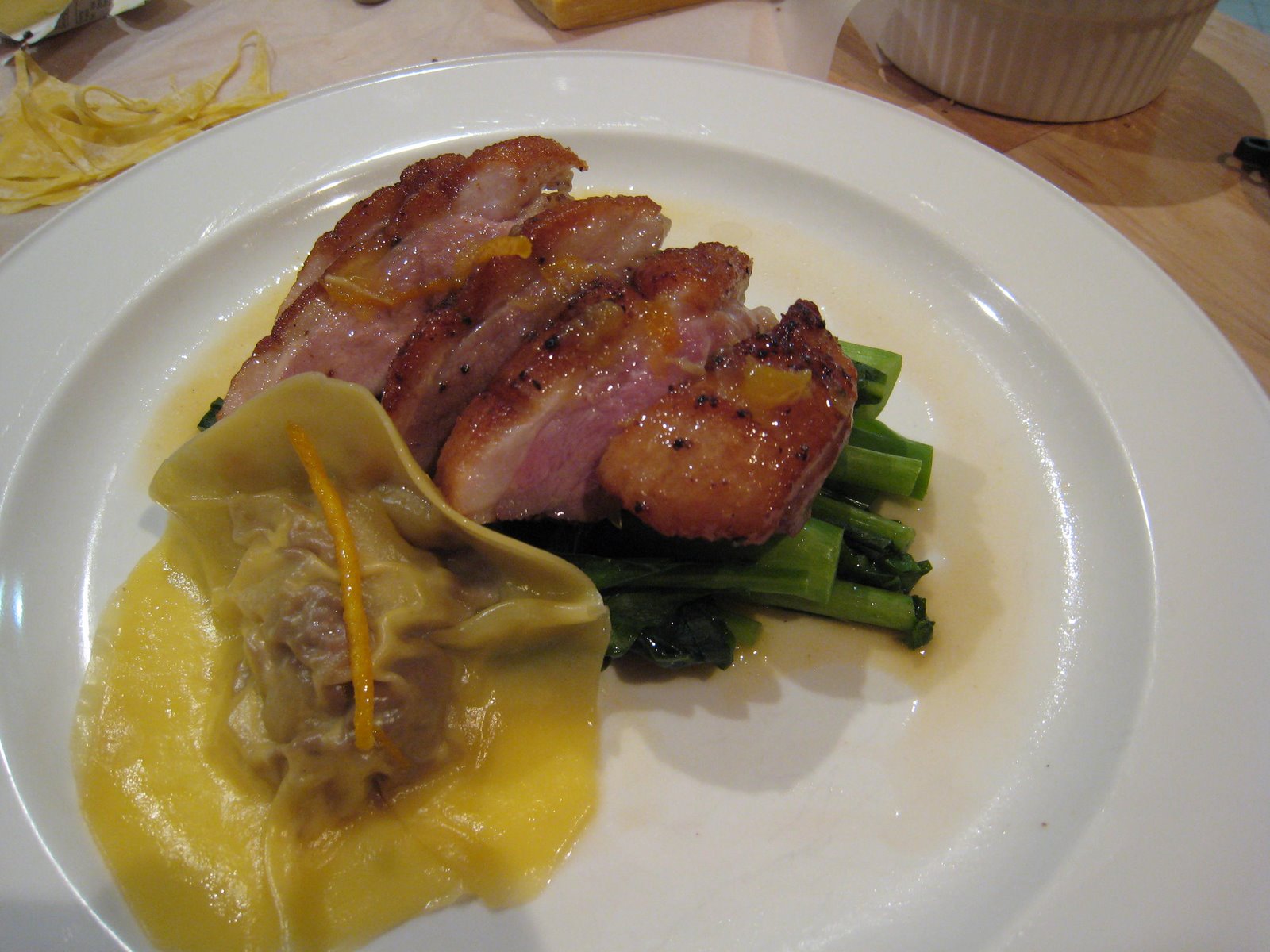
I even managed to try one of the Celebrity Chef Challenge recipes which was the Tea Smoked Duck Breast with Duck Liver Ravioli where Chef Peter Evans faced off against Julia and lost! Well, I thought if she can beat him, maybe the recipe would be easy enough to follow… of course I didn’t have a time limit.

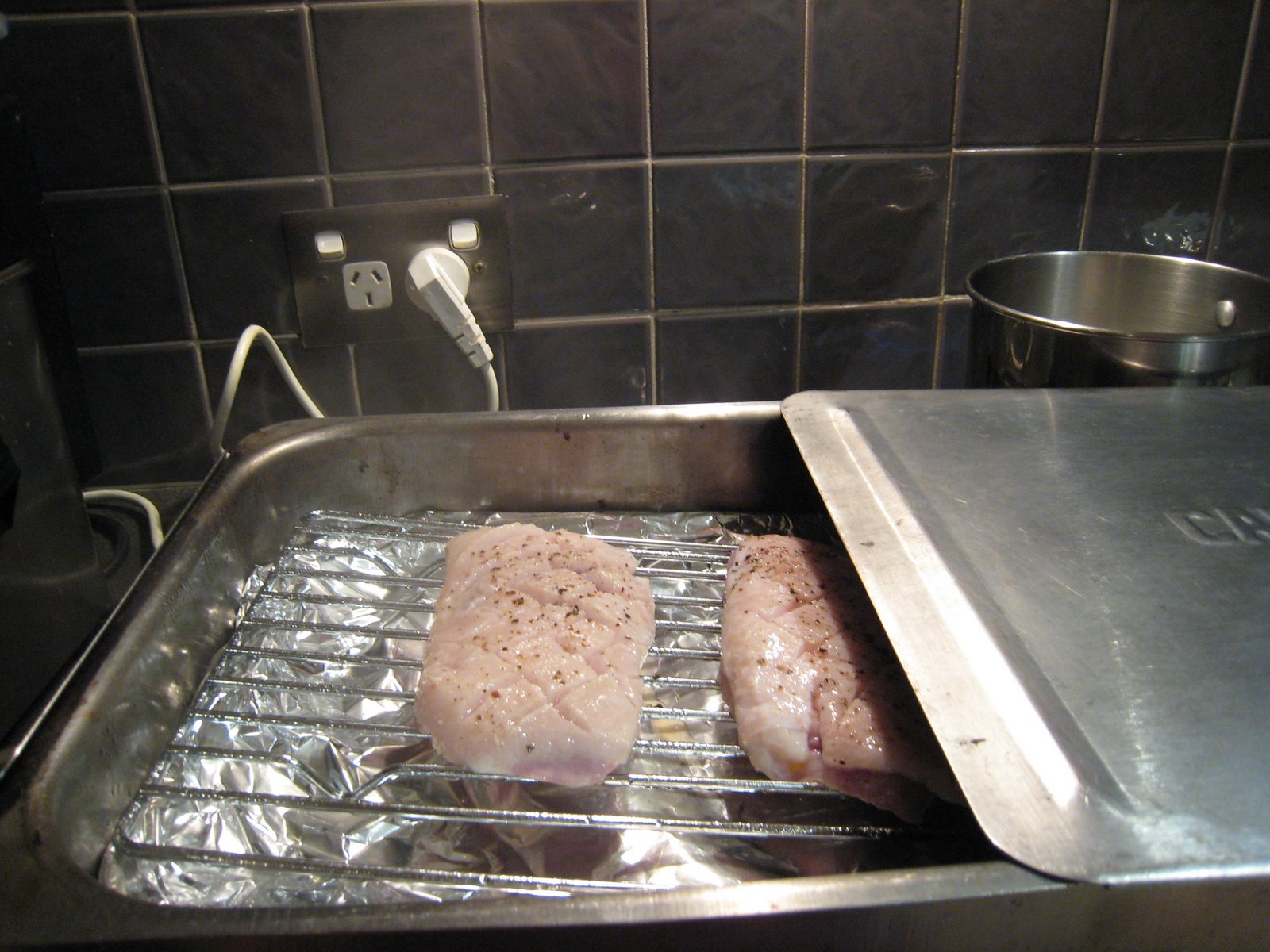
Anyway, the first step was to smoke the duck breasts which I had never done before. The process is easy enough and hassle free if you’ve got an indoor stove top smoker, otherwise you can use a wok and there are many sites on the internet that show you how.

The verdict – amazingly easy and good… given that it was a celebrity chef challenge – I thought it would be more difficult to make. But the hardest part was really going to the grocery three times because I never make a list when shopping for ingredients – and tend to forget something… with a shopping list as long as the one above – three trips were eventually necessary!

Ingredients

2 duck breast
50g pâté
25g water chestnuts, diced
25g pear, diced
4 gow gee or wonton wrappers or thin pasta sheets
¼ cup (60ml) blood orange sauce – recipe to follow
3 cups baby spinach
Vegetable oil
2 tablespoons julienned ginger

Tea Smoking Mixture
½ cup oolong tea leaves
½ cup jasmine tea leaves
Zest of 3 oranges
4 pieces of dried orange peel
1 cup jasmine rice
1 cup of brown sugar
5 star anise
1 tablespoon Sichuan peppercorns
6 pieces cassia bark

Orange sauce
60g caster sugar
¼ cup (60ml) red wine vinegar
2 cups (500ml) blood orange juice or orange juice
1 cup (250ml) Peking duck stock or chicken stock
Zest of 1 orange
50g of butter, diced

Serves 2

Method

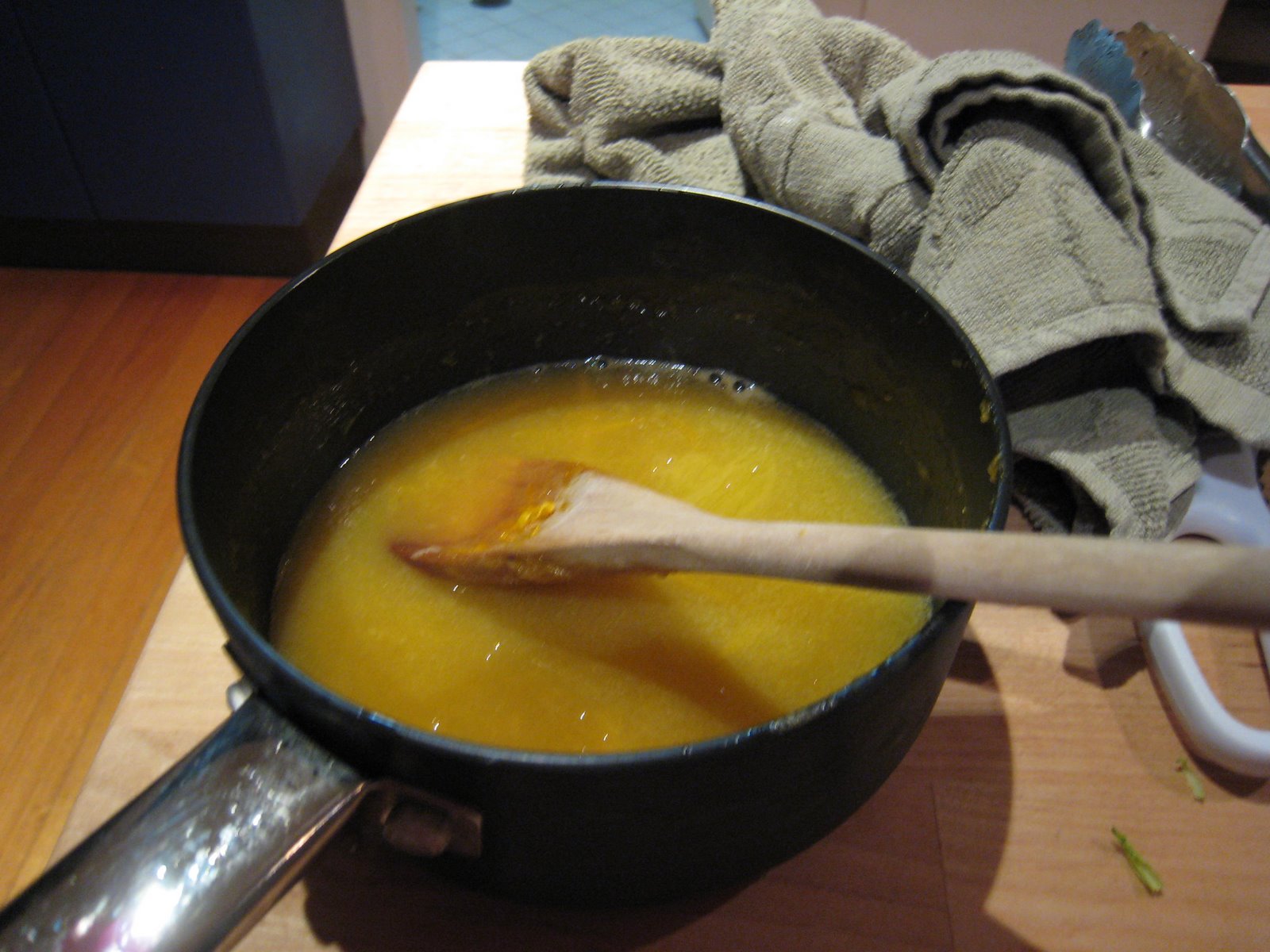
1. For the orange sauce, place sugar in a cold pan and melt it down slowly (careful not to burn). Then add vinegar and simmer until sugar is dissolved. Add orange juice and reduce by half. Then add the stock and reduce by half.

2. Add zest and blend the sauce with the butter and seasoning.
3. For tea smoking mixture, combine ingredients in a bowl.

4. Line a wok with foil then place the smoking mix on top and turn on the heat to medium and wait for it to start to smoke. OR If you are fortunate enough to have an indoor stovetop smoker – place the tea smoking mixture on the bottom of the smoker, cover with the drip tray, top with the rack and place the duck on top of the rack then cover. I used a medium heat for 8 minutes. Came out perfect.
5. To make the ravioli, mix the pâté, water chestnuts and pear together with a touch of salt. Lay 2 gow gee wrappers on the bench and brush with water, place 2 mounds of the pâté mix in the center of the gow gee wrappers and place the top gow gee wrappers over the mound and press down firmly around the edges to seal so you have 2 ravioli.


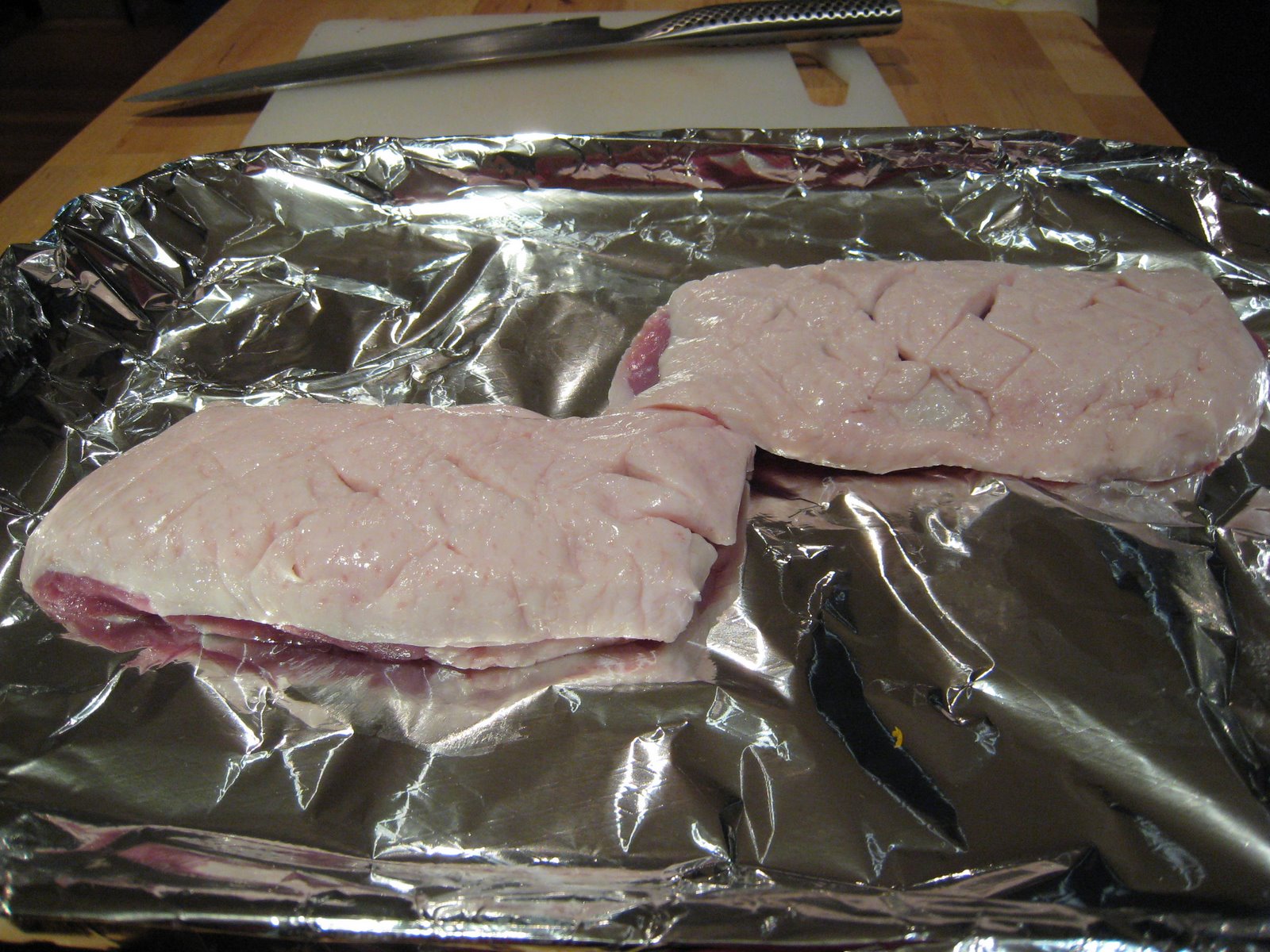
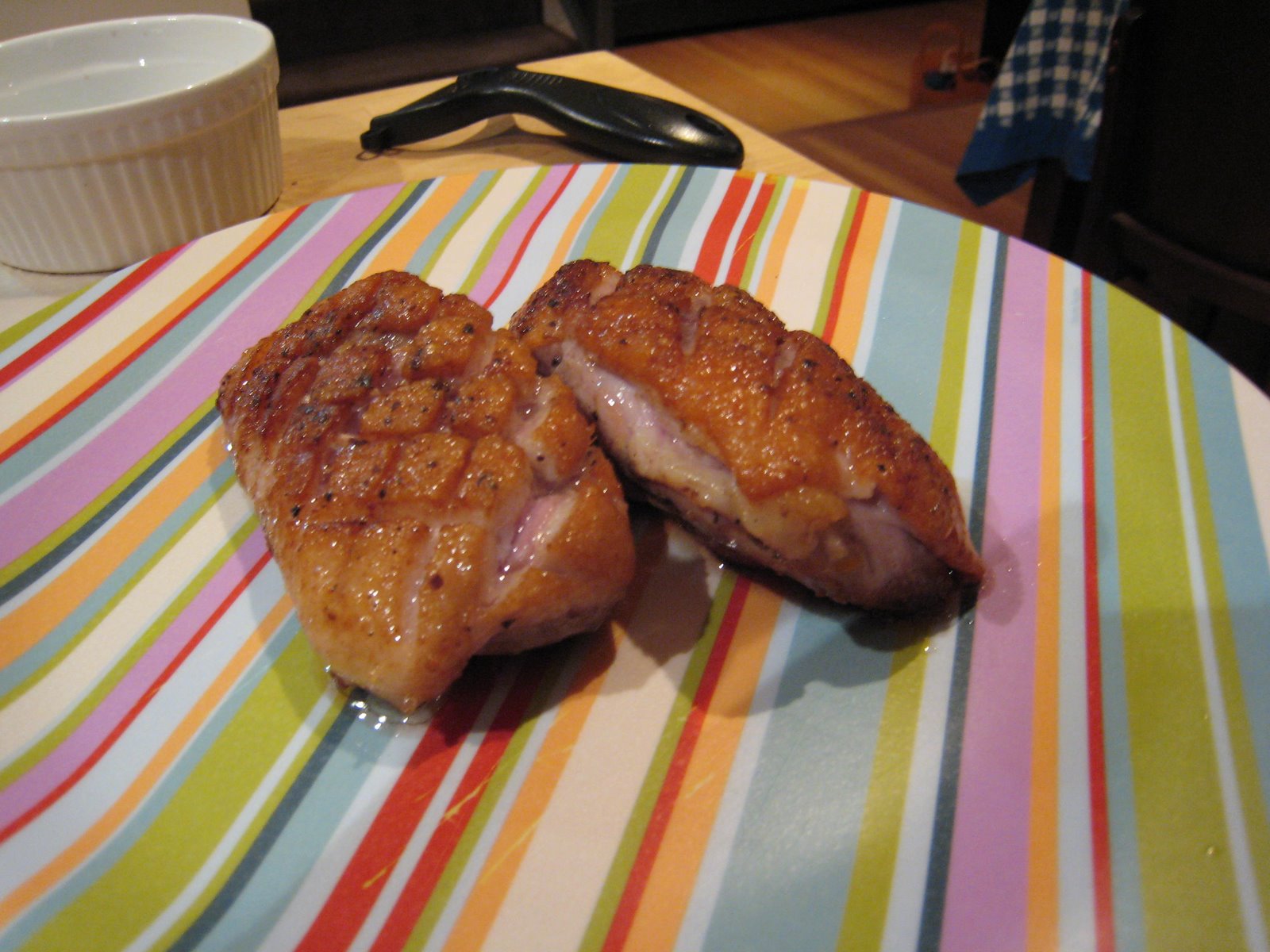
6. Place the duck skin side down in a frying pan and cook until fat has rendered and skin is crispy and let rest for a few minutes in a warm spot and then slice.
7. Add spinach (Gai Lan would be nice too!) to same pan and cook until just wilted, season with some sea salt and pepper and then drain any excess liquid out of the spinach in a strainer. Then drop the ravioli in a pot of boiling water to cook for 1 minute.

8. Pour vegetable oil into a small frying pan until one quarter full. Heat over medium-high heat until hot. Deep-fry ginger for 3-4 minutes or until golden and crispy. Drain on paper towel. Set aside.

9. Heat up the orange sauce.

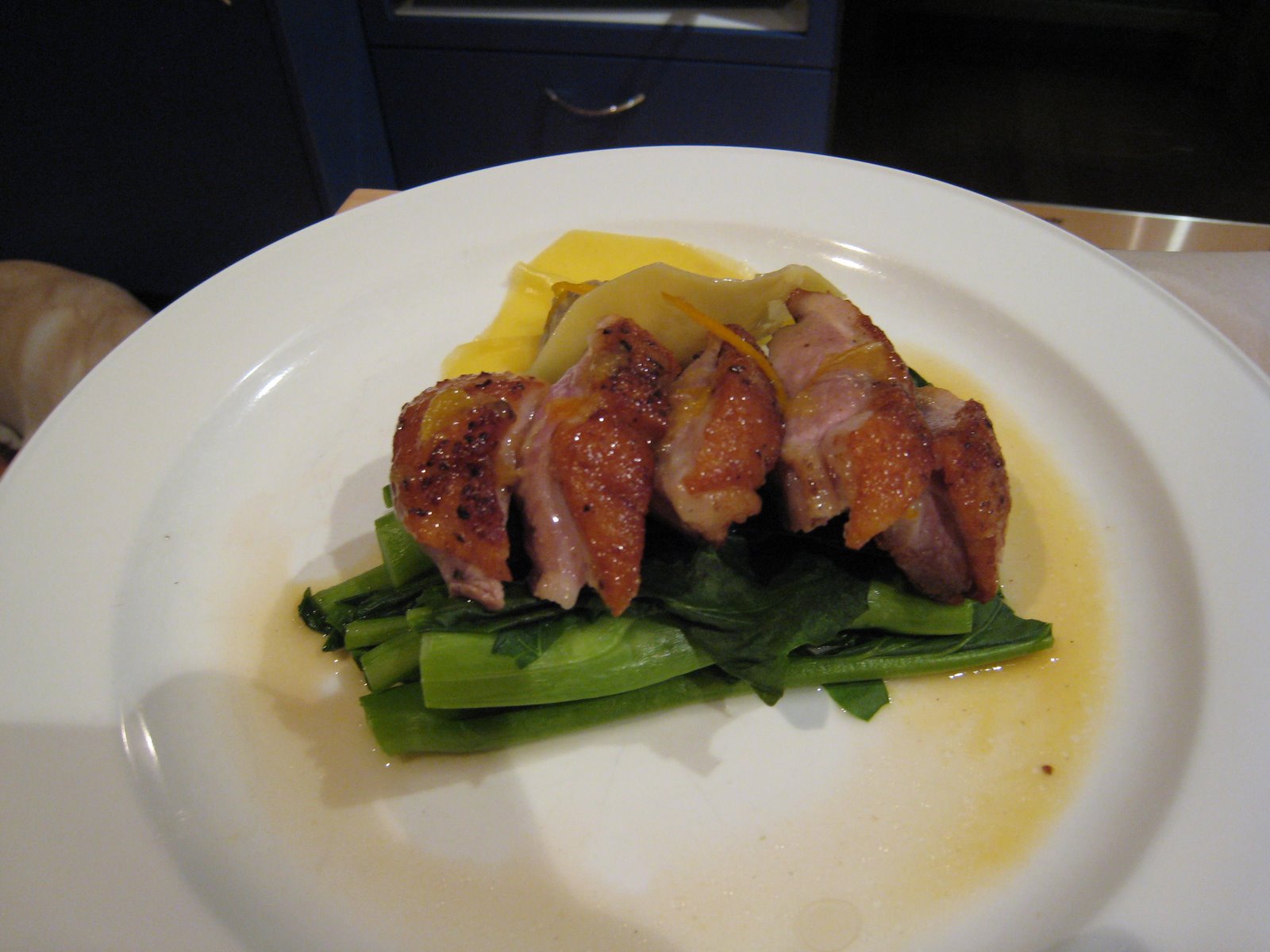
10. To serve, place the spinach on plate, then top with the sliced duck, the ravioli, drizzle a tablespoon of sauce over the ravioli and duck and top with the fried ginger.
Read Full Post »

Just recently joined the Daring Cooks’ Challenge and nearly missed posting my attempt at Chinese Dumplings/Potstickers. I am glad that I managed to give it a go as making home made potsticker dough was something I would have never dared try if not for this challenge.

The challenge was hosted by Jen of use real butter (userealbutter.com). Recipe below:

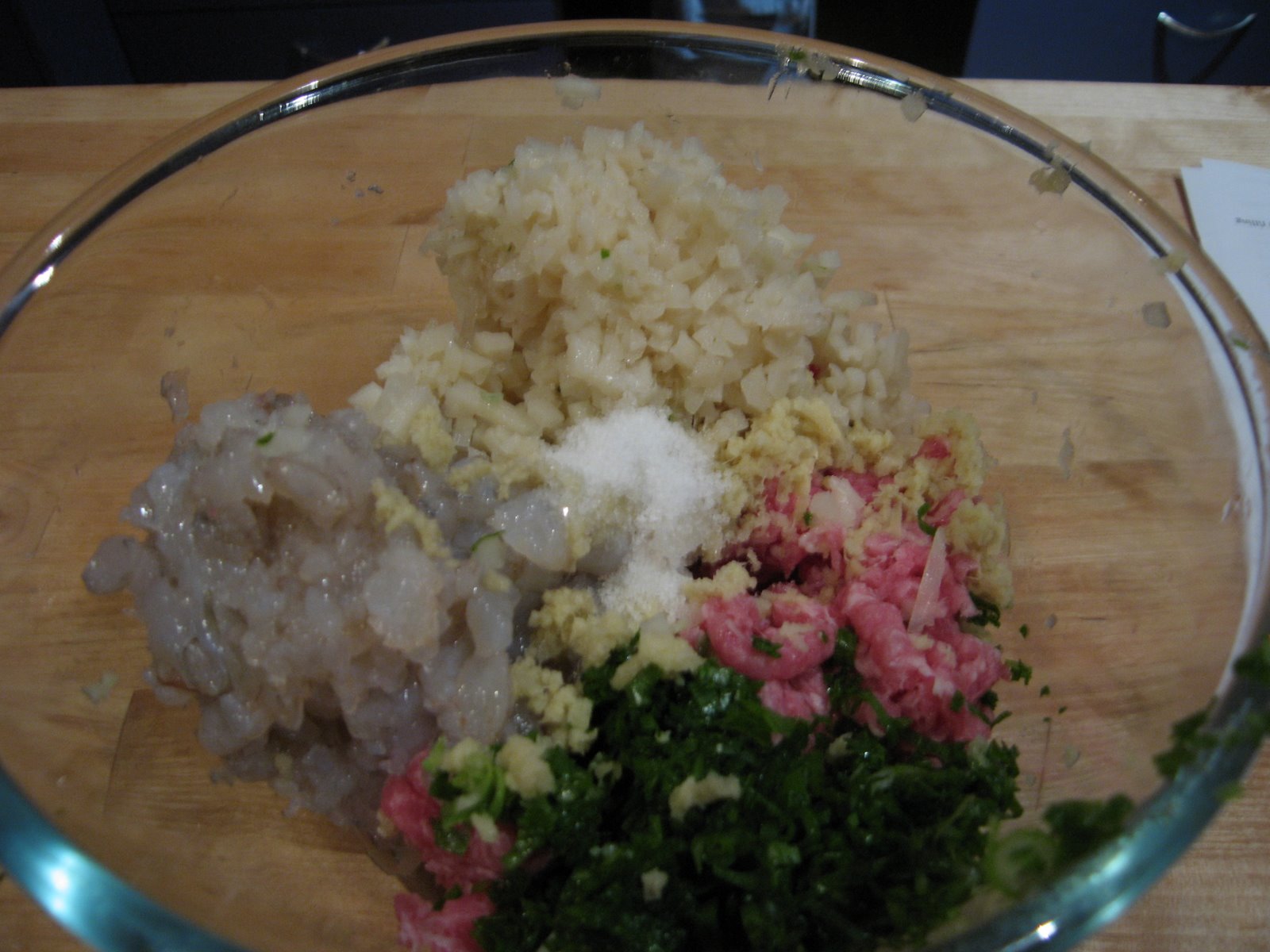
shrimp filling:
1/2 lb (225g) raw shrimp, peeled, deveined, and coarsely chopped
1/2 lb (225g) ground pork
3 stalks green onions, minced
1/4 cup (55g) ginger root, minced
1 cup (142g) water chestnuts, minced
1 tsp (5g) salt
3 tbsp (40g) sesame oil
2 tbsp (16g) corn starch

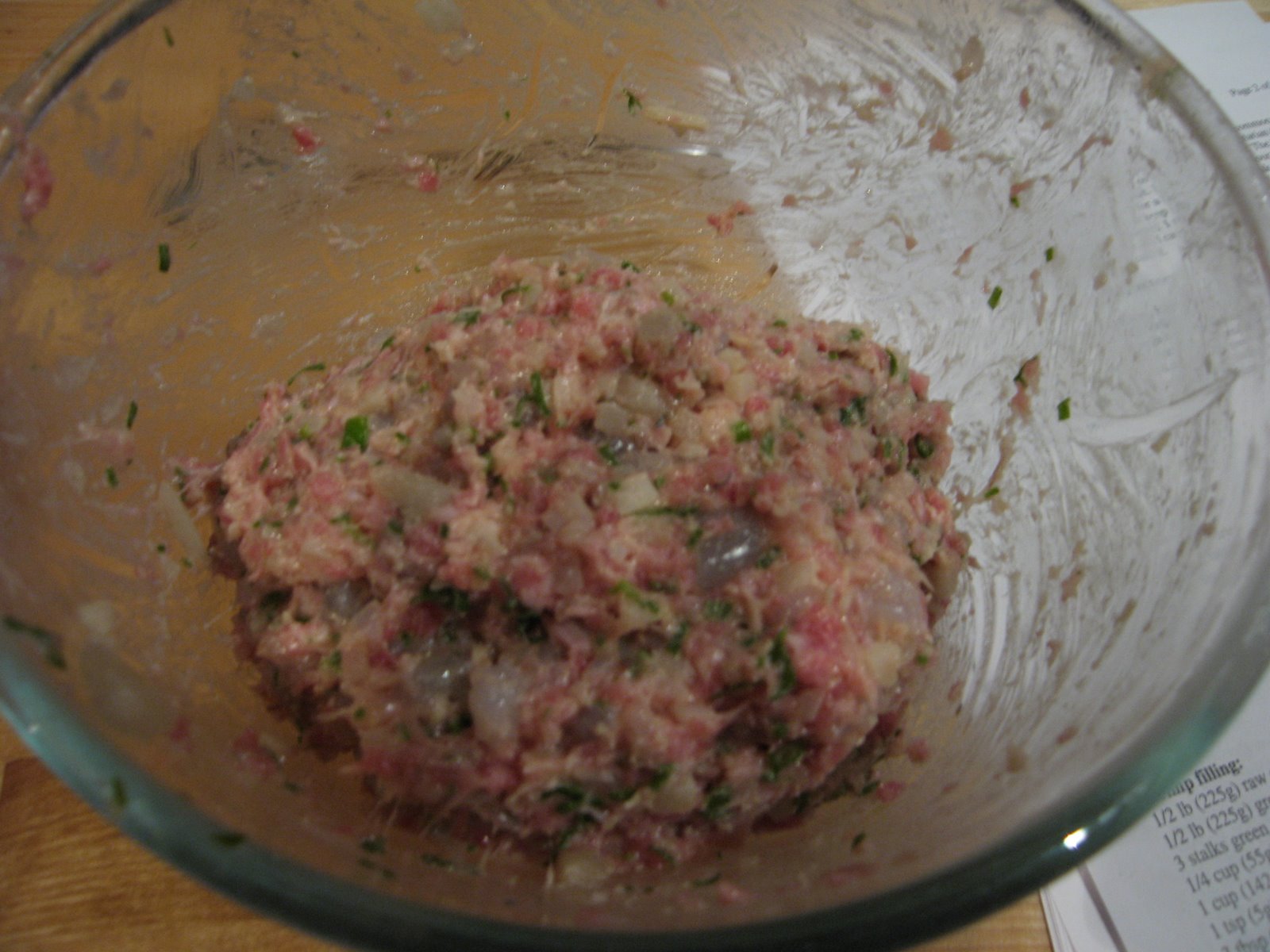
Combine all filling ingredients in a large mixing bowl and mix thoroughly (I mix by clean hand). Cover and refrigerate until ready to use (up to a day, but preferably within an hour or two).

dough: (double this for the amount of filling, but easier to make it in 2 batches – or just halve the filling recipe)
2 cups (250g) all-purpose flour
1/2 cup (113g) warm water
flour for work surface

Make the dough, Method 1: Place the flour in the work bowl of a food processor with the dough blade. Run the processor and pour the warm water in until incorporated. Pour the contents into a sturdy bowl or onto a work surface and knead until uniform and smooth. The dough should be firm and silky to the touch and not sticky.[Note: it’s better to have a moist dough and have to incorporate more flour than to have a dry and pilling dough and have to incorporate more water).

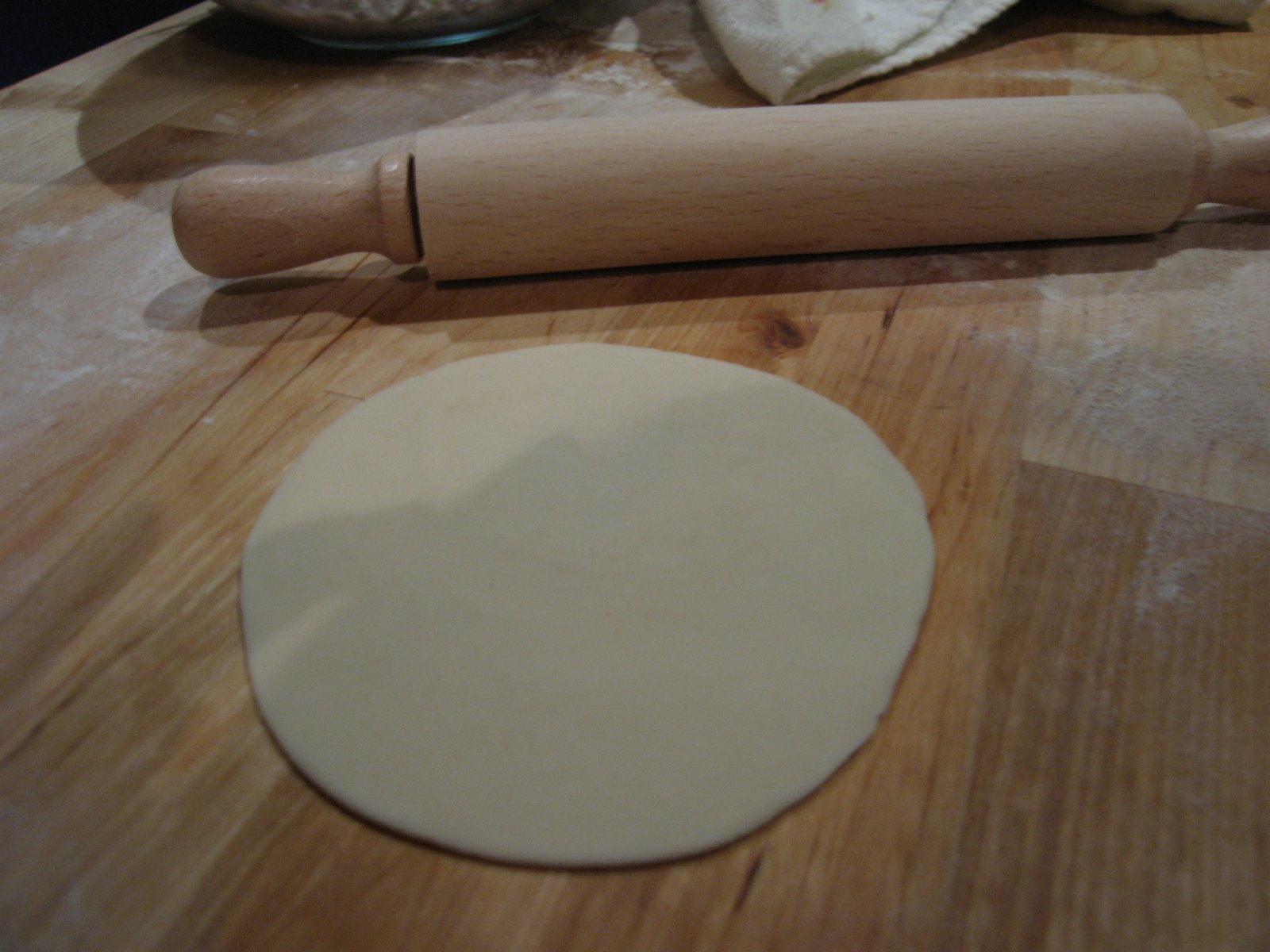
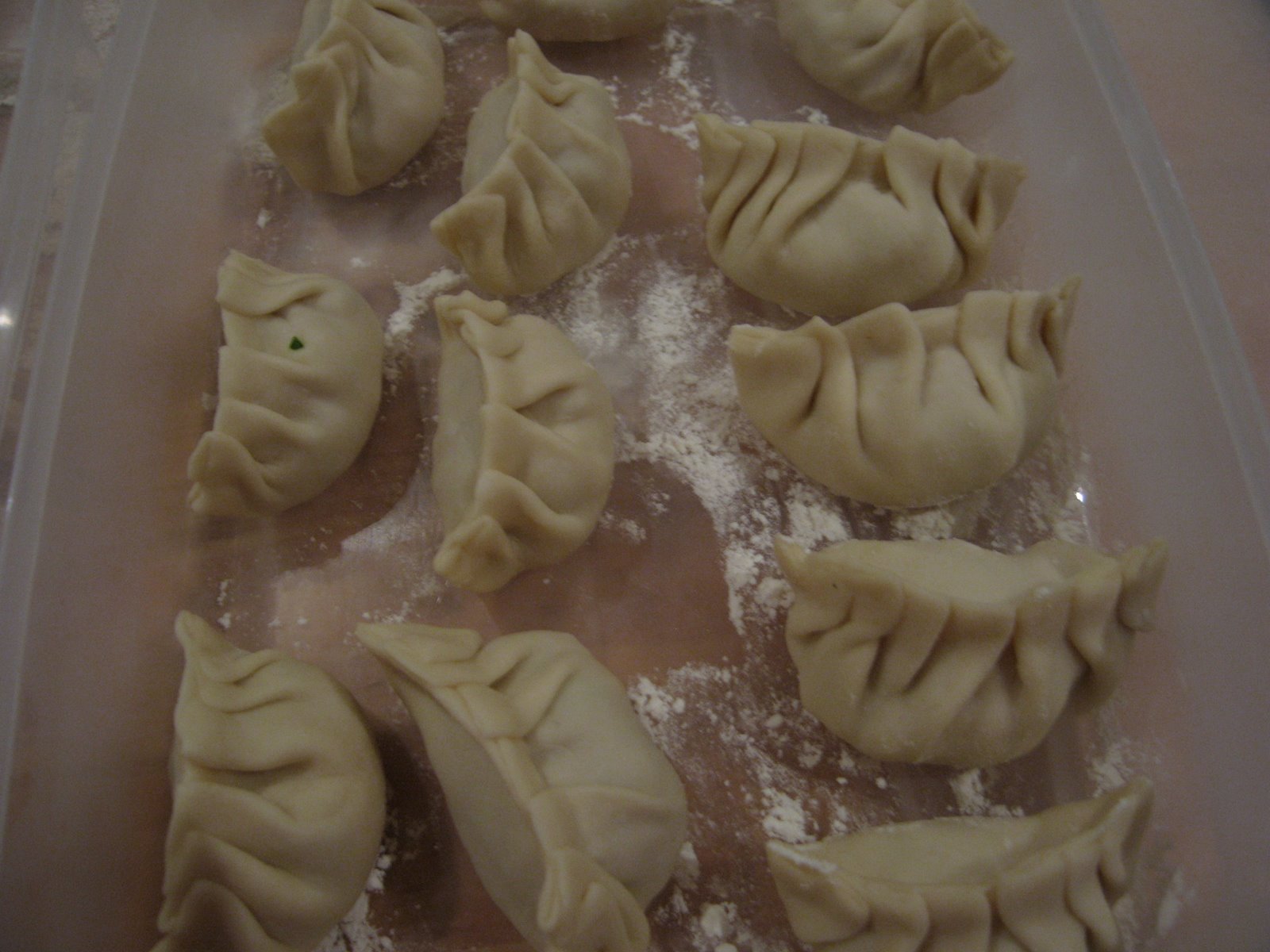
Both dough methods: Knead the dough about twenty strokes then cover with a damp towel for 15 minutes. Take the dough and form a flattened dome. Cut into strips about 1 1/2 to 2 inches wide. Shape the strips into rounded long cylinders. On a floured surface, cut the strips into 3/4 inch pieces. Press palm down on each piece to form a flat circle (you can shape the corners in with your fingers). With a rolling pin, roll out a circular wrapper from each flat disc. Take care not to roll out too thin or the dumplings will break during cooking – about 1/16th inch. Leave the centers slightly thicker than the edges. Place a tablespoon of filling in the center of each wrapper and fold the dough in half, pleating the edges along one side. Keep all unused dough under damp cloth.

To boil: Bring a large pot of water to a boil and add dumplings to pot. Boil the dumplings until they float.

To steam: Place dumplings on a single layer of napa cabbage leaves or on a well-greased surface in a steamer basket with lid. Steam covered for about 6 minutes.

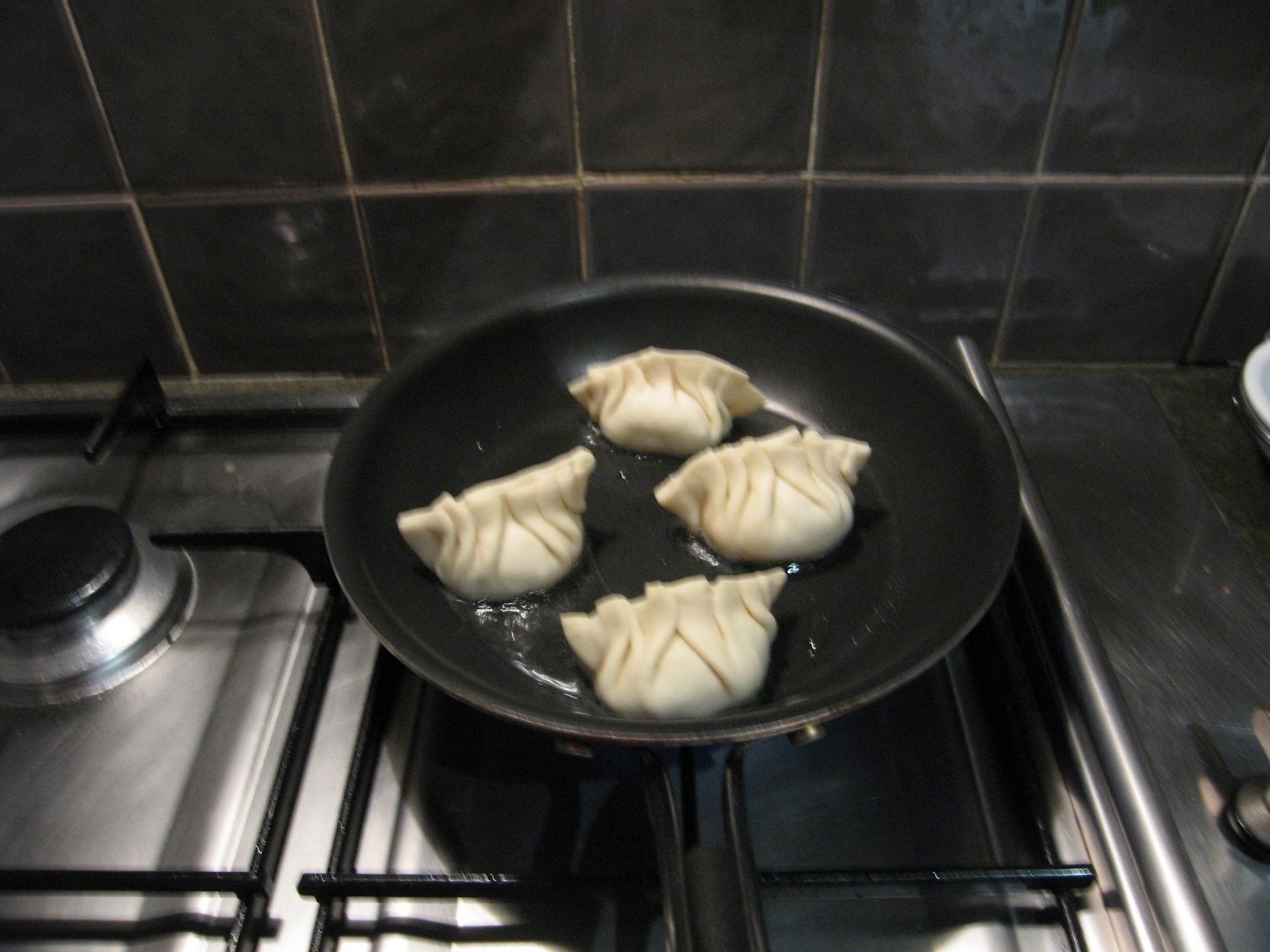
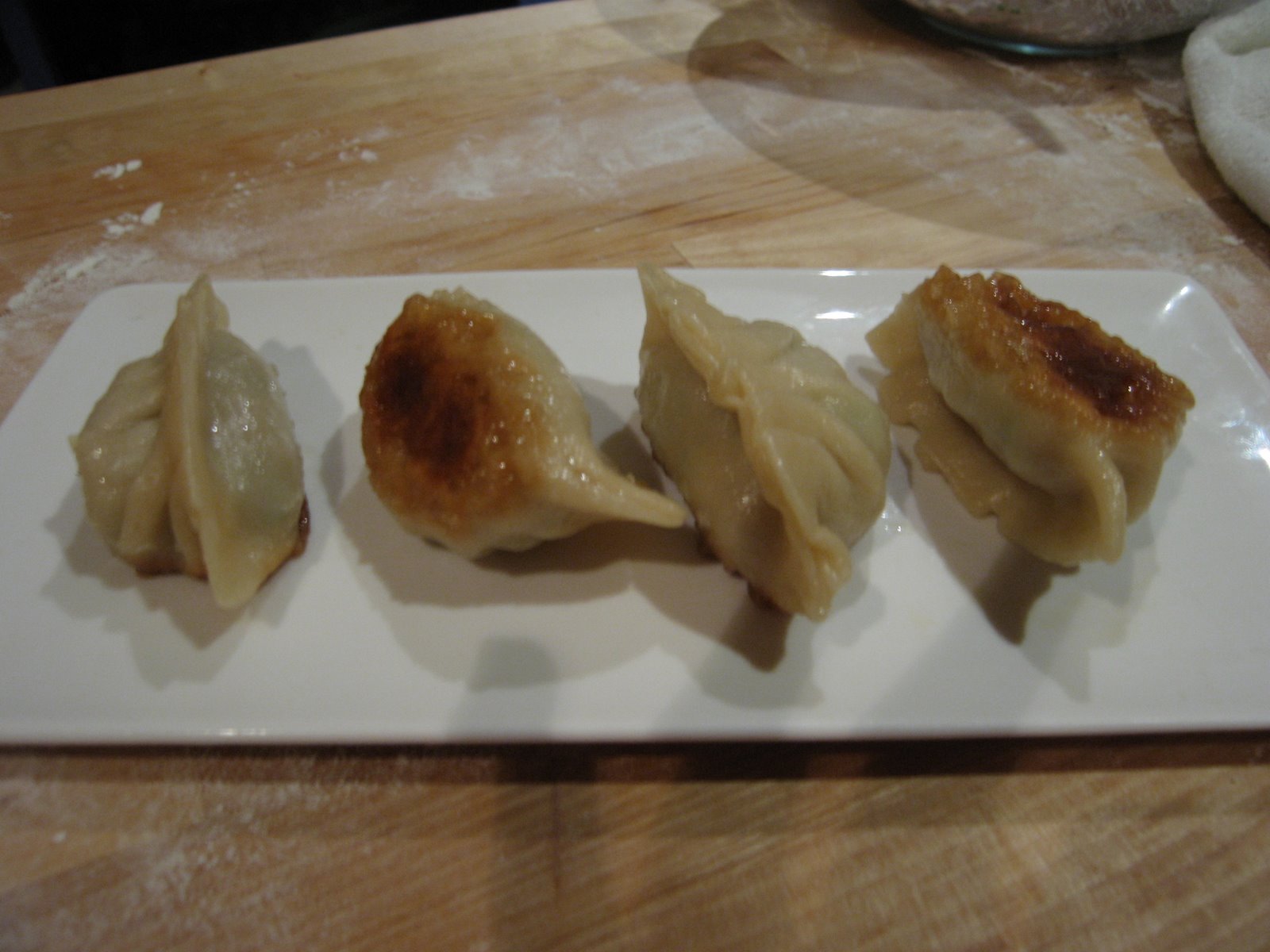
To pan fry (potstickers): Place dumplings in a frying pan with 2-3 tbsp of vegetable oil. Heat on high and fry for a few minutes until bottoms are golden. Add 1/2 cup water and cover. Cook until the water has boiled away and then uncover and reduce heat to medium or medium low. Let the dumplings cook for another 2 minutes then remove from heat and serve.


To freeze: Assemble dumplings on a baking sheet so they are not touching. It helps to rub the base of the dumpling in a little flour before setting on the baking sheet for ease of release. Freeze for 20-30 minutes until dumplings are no longer soft. Place in ziploc bag and freeze for up to a couple of months. Prepare per the above instructions, but allow extra time to ensure the filling is thoroughly cooked.

To serve: Serve dumplings or potstickers hot with your choice of dipping sauce combinations.

Yum!

Read Full Post »

My Welcome Lasagna


All,

Welcome to my blog. I set off creating this blog thinking it would be a good way to chronicle my upcoming trip to Europe but then I thought it would also be a good way to share with my friends and family my adventures (and misadventures) in the kitchen.

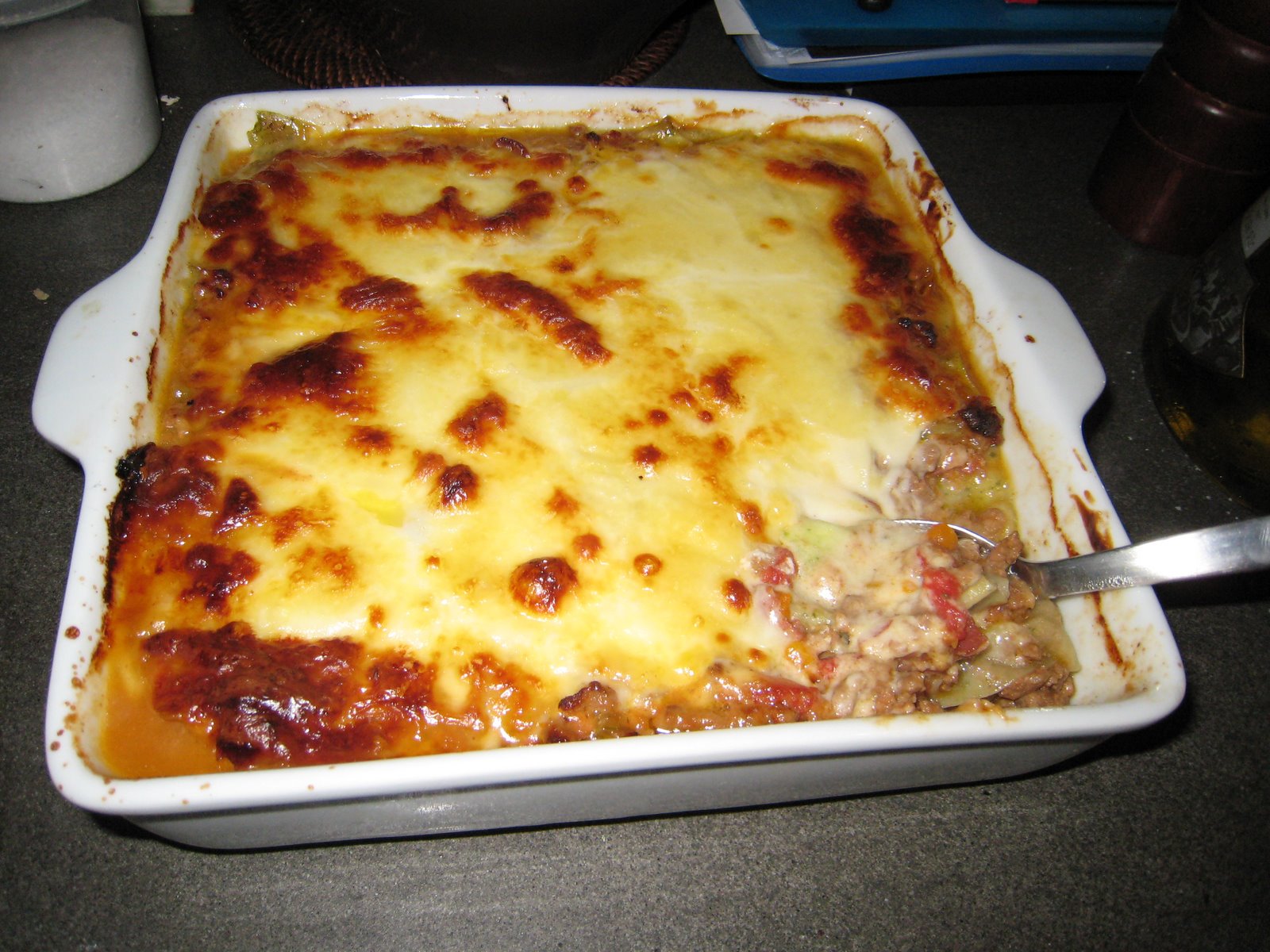
So what better way to kick off then to share with you what I happened to cook this weekend. Lasagna has always been one of my favorite dishes. One of the best lasagnas I’ve tried is from my aunt Jenni. She makes a rich ragu sauce and creamy bechamel that comes out bubbly, gooey and yummy and best of all it doesn’t require hours slaving in the kitchen. One day I’ll ask her to share it with you as well. In the meantime, if you have a couple of hours to spare on a lazy weekend afternoon, here is something you might want to try. I promise, the efforts will be worth it.

Lasagna Verdi
There are three components to the dish – the ragu, the bechamel and the pasta. Start early.

Step One: The Ragu

500 grams minced beef
500 grams minced veal (or pork)
100 grams chopped parma ham
800 grams canned Italian tomatoes
600 ml chicken stock (or beef stock)
300 ml milk
4 tablespoons olive oil
1 onion, finely chopped
1 celery stack, finely chopped
1 carrot, finely chopped
3 garlic cloves, finely chopped
1/2 cup white wine
1 tablespoon fresh oregano
1 tablespoon fresh thyme
salt and pepper to taste
300 grams mozarella cheese

  • In a heavy bottomed pot, cook the onion gently until translucent. Add the garlic, carrot and celery and cook a few minutes longer until all the vegetables are soft. Turn the heat to high and add the parma ham and the meat until brown. Cook for several minutes until the liquid from the meat evaporates.
  • Now add the wine and allow to evaporate for a few minutes to cook out the alcohol. Next, add the milk, stock and herbs.
  • Add the canned tomatoes and some salt and pepper to taste.
  • Simmer the ragu for 2.5 hours until you get a rich, dark sauce.
  • While you are waiting, begin the pasta

Step Two: The Pasta (La Sfoglia)
2 eggs
250 grams flour
30 grams cooked and strained spinach

  • Tip the flour onto the kitchen counter and bring it together into a mound
  • Make a well in the center of the flour and crack both eggs into the well along with the spinach
  • Using a fork, lightly mix the eggs and spinach together while slowly trying to incorporate the flour, a little at a time
  • Once the egg mixture becomes thick, stop mixing and cover the egg mixture with the rest of the flour
  • With your hands, bring the flour and egg mixture together into a ball and start kneading the pasta until it reaches the right consistency. To check, make an indentation into the ball of pasta dough, if it comes out clean without being sticky, stop. Otherwise, continue
  • Now cover the pasta dough and let it rest for at least 30 minutes. If not using immediately, wrap in cling film and refrigerate until ready to use.
  • Once you are ready to use the pasta dough and it has rested, roll it out on a pasta machine until setting 8. Cut the pasta into sheets. Let rest again for at least 15 minutes until you are ready to boil and assemble the pasta
  • Bring a large pot of boiling water to the boil and add some salt. Carefully add the sheets of pasta and boil for 3 minutes. Remove from the water and lay the sheets on a tea towel to dry.

Step Three: The Bechamel

75 grams butter
1/4 cup flour
750 ml hot milk
pinch of salt
pinch of freshly grated nutmeg

  • In a sauce pan, melt the butter over medium heat
  • Add the flour and let it cook out for a few minutes
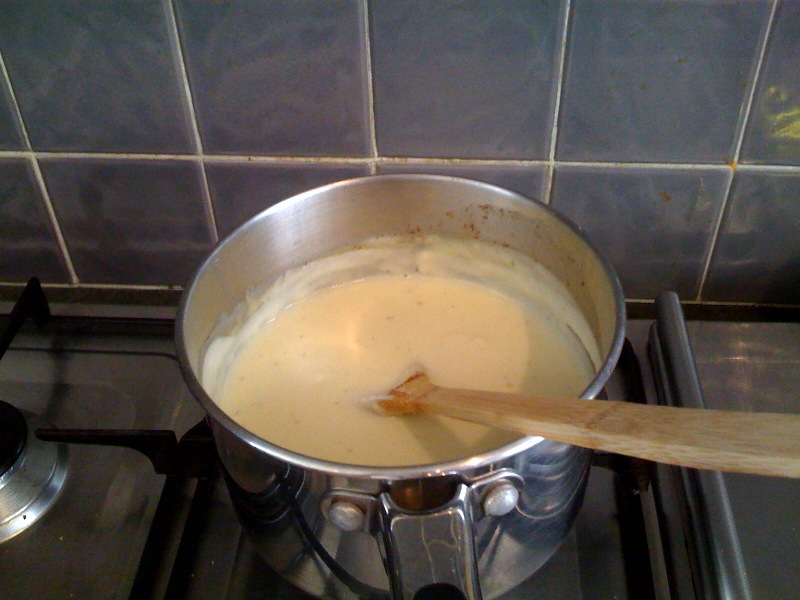
  • Gradually add the milk, whisking constantly until the sauce is thick, smooth and creamy
  • Remove from heat and add salt and nutmeg to taste

Step Four: Assembly

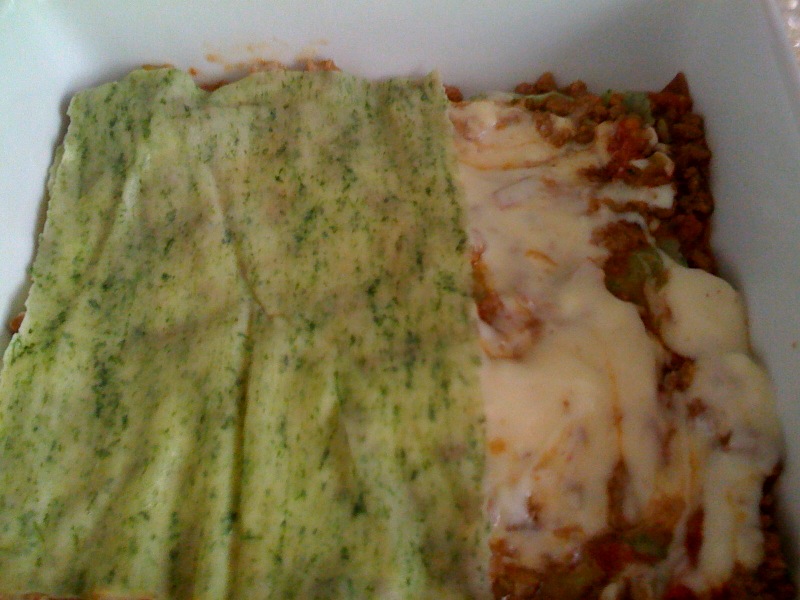
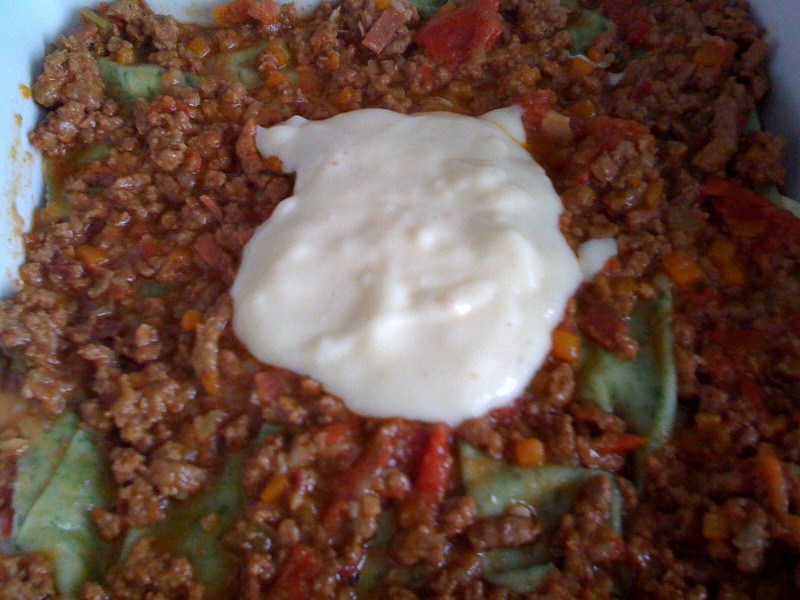
  • First spoon a layer of ragu on the serving dish
  • Lay the pasta sheets on top of the ragu then follow with another layer of ragu
  • Add a good amount of bechamel on top of the ragu and spread out evenly
  • Twice more, follow with another layer of pasta sheet, ragu and bechamel
  • You should now end with a bechamel topping. To this add the mozarella cheese
  • Bake in a pre-heated 180 degree oven for 30 minutes until golden

Enjoy!

Read Full Post »

« Newer Posts