Feeds:
Posts
Comments

Archive for November, 2009

DSC_0830

My take on Tetsuya's Signature Dish

From: Lopez, Trissa
Sent: Monday, 2 November 2009 3:43 PM
To: ‘XXXXXXX@tetsuyas.com
Subject: Query on Tetsuya Book

Dear Mr. Tetsuya,

So sorry to bother you – I have a book of yours and since I am not able to get a booking at your fabulous restaurant until next year, I wanted to try and recreate the Confit Ocean Trout at home. The recipe asks for konbu – but the konbu I found doesn’t look like it is for the recipe (ie a large sheet when I think the recipe requires a powder??).
I have been asking the Japanese shops close by if they know what this is but they said there is so many products that they don’t know where to begin.

Are you able to tell me what the konbu you are referring to? Is there a particular brand?

Kind regards

Trissa

I emailed Tetsuya. I really did! I know, my husband must be wanting to go into hiding right now. He thinks I have no shame. Truth is, he’s probably right!

Let me back up a little bit. For those that don’t know who/what is Tetsuya. Tetsuya is a three hat restaurant in Sydney owned by Tetsuya Wakuda. They have been consistently awarded the highest rating in Sydney’s Good Food Guide since 1992 and has been named one of the top restaurants in the world by S Pellegrino’s World’s 50 Best Restaurants.

While his accomplishments are many, he is a very humble man and so approachable. I still remember when I went there with my Mom about a year ago. Mr. Tetsuya went to our table and I introduced myself and my Mom to him. I told him that we had waited 3 months to get a table at his restaurant. He chatted with us awhile and then before he left he gave my Mom a piece of paper and said “Mrs. Lopez, this is for you so that you never have to wait three months again.” It was his business card with a “secret phone number” for special reservations! On top of that, on our way home they gave her a cookbook too!

Well, anyway, my Mom took the card with her and I was never able to use the “secret phone number”. So I had to try to get a booking like the rest of us mortals. However, every time I would call, I’d get told that the earliest available table on a weekend was three months or four months away…

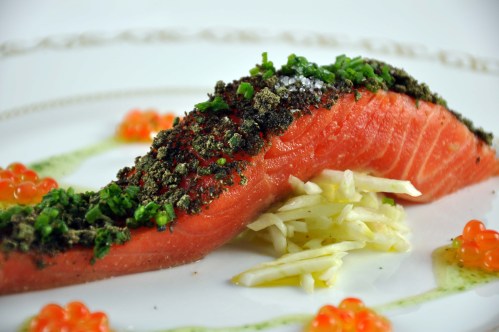
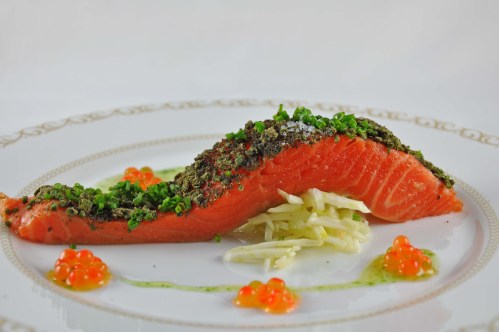
So I said to myself, if I can’t get a table, I’ll just make the dish myself. Which is why I emailed Mr. Tetsuya – I wanted to recreate the most famous dish in Australia, some say, the most photographed dish in the world. It’s not hard to see why, not only does it taste delicious, it’s a really beautiful dish. Imagine a fillet of ocean trout a top a salad of fennel, barely cooked so that it still maintains it bright orangey red colour, topped with konbu shavings and a sprinkling of chives. It is surrounded by a parsley caper oil and dots of ocean trout caviar… it’s just genius!
DSC_0789

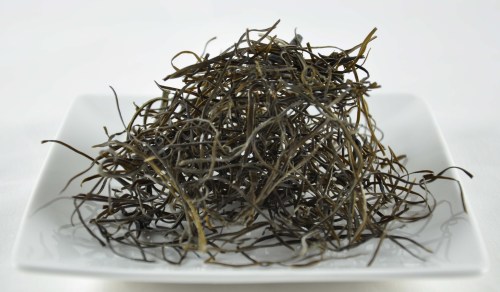
Strands of konbu

That afternoon I got a call from his personal assistant – she was kind enough to tell me that yes, it was the same konbu but they had staff that were skilled enough to cut the konbu up into tiny tiny pieces. While we were chatting I tried again, “was there a table available?” and miraculously she said yes! Did I want a lunch or dinner booking?

So that’s how I got my reservation for Tetsuya on a Saturday lunch – and that’s where the inspiration for this blog came from.

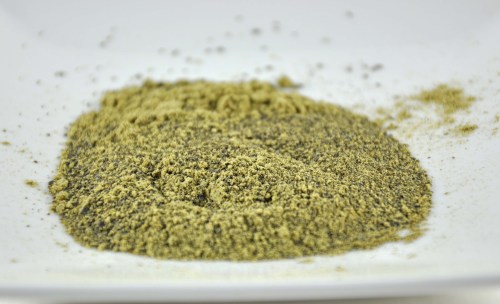
So finally, how did I deal with the konbu? Well, I bought some konbu strands (but I am sure you can use sheets to the same effect) and I ground them up with a spice grinder!
DSC_0791

Make your own konbu powder with a spice grinder!

The final result? Delicious! If I wanted to eat this dish again, there is no need for me to ask my mom for that “secret number”!

Recipe (Adapted from Tetsuya’s cookbook)

Note: The dish is so gorgeous that I initially expected it was very difficult to make. It’s not. Really. I promise. You just need a good fish monger that will fillet the fish for you…. and a spice grinder is helpful too!
DSC_0793

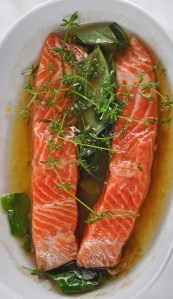
Trout is left to marinate in herbs, spices, garlic and a mixture of grapeseed and olive oil

Serves 4

  • 350 grams ocean trout (or use salmon if unavailable in your area), skinned and filleted
  • 100 ml grapeseed oil
  • 80 ml olive oil
  • 1/2 tablespoon ground coriander
  • 1/2 teaspoon white pepper
  • 10 whole basil leaves
  • 3 stalks thyme
  • 2 cloves garlic, crushed
  • 2 stalks celery, finely chopped
  • 2 small carrots, finely chopped
  • 3 tablespoons finely chopped chives
  • 4 tablespoons konbu, finely chopped (if you are not inclined to do so, grind them using a spice grinder)
  • 1/2 teaspoon salt
  • 2 tablespoons ocean trout caviar (or salmon caviar if unavailable)

Fennel Salad

  • 1/4 bulb fennel, shaved (use a mandolin for best results)
  • 1 teaspoon lemon juice
  • salt and pepper to taste
  • 1 tablespoon olive oil

Parsley Oil

  • leaved from 1/4 bunch italian/flat leaf parsley
  • 50 ml olive oil or grapeseed oil
  • 1/2 tablespoon salted capers, rinsed and drained
  1. Ask your fish monger to skin and cut the trout into four pieces. Each should not weigh more than 100 grams each. Marinate the ocean trout in the grapeseed oil, olive oil, ground coriander, pepper, basil leave, thyme stalks, and garlic.
  2. Cover with plastic wrap and rest in the refrigerator for a couple of hours (I left mine overnight).
  3. To cook the fish, preheat the oven to 65c and take the fish out and allow to come to room temperature.
  4. Then, lay the fish on a bed of celery and carrots and place in the oven. Paint the surface of the fish every few minutes with the oil marinade.
  5. Depending on the size of the fish, Tetsuya recommends this should take no longer than 7 or 8 minutes with the door of the oven open. I found that with the door closed, mine took 25 minutes before I was happy with the texture. The fish should remain pink but be be cooked enough that you can use a very sharp knife to cut all the way through the fish.
  6. Remove from the oven and let cool.
  7. To make the salad, slice the fennel on a mandolin (you can also use apples and daikon together). Toss with the lemon juice, salt and pepper and oil.
  8. To make the parsley oil, puree the parsley, olive oil and capers in a blender. Strain.
  9. To serve, plate some fennel salad on the base of the plate. Add the ocean trout and sprinkle with the konbu, chives and some salt.
  10. Drizzle the parsley oil around the edges and dot some ocean trout caviar around the trout and regular intervals.
DSC_0805

Stumble It!

Read Full Post »

kulinyara_v3

Kulinarya was started by a group of Filipino foodies living in Sydney, who are passionate about the Filipino culture and its colourful cuisine.

Each month we will showcase a new dish along with their family recipes. By sharing these recipes, we hope you find the same passion and love for Filipino Food as we do.

If you’re interested in joining our Kulinarya Cooking Club, please feel free to drop by our foodblogs and leave a comment – we would love to hear from you!

Trissa, Kath and Trish

DSC_0898_edited-1

Our first post: Turon!!

I’m so excited to share with you this month’s recipe for the Kulinarya Cooking Club.  But first, let me share with you a little bit about this project.  Kath, Trish and I wanted to start a blog/club that focused on Filipino cooking.  This was our way to promote the cuisine and practice our cooking skills.   Every month, we decide on a dish to feature and a date when to post – and that’s it!  We get to pick our own recipe so that we get to show you all the different ways a dish can be prepared, especially when you put your own stamp on it!

If you are Filipino (or not!) and want to further your cooking skills then drop us a line and join us on this culinary journey!

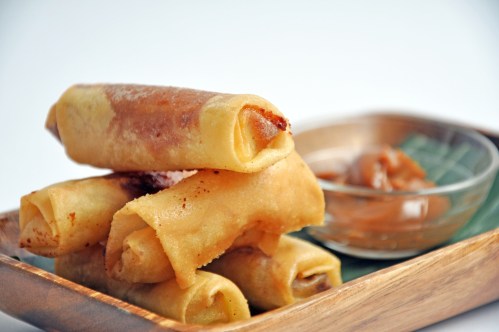
DSC_0878_edited-1

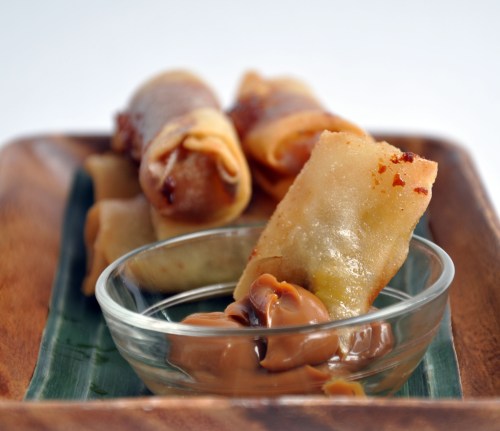
Delicious with some cold dulce de leche!

Recipe

  • Lumpia wrappers (spring roll)
  • Bananas (usually cooking bananas are used, but not imperative)
  • Sugar
  • Oil for frying

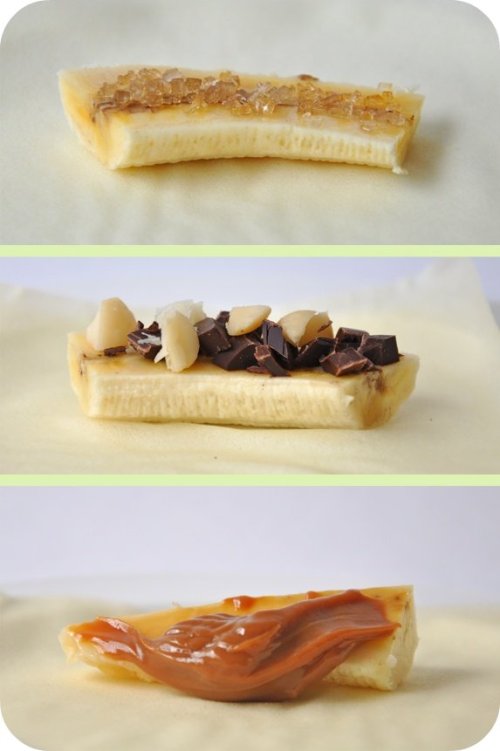
Alternative fillings to add to the bananas

  • Brown sugar
  • Chocolate and Macadamia
  • Dulce de leche
4084949920_d8a250d3ec_o

Let your imagination go wild with the fillings!

  1. Slice the bananas into a size, slightly smaller the the spring roll (also known as lumpia) wrappers.
  2. Using a pastry brush, wet the sides of the spring roll wrapper
  3. Roll the bananas in a cylinder shape and seal the edge with a little more water
  4. Deep fry at 180c for around 2 to 3 minutes until golden brown
  5. Serve immediately.

Note – it’s great with some ice cream or dulce de leche as a “dipping” sauce!

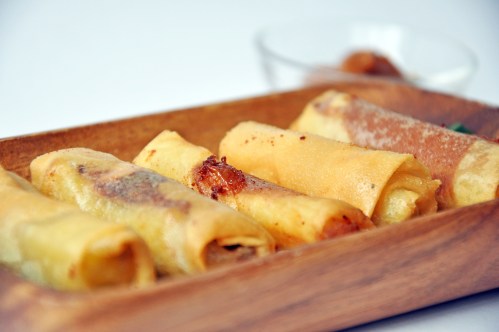
DSC_0901

Great with some dulce de leche...

Stumble It!

Read Full Post »

DSC_0770

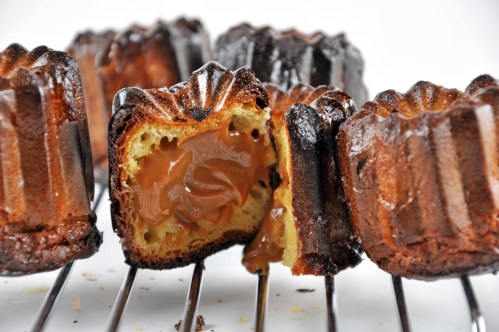
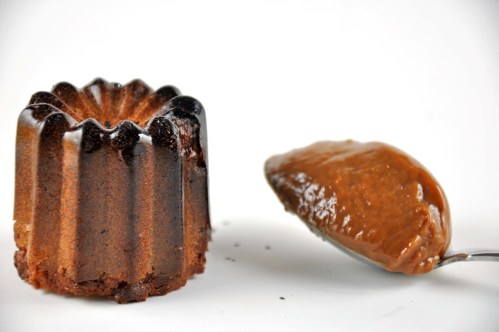
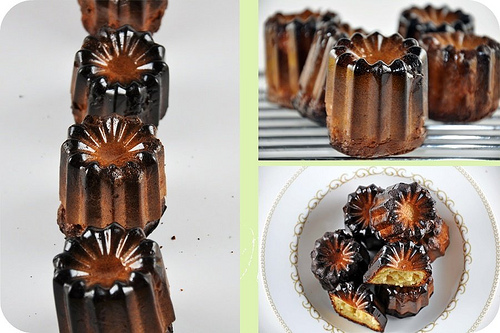
Canele stuffed with Confiture au Lait

Give me a canele over a macaron any day… that’s what I say.  To me, this is the ultimate French treat.  I just love it.  If you haven’t tried one yet, I suggest you hunt them down.  In the absence of a bakery that sells authentic caneles, you can make them yourself!

The great cookbook author, Ms. Paula Wolfert, describes it as a cake with a custardy interior enclosed by a thin caramelized shell.  If you want to read more about this fantastic treat, check out this site.  Some claim that the canele is very difficult to make, I say, the hardest part is waiting the 48 hours (to allow the ingredients to fully incorporate) before you can actually eat them!

So what happens when the Canele de Bordeaux meets the Confiture de Lait?  Why of course, you get a twinkie!  If you haven’t heard of a twinkie, it is a popular cake in the United States with a creamy filling.  This, of course, is the very posh version.

The recipe for the Canele de Bordeaux was taken from website of Paula Wolfert (see above) and the recipe I used for the Confiture de Lait can be found on the website of David Lebovitz.

For the Caneles the traditional method is to use a copper mold, which unfortunately, are very expensive.  However, you can get silicone molds which work just fine.

DSC_0731

"Unbeatable combination!

Recipe

  • 2 cups whole milk
  • 4 egg yolks
  • 75 grams butter
  • 100 grams sugar
  • 100 grams flour
  • 1 tablespoon dark rum
  • 1 teaspoon vanilla extract
  • pinch of salt
DSC_0712

The perfect tea time treat!

  1. Rinse a heavy based saucepan with cold water.  Then add the milk and heat the milk to 83 c.
  2. Place the butter, flour, sugar, and salt in the bowl of a food processor, pulse until combined.
  3. Add the egg yolks, and continue to process.
  4. With the motor running, steadily add the milk and then strain through a fine sieve into another container.  Stir in the rum and the vanilla.  Cool to room temperature and cover with a plastic wrap.  Refrigerate between 48 to 72 hours.
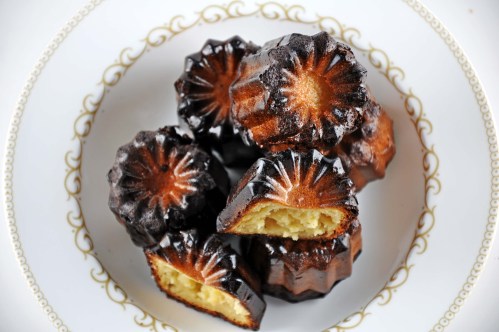
  5. When ready to bake, pre-heat the over to 190c (fan forced).  Stir the batter gently and then pour the canele mixture into the molds and bake for 1 hour and 15 minutes. The caneles should be a deep brown colour, almost black.
  6. When done, remove from the oven and unmold as quickly as possible and cool on cooling racks.
4080267408_3a089a4d3a

Caneles de Bordeaux

To stuff the canele with the confiture au lait, fill a piping bag with a small tip with the confiture au lait.  Inject the mixture into the canele from the bottom, about 1 tablespoon each.

Read Full Post »

DSC_0638

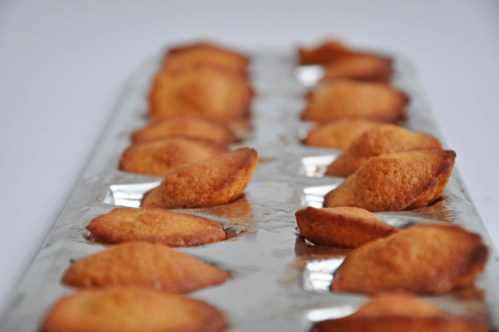
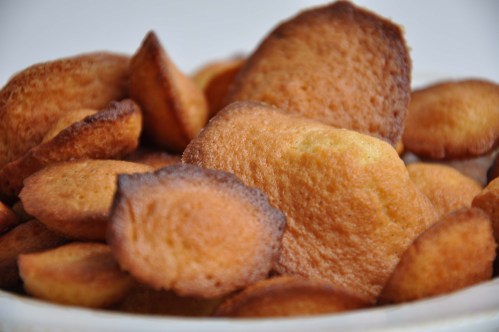
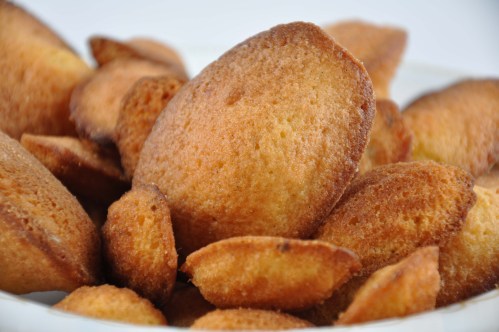
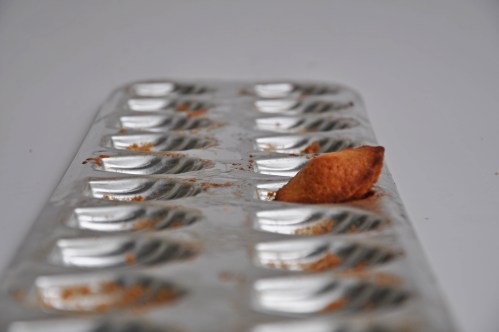
Lemon and Lime Madeleines

In the world of blogging, it amazes me to find so many people willing to share their time and knowledge with you.  Instead of one gigantic “self-help” group – it’s one big “food-help” group.

For instance, there is the Daring Bakers where a group of bakers get together each month to tackle a certain recipe.  Being a part of this group has allowed me to tackle some recipes I would have never tried on my own.

When I first started my blog, Kath from A Cupcake or Two organized a blogger dinner  and was kind enough to invite me.  She, along with Lorraine from Not Quite Nigella, Betty from Betty’s Bites, Trish from Sugarlace and Ellie from Almost Bourdain all gave me tips on how to improve my blogging “skills” when I first started.

Most recently, I was struggling with the fact that almost every blog I read and person I spoke to mentioned that the best way to take pictures was to use “natural light”.  Yeah right – try getting natural light when you work during the day – it’s almost impossible!  I noticed I tended to then stick to recipes that I could store for future photos – like cakes, cookies or other sweets.

And, how many of you have struggled with cooking  early in the morning just to take a photo of it and then having to go to work before 8 am!

I needed to find a way to take the pictures at night!

Simone from Junglefrog Cooking to the rescue!  Have you seen her blog?  If there is any doubt as to why I trust her completely on food picture advice – just go check out her blog.  Her pictures are gorgeous (and so are her recipes!).  She suggested I try the Lowel Ego lights which she had heard great things about.  I did a few searches on google as well and found a post from Steamy Kitchen which was very helpful.

1

Was this taken at night using the lowel ego lights?

2

Or was this taken at night using the lowel ego lights?

So this post is a small thank you to everyone!  Merci, grazie, gracias, salamat!

Recipe

  • 2 large eggs
  • 100 grams sugar
  • 80 grams butter, melted  and cooled
  • 100 grams flour
  • 1 teaspoon baking powder
  • grated zest of 1 lemon and 1 lime
  • 1 teaspoon each of lemon juice and lime juice
  • 1/2 teaspoon vanilla extract
  1. In a bowl, whisk the sugar and the eggs until frothy.  Slowly add the butter and incorporate very well.
  2. Add the flour, baking powder, lemon and lime zest, lemon and lime juice and vanilla extract
  3. Cover the bowl with plastic wrap and refrigerate at least 1 hour before baking.
  4. Butter your madeleine pans (I used a combination of tiny and regular sized pans)
  5. Spoon the batter into the pans until three quarters full and place the pans in the freezer for 10 minutes
  6. Pre-heat the oven to 190c (fan forced)
  7. When the 10 minutes is up, bake the madeleines (small for 10 minutes and large for 13) for the required time.
  8. Remove from oven and cool.
  9. Best served immediately but can also be stored in an airtight container for a few days.

DSC_0658

Read Full Post »

DSC_0608

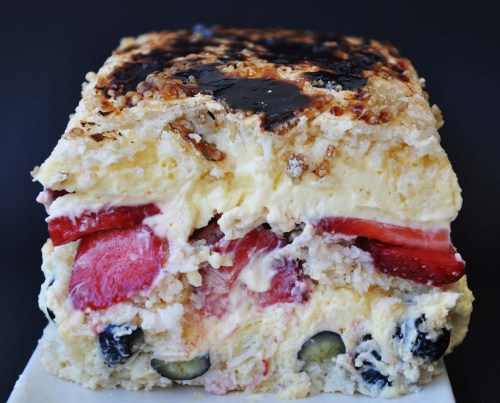
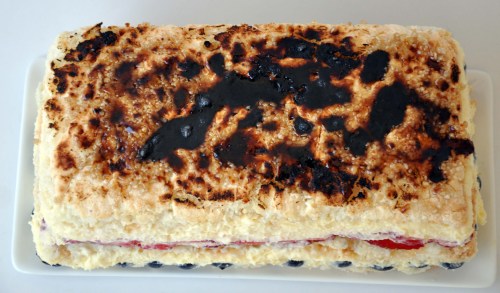
Berry, Mascarpone and Coconut Cake

One great thing about having a blog is that it pushes you to try out new recipes that you would never have tried otherwise. My attitude nowadays has evolved from “Why make it, when you can buy it” to “Why buy it, when you can make it”.

Take this Berry, Mascarpone and Coconut Cake I made over the weekend.  It is one of my favourite (I know, everything seems to be “one of my favourite”) desserts. Every weekend my husband and I pick up a rustic sourdough from Victoire in Balmain and on special occasions, the strawberry mascarpone coconut cake.

DSC_0558

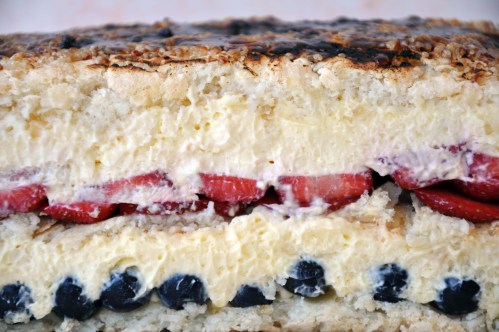
Layers of summery goodness!

It is a layered cake of coconut dacquoise, strawberries and a mascarpone cream. In my version, I took advantage of the fact that blueberries were in season and added that to a layer as well.

Recipe (Serves 8 to 10)

Equipment:

  • Jelly Roll Pan measuring 38cm by 24cm
  • Loaf Tin measuring around 23cm by 10cm

Ingredients for the Coconut Dacquoise

  • 6 egg whites
  • 70 grams caster sugar
  • 100 grams shredded coconut
  • 80 grams desiccated coconut
  • 150 grams icing sugar, sifted

Ingredients for Mascarpone Mixture

  • 500 grams mascarpone
  • 50 grams caster sugar
  • 2 eggs, separated
  • 25 grams caster sugar

DSC_0517

To Prepare the Dacquoise

  1. Grease and line with baking paper the jelly roll pan.
  2. Pre heat the oven to 130C.
  3. In a bowl, mix the coconuts and the icing sugar.
  4. Whisk the egg whites and when you start to see soft peaks, slowly add the caster sugar and whisk until firm peaks.  Add the coconut mixture.
  5. Spread on to the jelly roll and bake in a fan forced oven (increase the heat by 30C if using non-fan forced oven) at 130C for 35 minutes.
  6. Remove from oven and allow to cool in a cooling rack.

DSC_0520

For the Mascarpone Mixture:

  1. Whisk the egg whites until soft peaks and then add the 25 grams of caster sugar.
  2. In a separate bowl, whisk the egg yolks, mascarpone and 50 grams of sugar until firm.
  3. Incorporate the two mixtures by folding the egg whites into the mascarpone mixture.

Pic1

To Assemble: 250 grams fresh strawberries and 250 grams fresh blueberries and brown sugar for dusting.

  1. Slice the strawberries and cut the blueberries in half.  Save a few whole blueberries for the edges of the cake.
  2. Cut the coconut dacquoise into three parts so that each will fit into the loaf tin.
  3. Layer the tin with plastic wrap so that the edges are sticking out.  You will want at least 5cm of plastic that sticks out because you will use it to wrap the cake.
  4. Place a layer of dacquoise  on the tin and cover with 1/2 of the mascarpone mixture and then the strawberries.
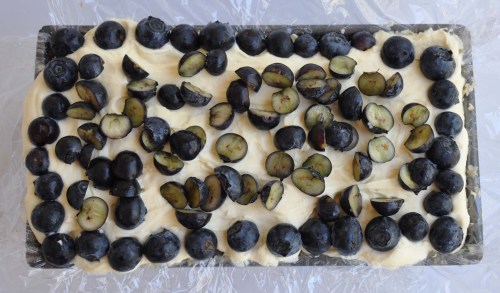
  5. Place a second layer of dacquoise over this and cover with the rest of the mascarpone mixture and the blueberries.
  6. Top with a final layer of dacquoise and cover with the plastic wrap.
  7. Refrigerate overnight before dusting with brown sugar and caramelizing the top with a blowtorch.

DSC_0528

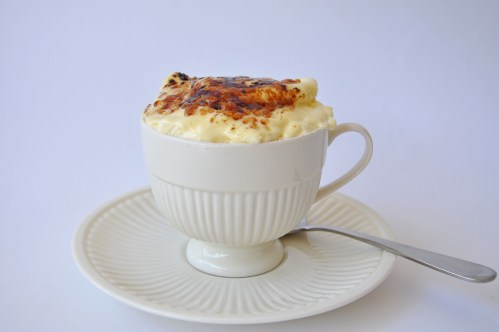
Alternatively, you can layer the dessert in a tea cup as well!

DSC_0019

Looks good served in tea cups too!

Read Full Post »

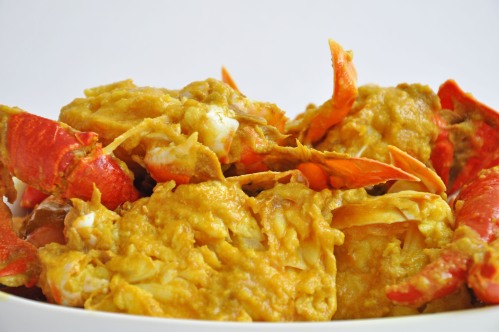
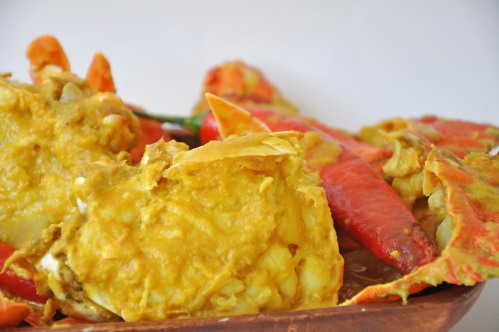
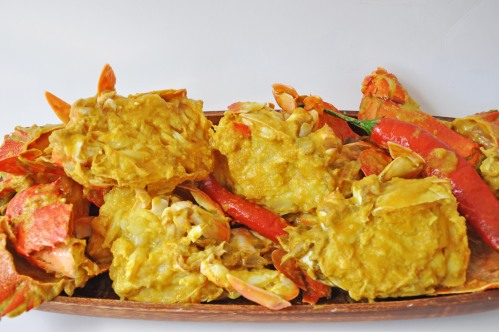
Spanner Crab with Roasted Coconut Gravy

Spanner Crab with Roasted Coconut Gravy

Having a severe case of homesickness over the weekend, I decided to attempt re-create one of my favourite Philippine Dishes.  Crabs with “Alavar Sauce” .  I am sure that outside the Philippines there aren’t many people familiar with the Alavar sauce.  Some bloggers have referred to it previously, here and here.   It’s a thick coconut gravy made with (I believe) roasted coconut milk and “secret” spices.

The recipe for this sauce is even more guarded than any national security secret so it was difficult to know where to begin recreating it.  I decided to keep it simple and stick with the basic ingredients found in most Philippine cuisine – of course there was the “holy trinity” – onion, garlic and ginger and then coconut milk.  Not just any coconut milk, but it had to be made from roasted coconut.  And from there I added a few bits and pieces and came up with something pretty close -not yet there but just as delicious!

DSC_0470

My version of "Alavar"

Note: For this recipe I made my own roasted coconut milk.  Halfway through the process, I found myself muttering that I would never do it again.  If you find the process below too tedious, don’t do it.  Simply substitute with 250 ml coconut milk.  But trust me, it is well worth it.

Procedure for Roasted Coconut Milk: It was a bit of a struggle because you first have to crack open a mature coconut (we call it niyog  in the Philippines, it is the one with the brown outer shell).  Once open you then have to crack the coconut down even further by placing it in a plastic bag, covering it with a tea towel and bashing as hard as you can with a hammer.  Then, you have to try and pry the coconut pieces away from the shell (I used a sharp knife but I really would not recommend it because you can easily get hurt and I have battle scars on my hands to prove it).  Once you have your meat, grind it through a food processor until coarsely ground and then toast over a pan, stirring constantly until it  begins to release a fragrant coconut smell and starts to turn golden brown.

Return the toasted coconut to the food processor and add around 1 cup of hot water and grind until very fine.   Place a sieve covered with a muslin over a bowl and pour the coconut on the sieve.  Squeeze the muslin to extract as much milk as possible.  This is called the roasted coconut milk.

DSC_0467

Recipe (serves 2)

  • 2 spanner crabs, cleaned
  • 2 tablespoons vegetable oil
  • 1 large onion, finely chopped
  • 2 tablespoons crushed ginger
  • 2 tablespoons crushed garlic
  • 1 1/2 teaspoons ground turmeric
  • 2 large red chilies, chopped
  • 250 ml roasted coconut milk
  • 250 ml canned coconut milk
  • salt and pepper to taste
  1. Heat the oil and saute the onions over medium heat until translucent and soft, around 10 minutes.  Add the ginger and garlic and saute until fragrant, a minute or two.
  2. Then add the turmeric and fresh chilies.  Add the roasted coconut milk (if using, otherwise, add a total of 500 ml regular coconut milk) and season to taste.
  3. For a smoother sauce, blend using a hand held stick blender.  This is optional.
  4. Lastly, add the spanner crabs and cook for around 7 to 10 minutes until the crab meat is cooked through.

Read Full Post »

« Newer Posts