Feeds:
Posts
Comments

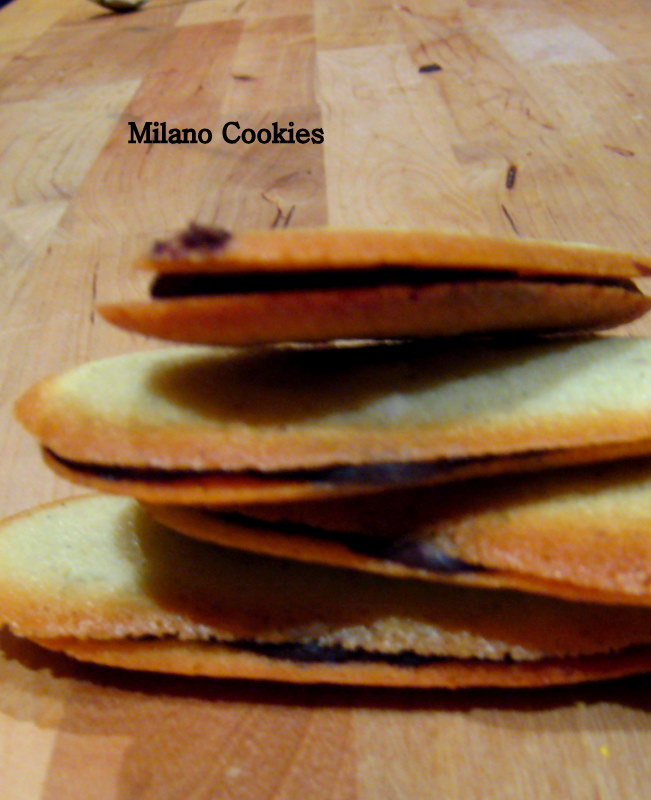
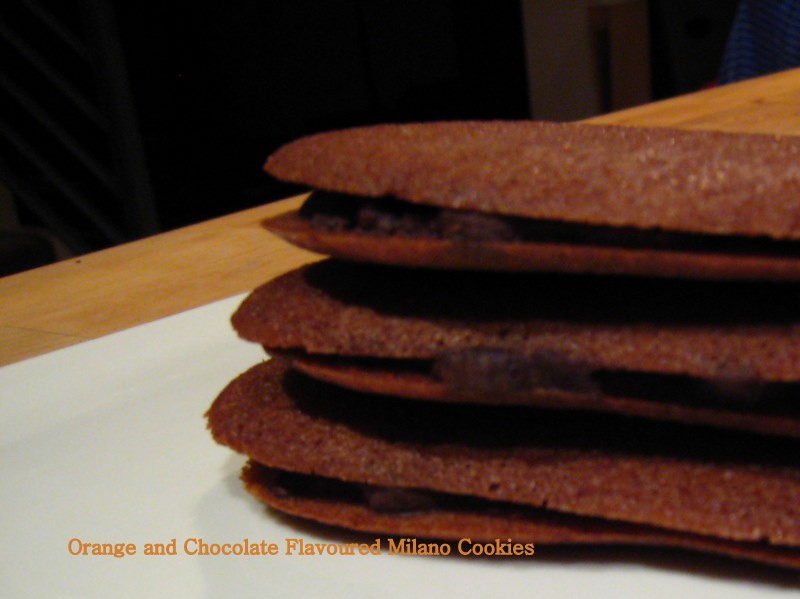
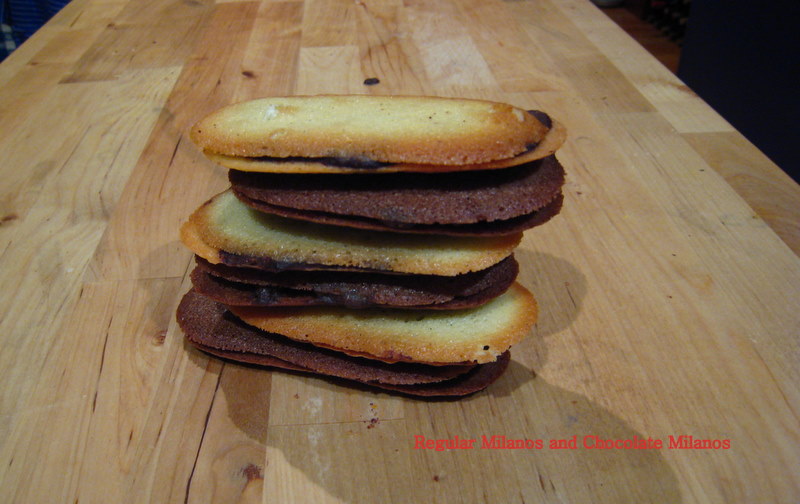
Milano Cookies


The July Daring Bakers’ challenge was hosted by Nicole at Sweet Tooth. She chose Chocolate Covered Marshmallow Cookies and Milan Cookies from pastry chef Gale Gand of the Food Network.


Prep Time: 20 min
Inactive Prep Time: 0 min
Cook Time: 1 hr 0 min
Serves: about 3 dozen cookies

• 12 tablespoons (170grams/ 6 oz) unsalted butter, softened
• 2 1/2 cups (312.5 grams/ 11.02 oz) powdered sugar
• 6 egg whites
• 2 tablespoons vanilla extract
• 2 tablespoons lemon extract
• 1 1/2 cups (187.5grams/ 6.61 oz) all purpose flour
• Cookie filling, recipe follows

Cookie filling:
• 1/2 cup heavy cream
• 8 ounces semisweet chocolate, chopped
• 1 orange, zested


1. In a mixer with paddle attachment cream the butter and the sugar.
2. Add the egg whites gradually and then mix in the vanilla and lemon extracts.
3. Add the flour and mix until just well mixed.
4. With a small (1/4-inch) plain tip, pipe 1-inch sections of batter onto a parchment-lined sheet pan, spacing them 2 inches apart as they spread.
5. Bake in a preheated 350 degree oven for 10 minutes or until light golden brown around the edges. Let cool on the pan.
6. While waiting for the cookies to cool, in a small saucepan over medium flame, scald cream.
7. Pour hot cream over chocolate in a bowl, whisk to melt chocolate, add zest and blend well.
8. Set aside to cool (the mixture will thicken as it cools).
9. Spread a thin amount of the filling onto the flat side of a cookie while the filling is still soft and press the flat side of a second cookie on top.
10. Repeat with the remainder of the cookies.

Deluxe Brownies

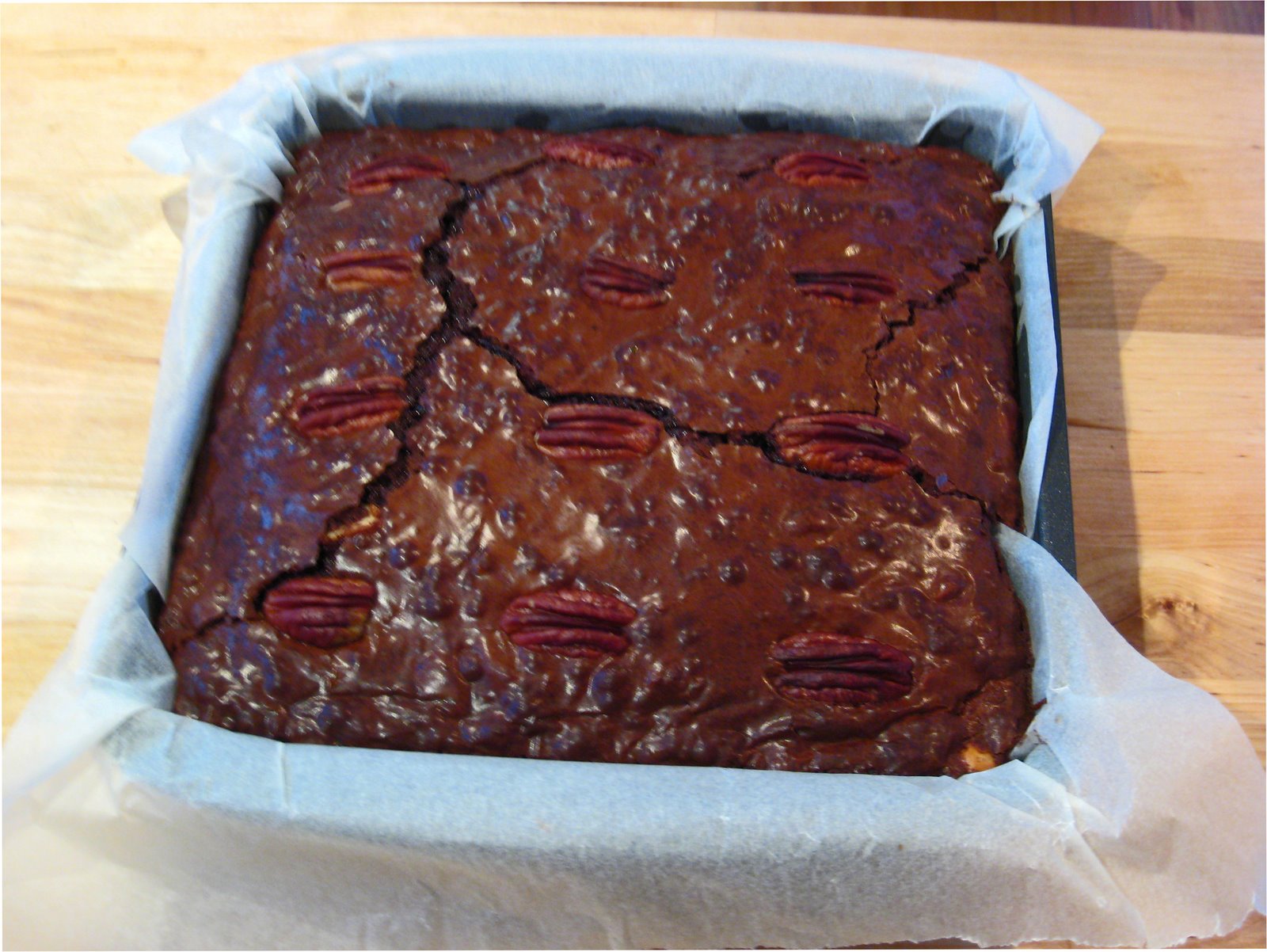
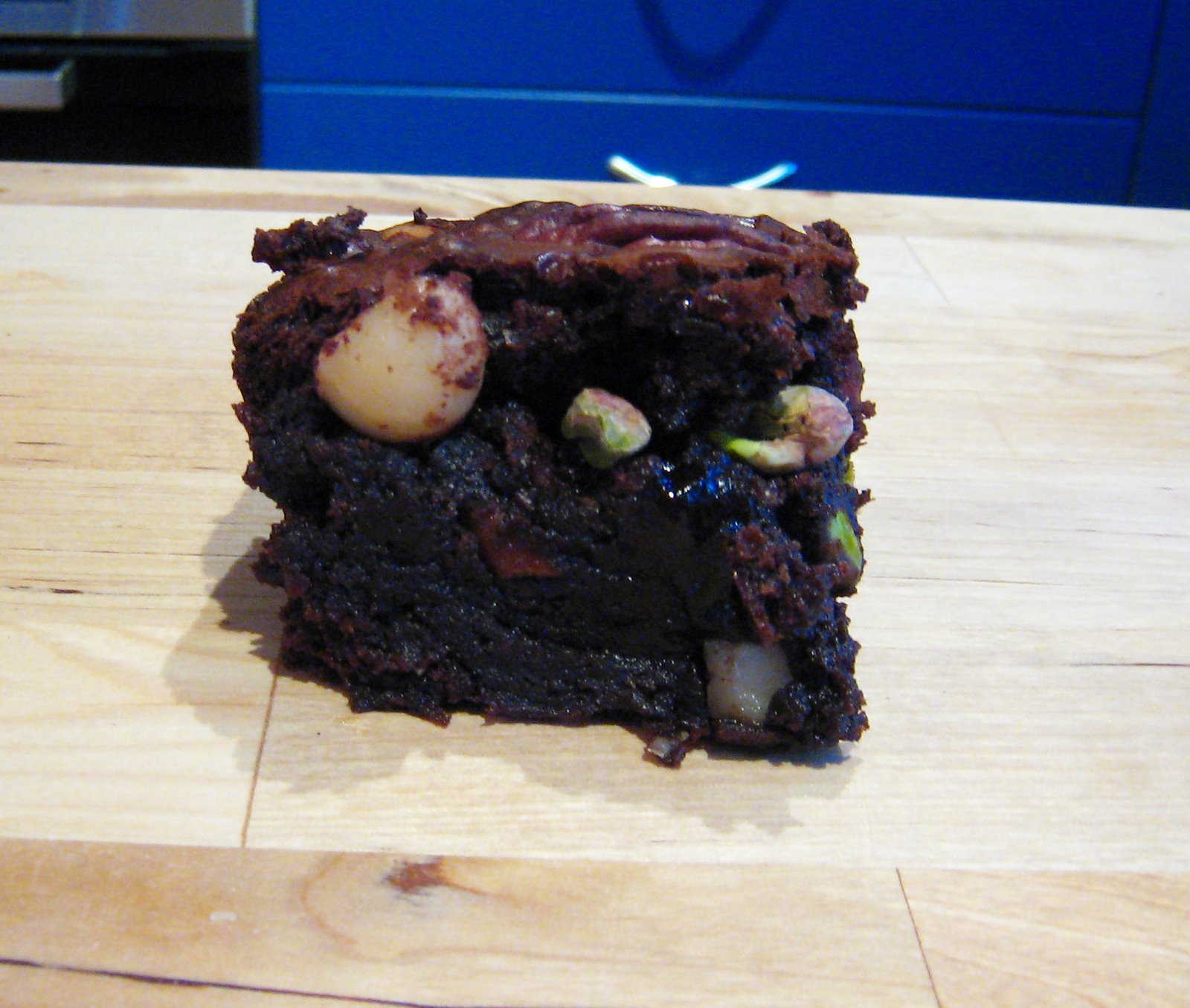
If there had to be one recipe in everyone’s repertoire, I would say it would have to be the humble brownie. It’s a dessert that is sure to please both young and old. Here is my version which has been tested by myself and my two other sisters. You are all very lucky that I can share it with you. My sister was initially reluctant to part with this top secret family recipe but I managed to get her approval to post it. It meets all the qualities I look for in a deluxe brownie.

1. It’s easy to make – start to finish takes me less than 1 hour.
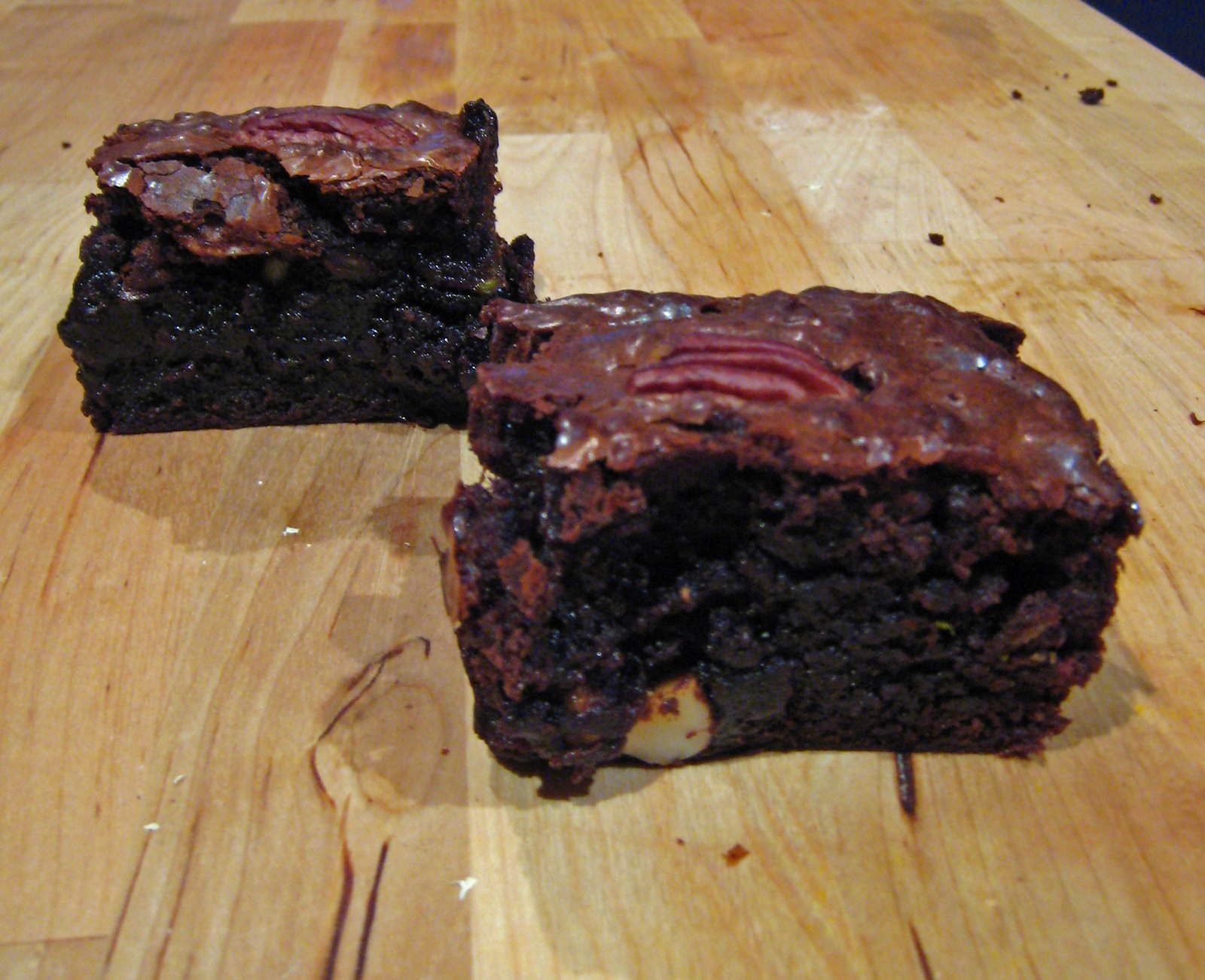
2. It has the consistency of a molten chocolate cake – we slightly underbake the cake so that the centre is slightly wobbly. You are normally supposed to let the brownie rest until cool before cutting but once I couldn’t wait and was pleasantly surprised to see the slice I got collapsing as the chocolate centre started oozing out.


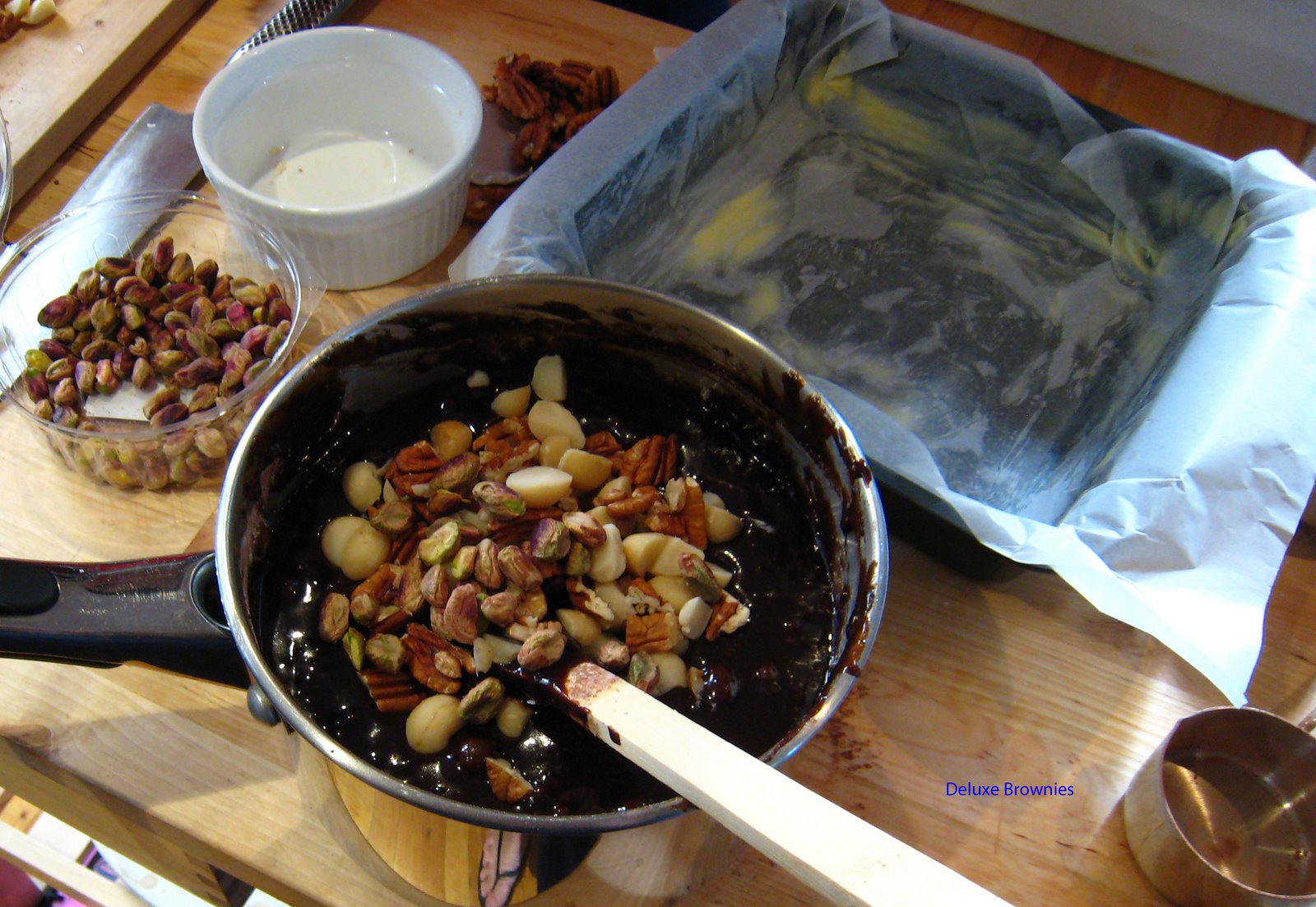
3. It’s loaded with nuts – we used three different nuts to make these brownies so you’ve got added texture to the end product and I find that the nuts somehow cut into the sweetness of the brownies – my particular favorite was pistachio!


4. It’s flexible – if you don’t like nuts, remove it, you can use dried fruit instead (I love it with dried cranberries and pistachios). If you want a pure chocolate indulgent dessert, leave out the nuts. If you want a pick me up, add a bit of esspresso (I find that 2 tablespoons is enough for this recipe). Go crazy!!


Recipe
230 grams butter, melted
20 grams butter, melted for greasing the brownie pan
1 1/3 cups sugar
4 eggs
1 1/2 cups dark chocolate, chopped into pieces
1 cup flour
1/3 cup cocoa powder
1 1/2 cups nuts (we used pistachio, macadamia and pecan)

Preheat oven to 180C.

Melt butter and remove from the heat. In a bowl, add the melted butter to the sugar. Add the whisked eggs then the dark chocolate. Add the flour and cocoa powder and gently mix.


Finally, add the nuts.

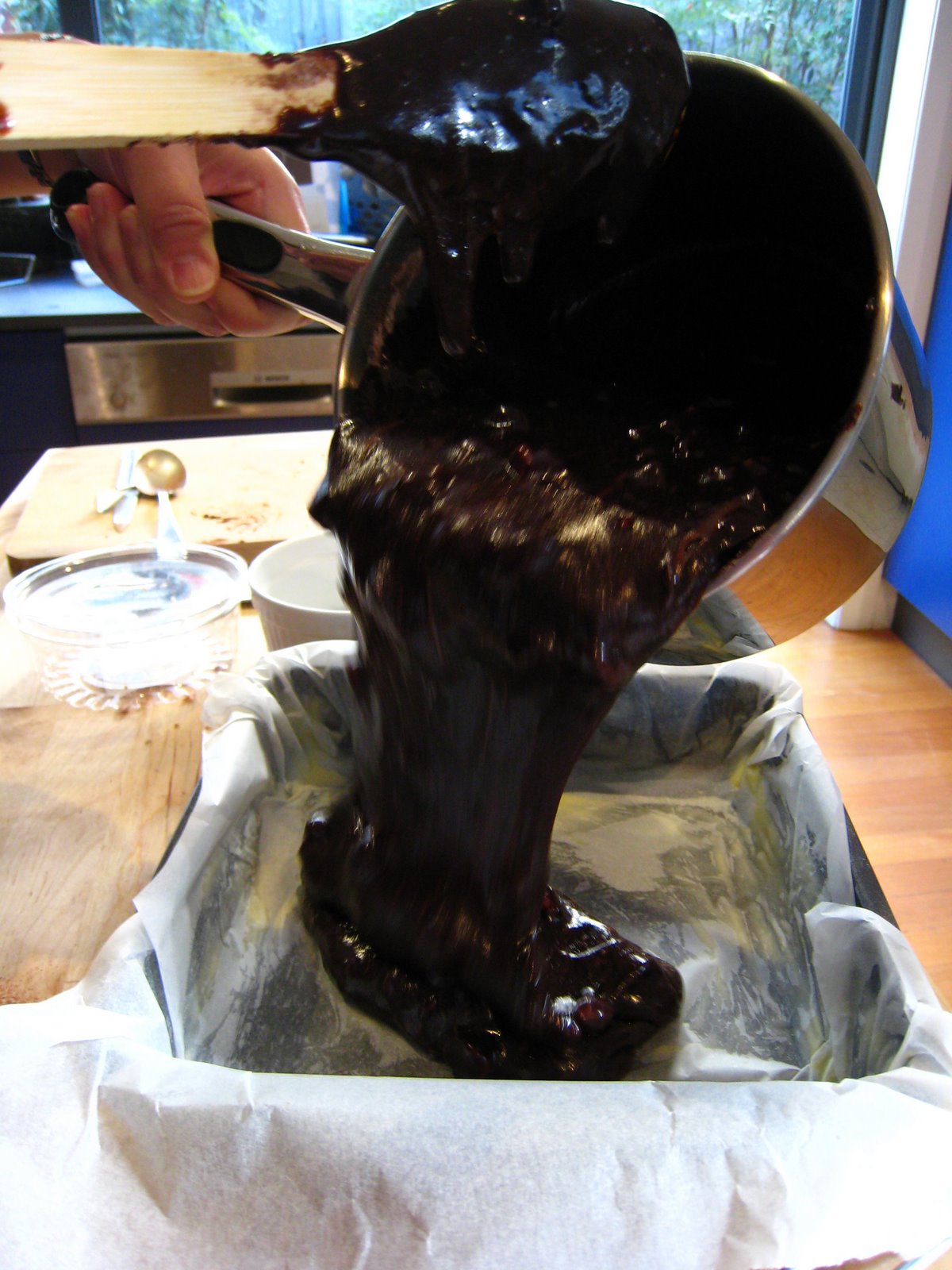
Pour the brownie mixture into a buttered pan that measures 20cm by 20cm.

Bake in the over for 40 to 50 minutes. Cool to room temperature before slicing.

The ensaimada has its origins from Mallorca, Spain’s largest island. This version is rolled into a tube and then coiled into a spiral shape. The Mallorcans take their ensaimadas seriously. There is even a regulatory council and a sampling committee that ensure that the “Ensaimada de Mallorca” meet certain controls and guidelines.

While the brioche has its origins in Rome, the French have perfected the art of this rich roll. The core ingredients of a brioche are flour, eggs, butter, milk, sugar, and yeast. When done properly, a brioche is light, buttery and really more a pastry than a bread.

The Philippine Ensaimada got its origins from the Spanish but has similarities as well to the brioche.

But I have my own version of how the Philippine Ensaimada began. I like to think three bakers, a Frenchman, Spaniard and Filipino were sitting around one day and decided to have a bread baking contest.

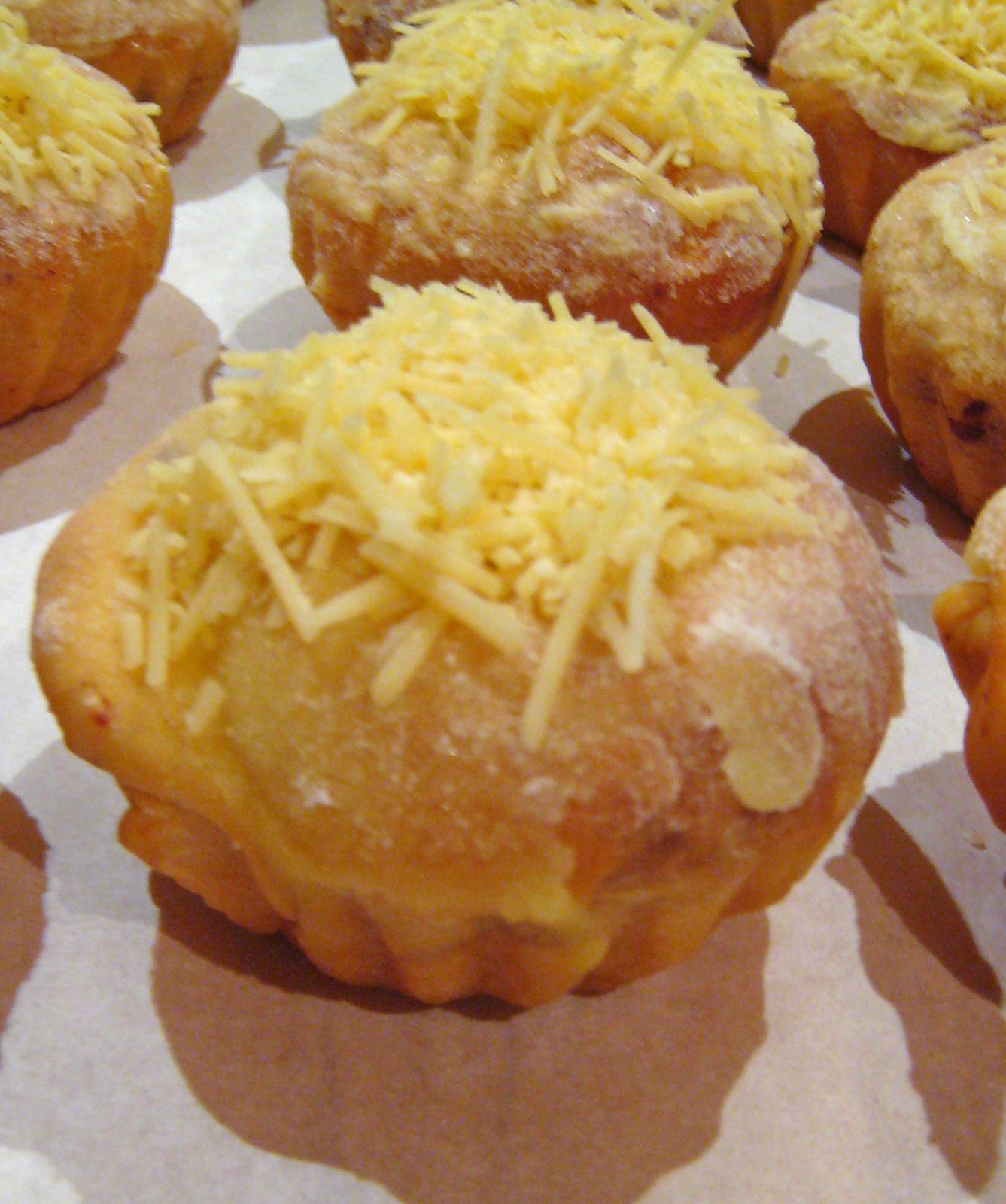
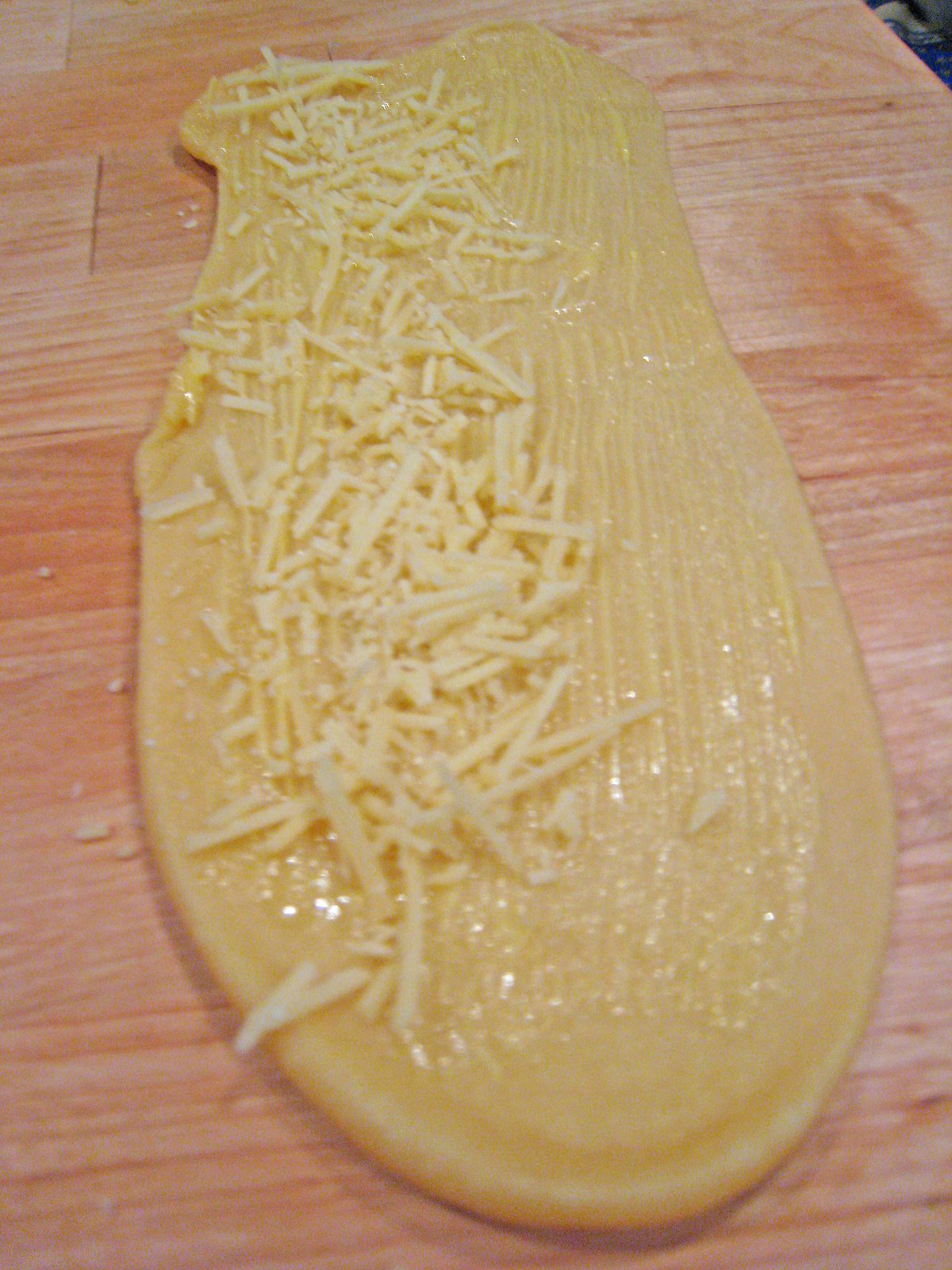
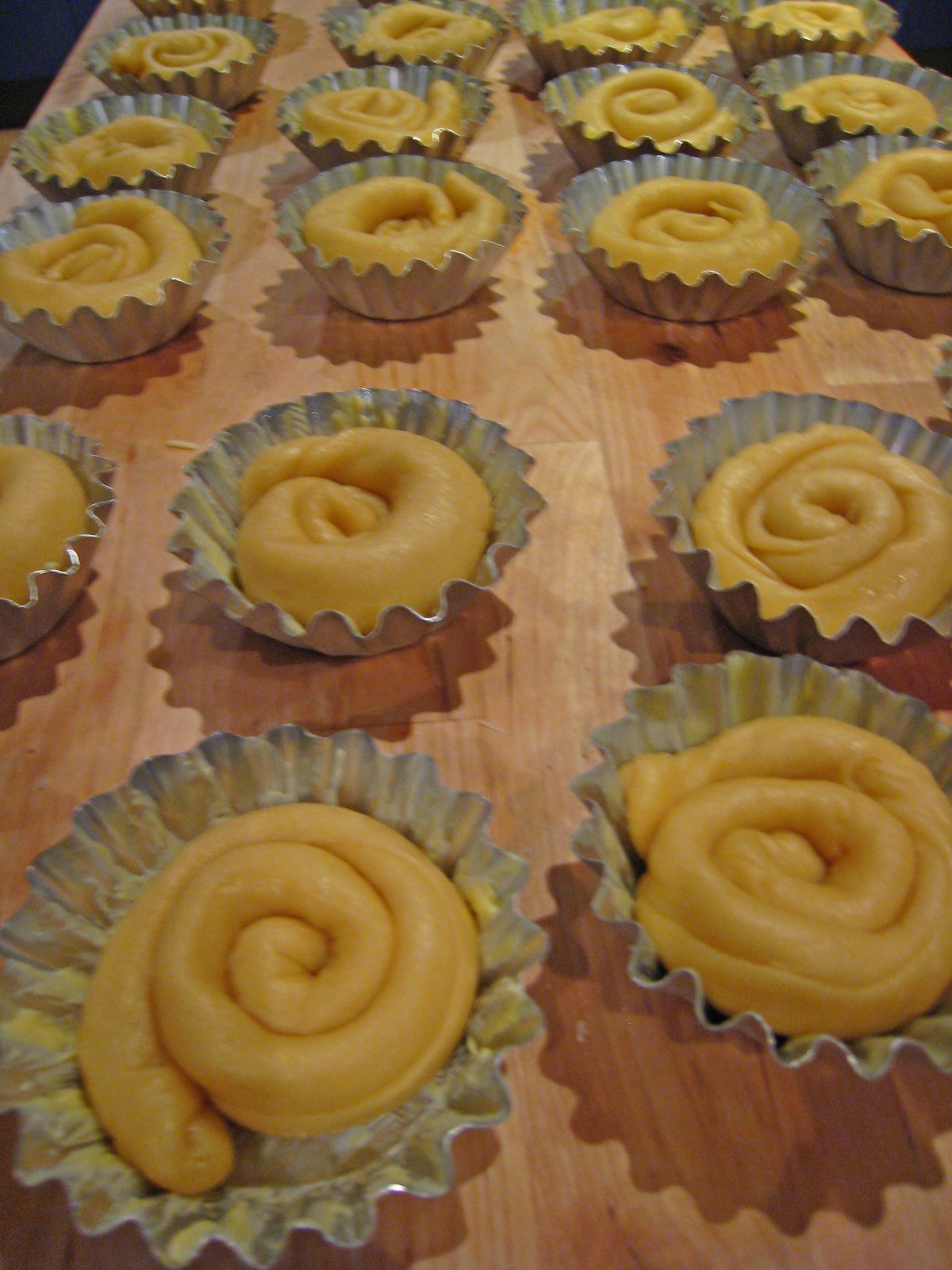
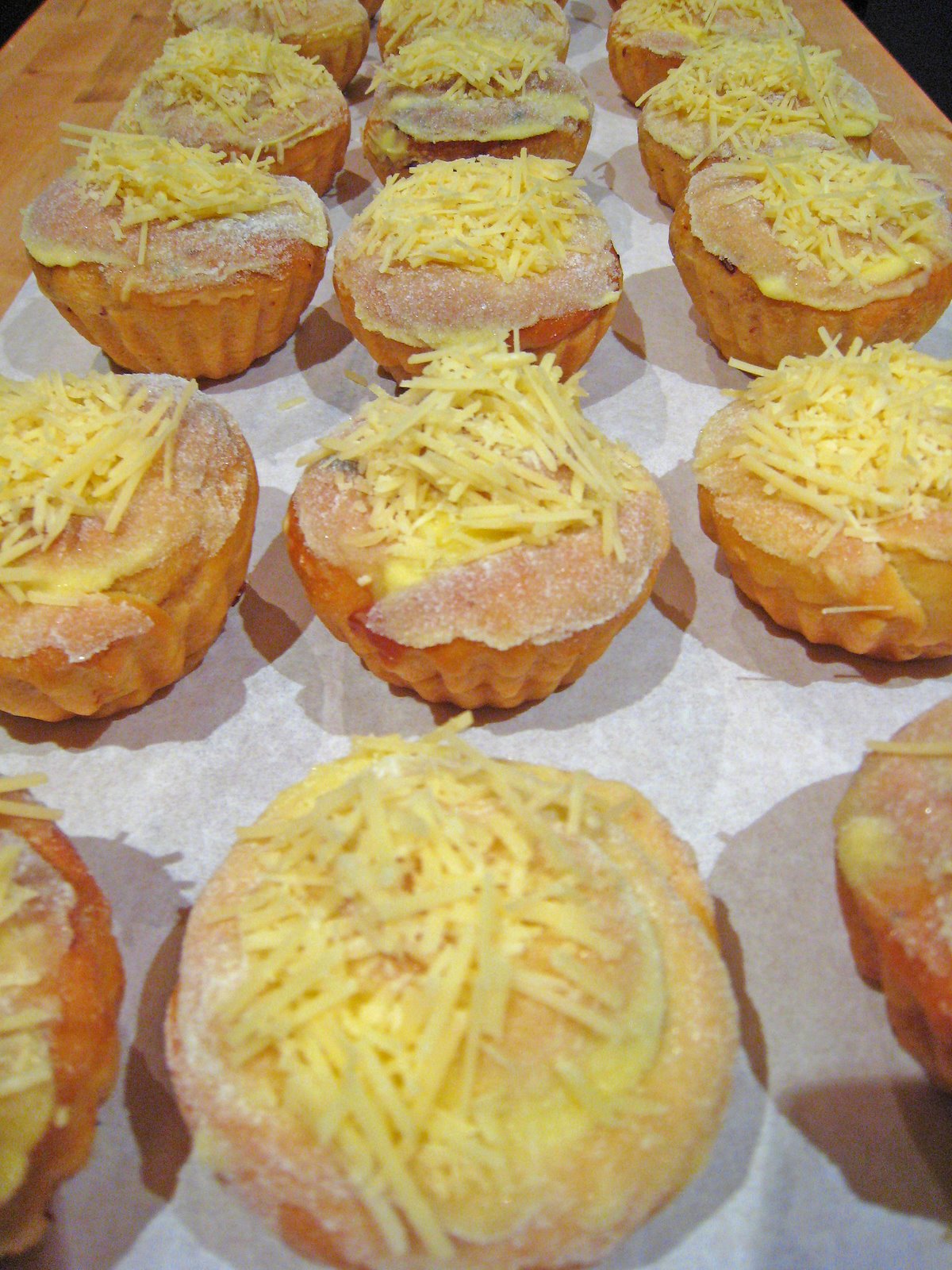
The Spaniard went first and his version was made with flour, water, sugar, eggs, pork lard and yeast. The Frenchman, not wanting to be outdone, decided to enrich the roll and replaced the water with some milk and the pork lard with butter. The Filipino baker went even further. He used the Frenchman’s dough and added some cheese before rolling it like a jelly roll and then into a spiral shape before baking. After baking, the baker topped the resulting roll with butter, sugar and even more cheese!
Guess who won?!?!

Recipe for 12 Ensaimadas

2 tsp sugar

2 tsp dried yeast

1/3 cup warm water

1/4 cup egg yolks (around 3 egg yolks)

1/3 cup sugar

2 1/2 tablespoons milk

2 1/4 cup all purpose flour

1/3 cup butter for the dough and another 1/3 cup for brushing

1/3 salt

1/3 cup parmesan cheese

  • Dissolve sugar and yeast in warm water, let stand for 10 minutes
  • Blend egg yolks, sugar and milk and add to the yeast mixture
  • Add the flour and salt then knead and add the butter a little at a time
  • Leave in a warm place and let rise until double in size.
  • Punch down and divide into 12 pieces.  Form each piece into a ball and then roll out to 1/8 inch thickness
  • Brush each with soft butter and and sprinkle with grated cheese (I used parmesan)
  • Let rise for another hour and bake at 300F for 12 to 15 minutes
  • When done, cool and brush tops with more butter and sprinkle with more grated cheese and sugar

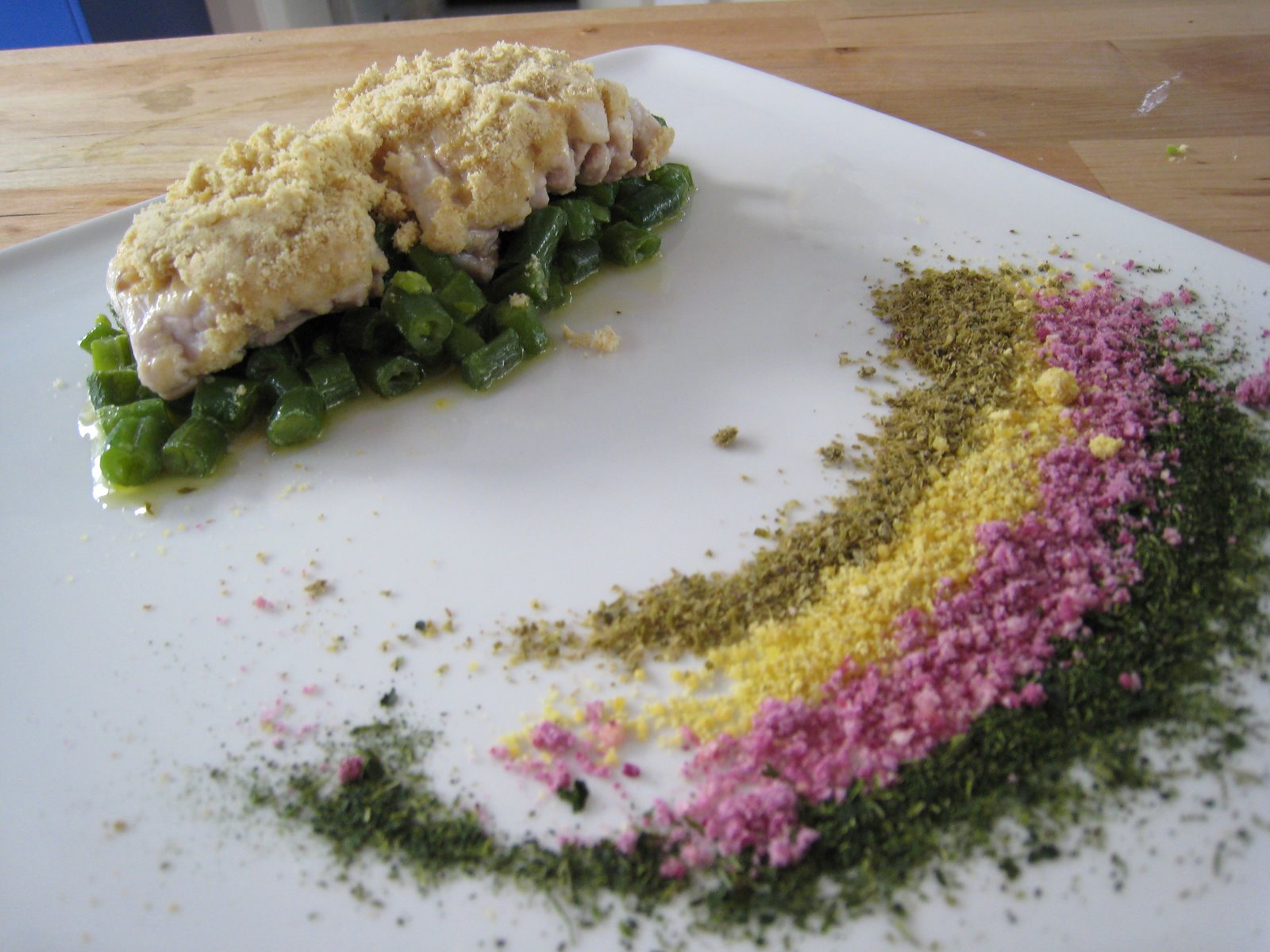
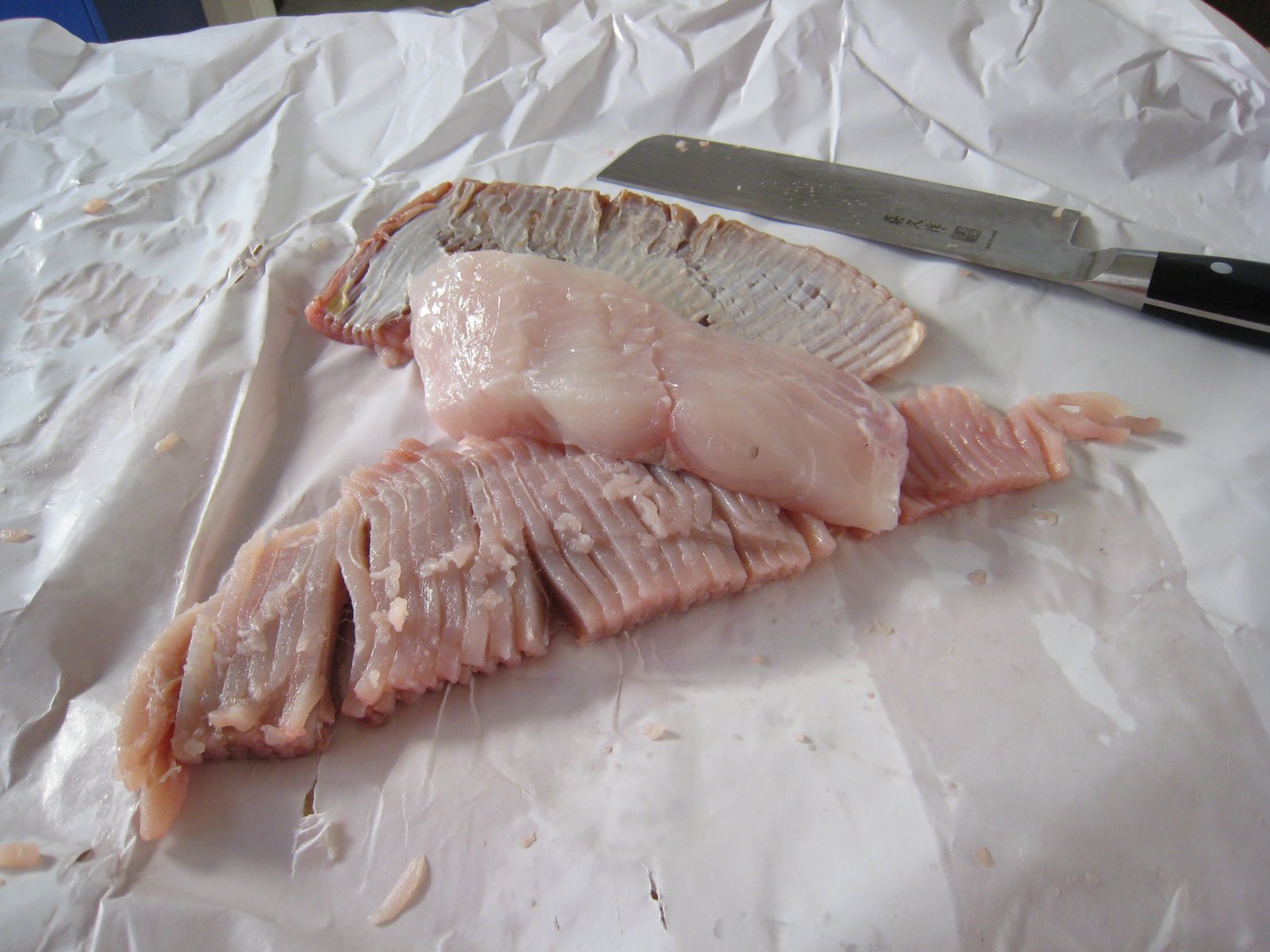
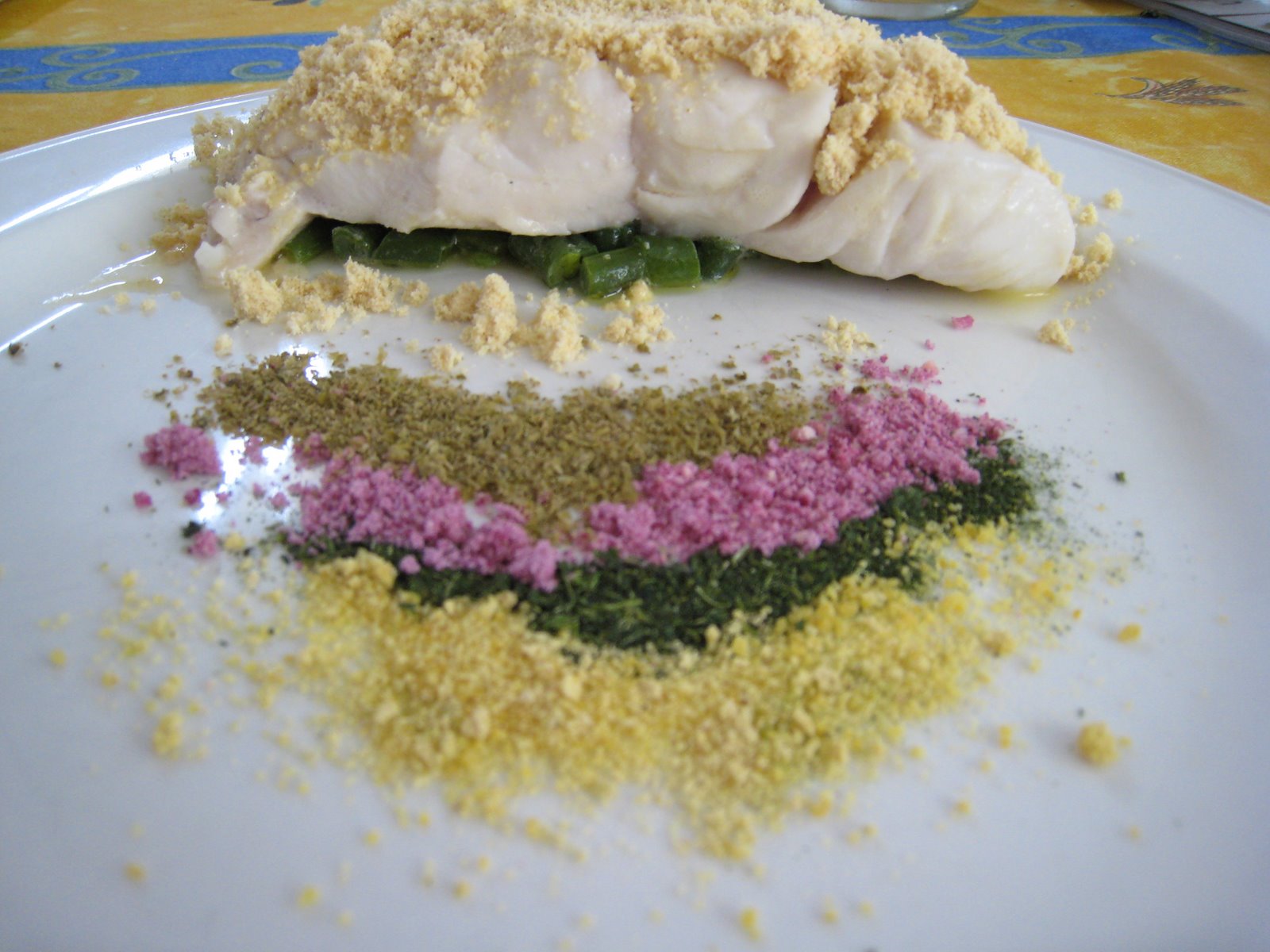
July’s Daring Cooks challenge was hosted by Sketchy and was called Skate, traditional flavors…

Skate, Traditional Flavours Powderedwith changes

  • 4 skate wings
  • * Beurre monte
  • * 300g fresh green beans
  • sea salt/kosher salt
  • 454g butter – 4 sticks
  • 300g lemons
  • 5g citric acid/vitamin c tablet
  • 150g cilantro
  • 150g parsley
  • 100g dried banana chips
  • 300g powdered milk
  • 100g cup minced red onion
  • 200g capers (brined, not oil)

* For green beans, slice each beans into very thin rounds (2 mm)
* Beurre Monte – 454g butter cubed and cold, 60g water. In a small saucepan, bring the water to a boil, remove from heat and whisk in the butter 1 cube at a time. This should from an emulsion. Keep this heated, but under 90C. The emulsion will not break – this is your poaching liquid.

Powders – prepare ahead of time
caper / onion
lemon powder
cilantro/parsley powder
‘brown butter’ powder

Powders
once dried, all powders should be pulsed in a coffee grinder/spice mill/morter and pestle then passed through a chinois or fine mesh strainer.

Citrus powder
300g lemons
1000g simple syrup (boil equal parts water and sugar until dissolved)
5g citric acid/vitamin c tablet

Zest 300g of lemons (10.6 oz), remove the pith from the zest and poach in the simple syrup three times. dry with paper towels and move to the oven. 70C for 2 hours. pulse the zest in a coffee grinder, and mix with citric acid/vitamin C powder.

Cilantro/parsley powder
150g cilantro
150g parsley

Blanch the parsley in boiling saltwater for 1 second, submerge the leaves in ice water for 3 minutes. Dry on paper towels and place in oven. 70C for 2 hours. Grind.

onion powder
100g cup minced red onions

Place in oven for 2 hours at 70C. Grind.

Caper powder
200g capers (get the ones packed in brine/vinegar)

Run the capers under cold water for two minutes to remove some of the brine.
Dry on paper towels and place in oven for 2 hours at 70C.

Brown Butter powder

100g Dried banana chips (unsweetened if possible – many are coated in honey – the freeze dried ones would be brilliant)
300g powdered milk

Grind the banana chips in a coffee grinder and mix with the toasted milk powder. Heat the powdered milk with the ground dried banana in a pan. Be cautious and make sure it does not burn.

The Council of Italian Restaurants in Australia offers cooking lessons on a regular basis. The classes are held at Casa Barilla in Annandale and many of them are hands on. I’ve been fortunate enough to attend a number of classes, these are conducted by the who’s who of Australia’s Italian cooking world.

Attending a class is almost as good as eating in anyone of the restaurants from where the chefs are associated with.

The first lesson I attended was a hands on class with James Kidman from Otto Restaurant where we learned the secrets to making a great rissotto. The second class I went to was taught by Armando Percuoco from Buon Ricordo. Signore Percuoco is one of the most amiable and down to earth people I have ever met. His class was entitled Cucina Povera (Peasant Cooking or humble food) where he shared pragmatic yet very delicious recipes.

Two weekends ago I managed to drag my husband to CIRA once again for a class with Logan Campell, head chef at Lucio’s in Paddington. My husband had never cooked a meal in his LIFE prior to the class so it was interesting to see how he would react to this whole new experience. I am happy to report that he LOVED it! Absolutely loved the experience.

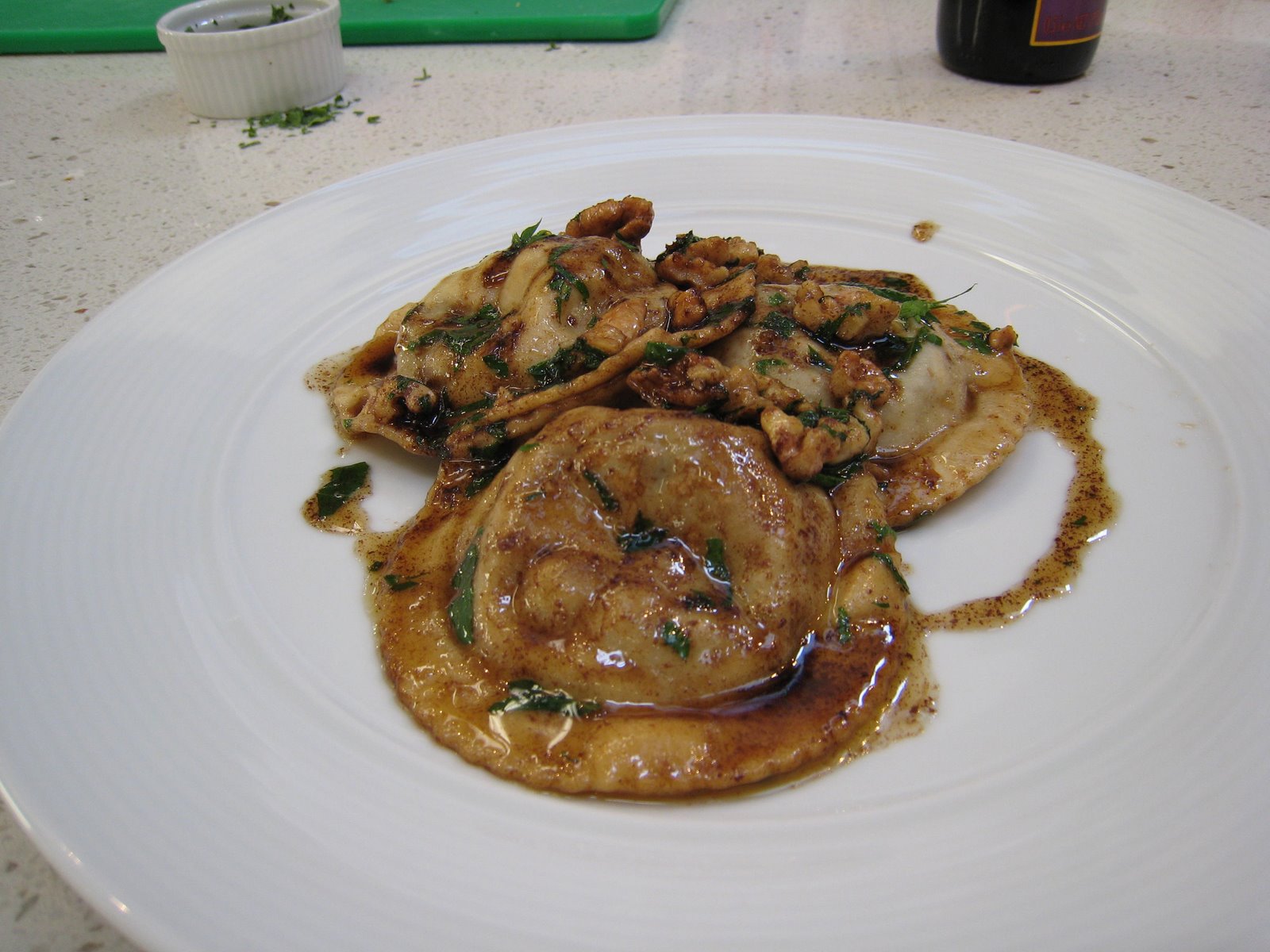
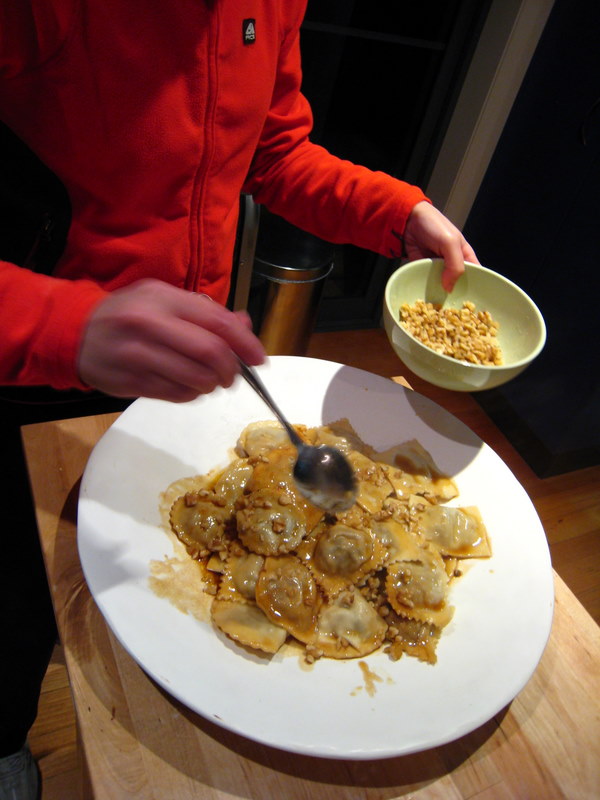
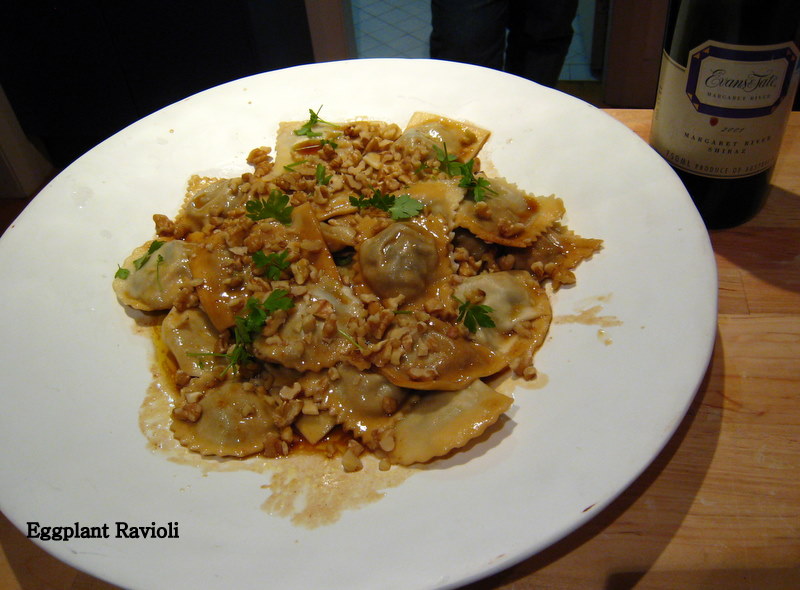
The class was entitled “Logan’s Ligurian Experience”. The hands on class featured two dishes, Eggplant Ravioli and a Rolled Spatchcock. Both were amazingly easy to prepare (yes, even deboning the spatchcock) and can be recreated at home.

I’ve written down the eggplant ravioli recipe and hope you’ll enjoy it!

Pasta Ingredients
300 grams plain flour
3 large eggs
pinch of salt

Filling Ingredients (you will probably have leftover filling depending on how you fill your pasta)
1 large eggplant, diced
1/2 bunch picked thyme
100 grams diced taleggio cheese (I used Mauri Taleggio)
50 grams parmesan cheese
1 egg
1/4 bunch chopped parsley
salt and pepper

To Serve
125 grams butter
2 tablespoons vinegar
1/4 cup chopped walnuts
A few sprigs of parsley

Pasta
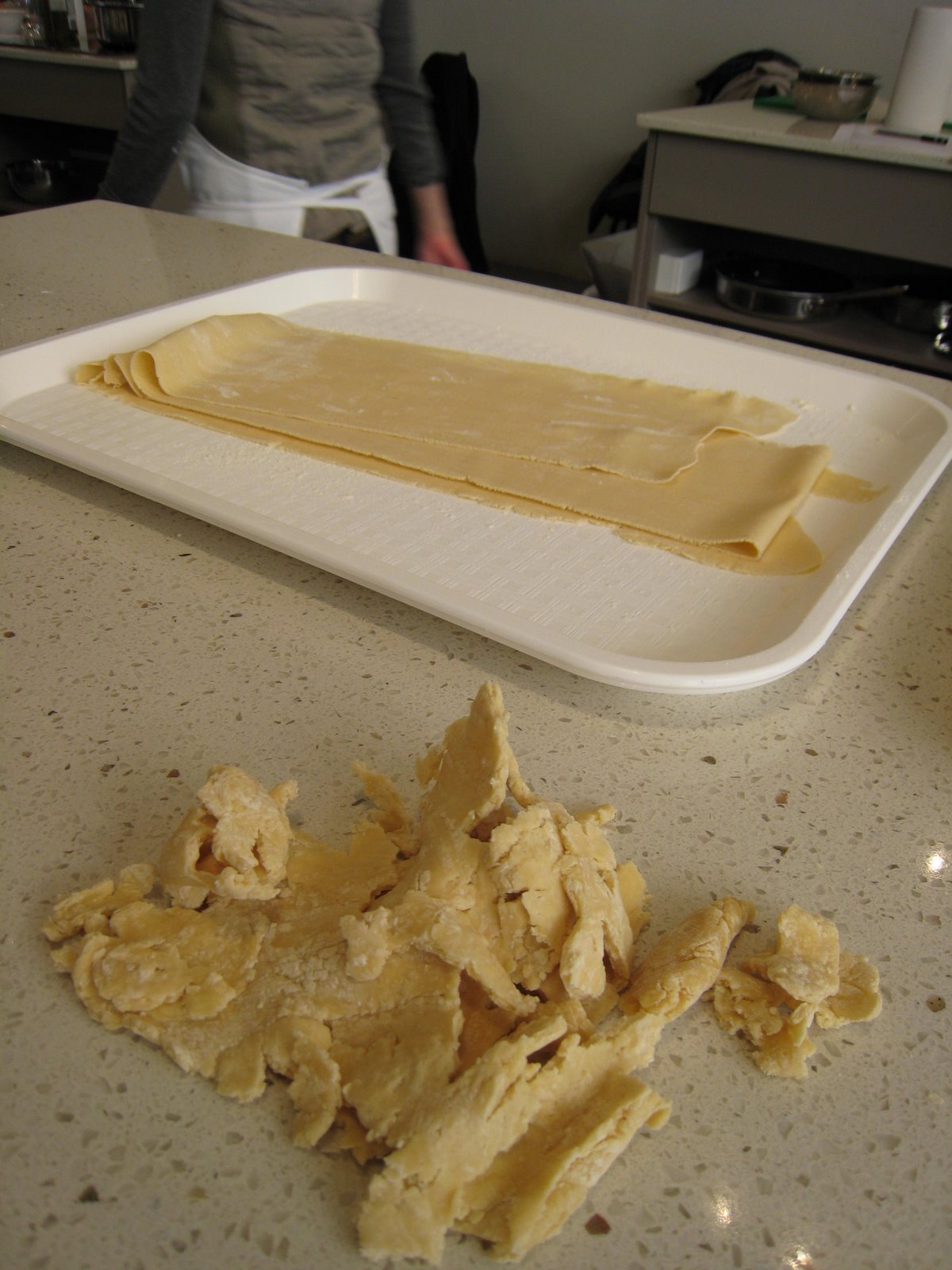
Pour flour onto benchtop and make a well in the centre.
Place the salt and add the eggs into the well and incorporate until the dough forms
Knead for 5 minutes and rest covered for 1 hour

Filling
Sprinkle the eggplant with salt and let stand 20 minutes
Rinse off the salt and drain
Saute the eggplant in a little olive oil, add thyme and cook until eggplant is browned
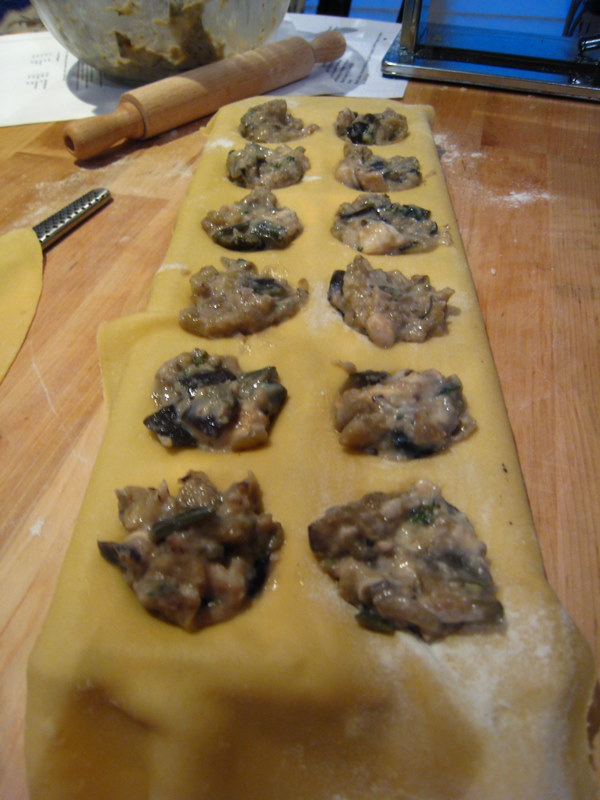
Allow to cool and then mix the eggplant with the cheeses, egg and parsley
Season with salt and pepper


Ravioli
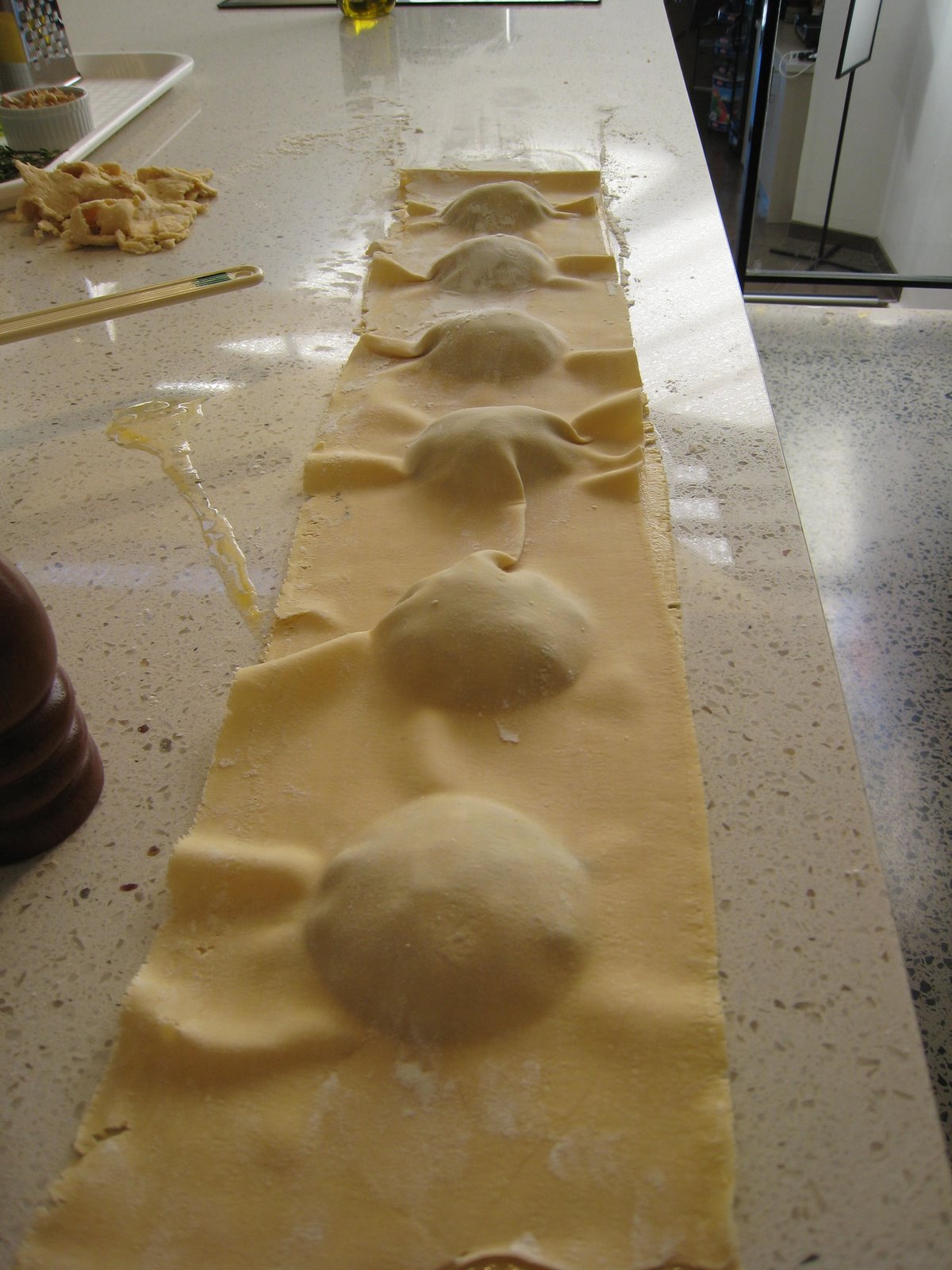
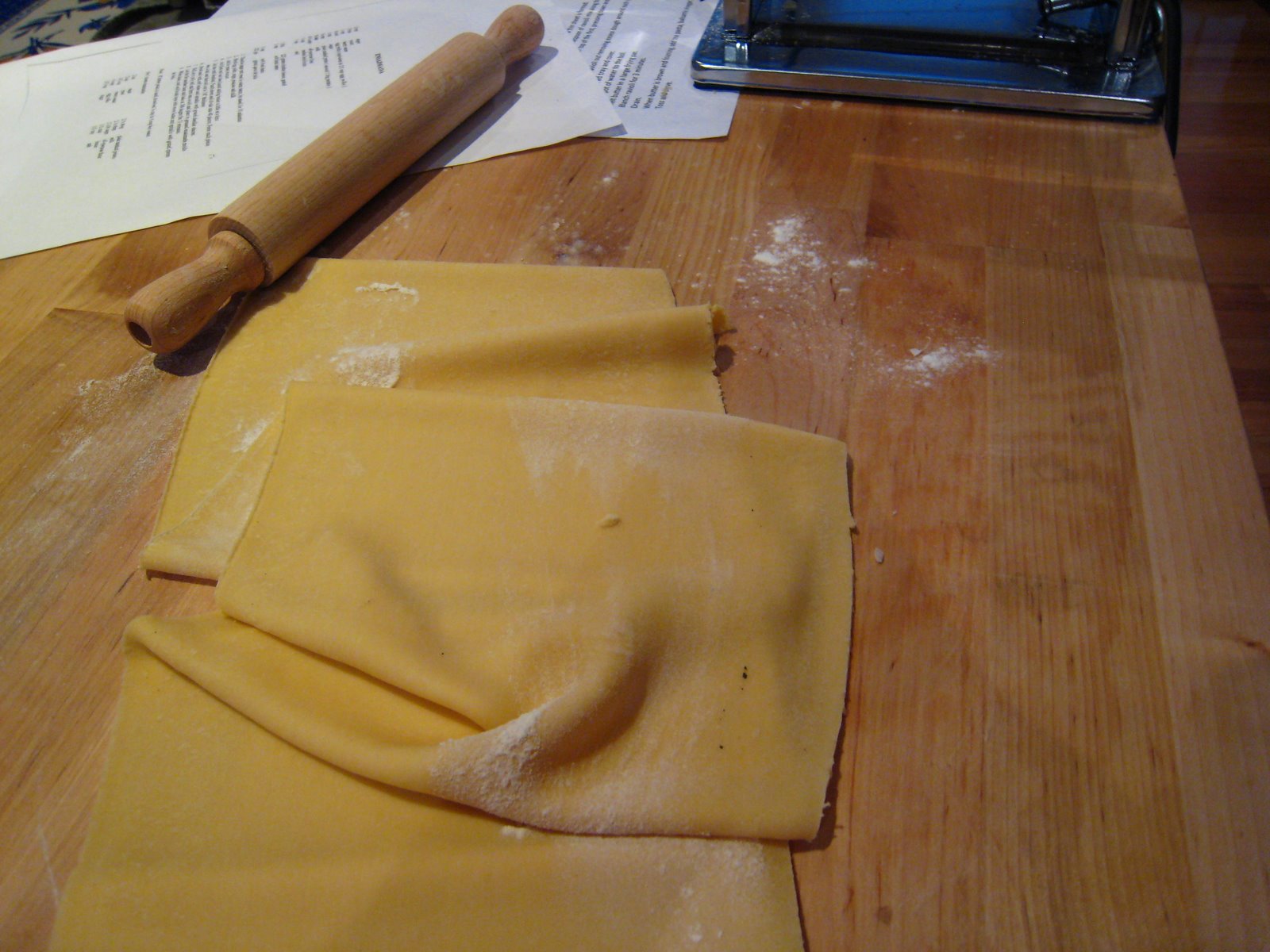
Using a pasta machine roll out the dough until a thin sheet is formed. Brush with egg wash and place some the ravioli mix along the sheet 3 centimeters apart.


Roll another sheet and place on top of the first, pressing down around the mix to remove any air pockets.


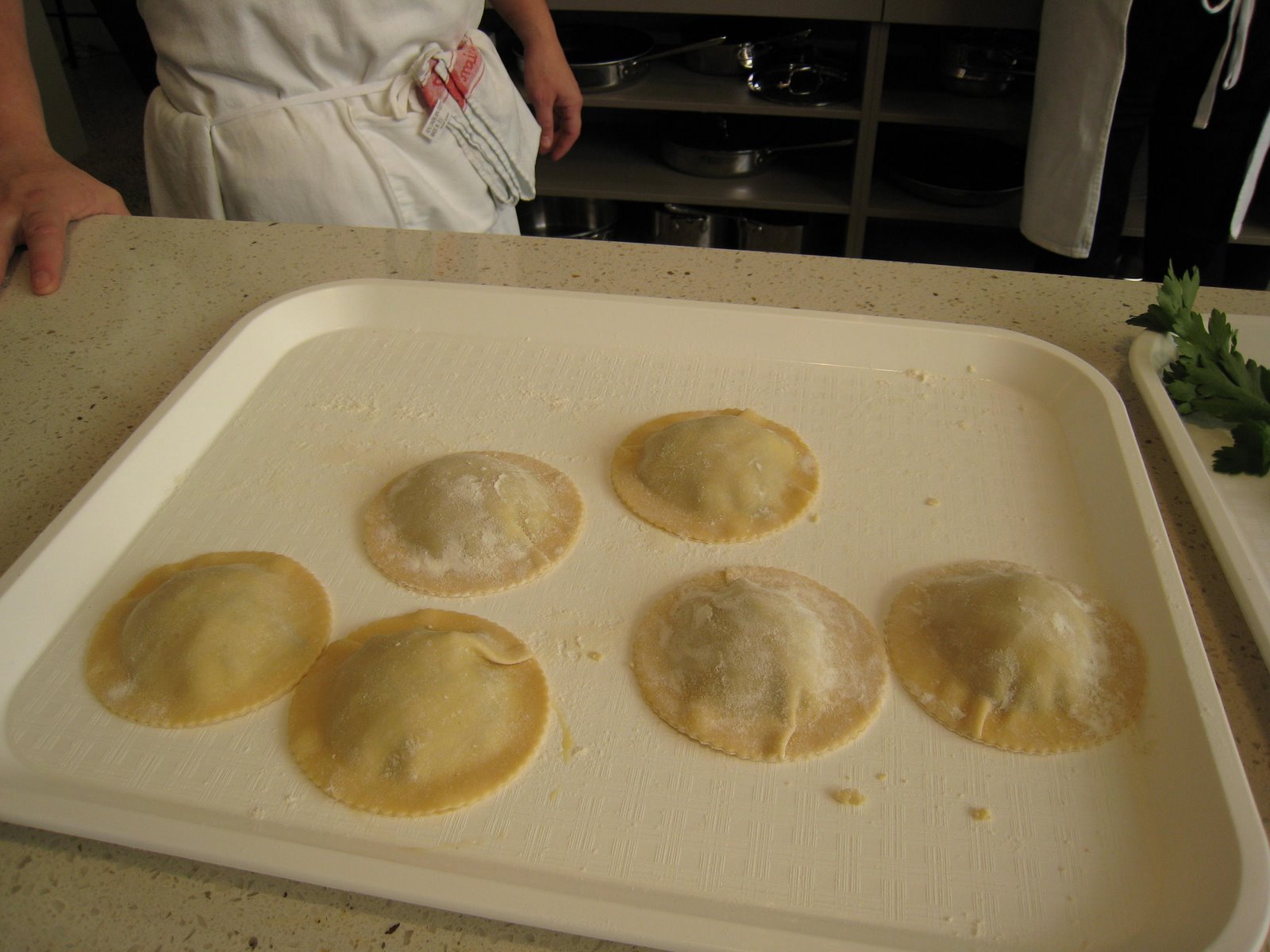
Using cutters, cut the ravioli out removing excess dough around each one.


Place on a floured tray and cover.
Brint a pot of water to the boil.
Melkt the butter in a large frying pan
Blanch ravioli for 3 minutes
Drain
When butter is brown and foaming, add the pasta, balsamic vinegar and walnuts.
Garnish with chopped parsley
Toss and serve.

That’s not the end of it!

This weekend I invited a few guests to try out the pasta… here are a few shots of my version of the eggplant ravioli.


MasterChef Australia has really grown on me. The first few audition episodes were not pleasant to watch, too much drama and too much of me wondering whether Matt Preston wore the handkerchief to cover the double chin or as a fashion statement. But lately… I can’t get enough. It’s really evolved and I think an even better show than the original UK version.

(Matt has got a lot of handkerchiefs….)


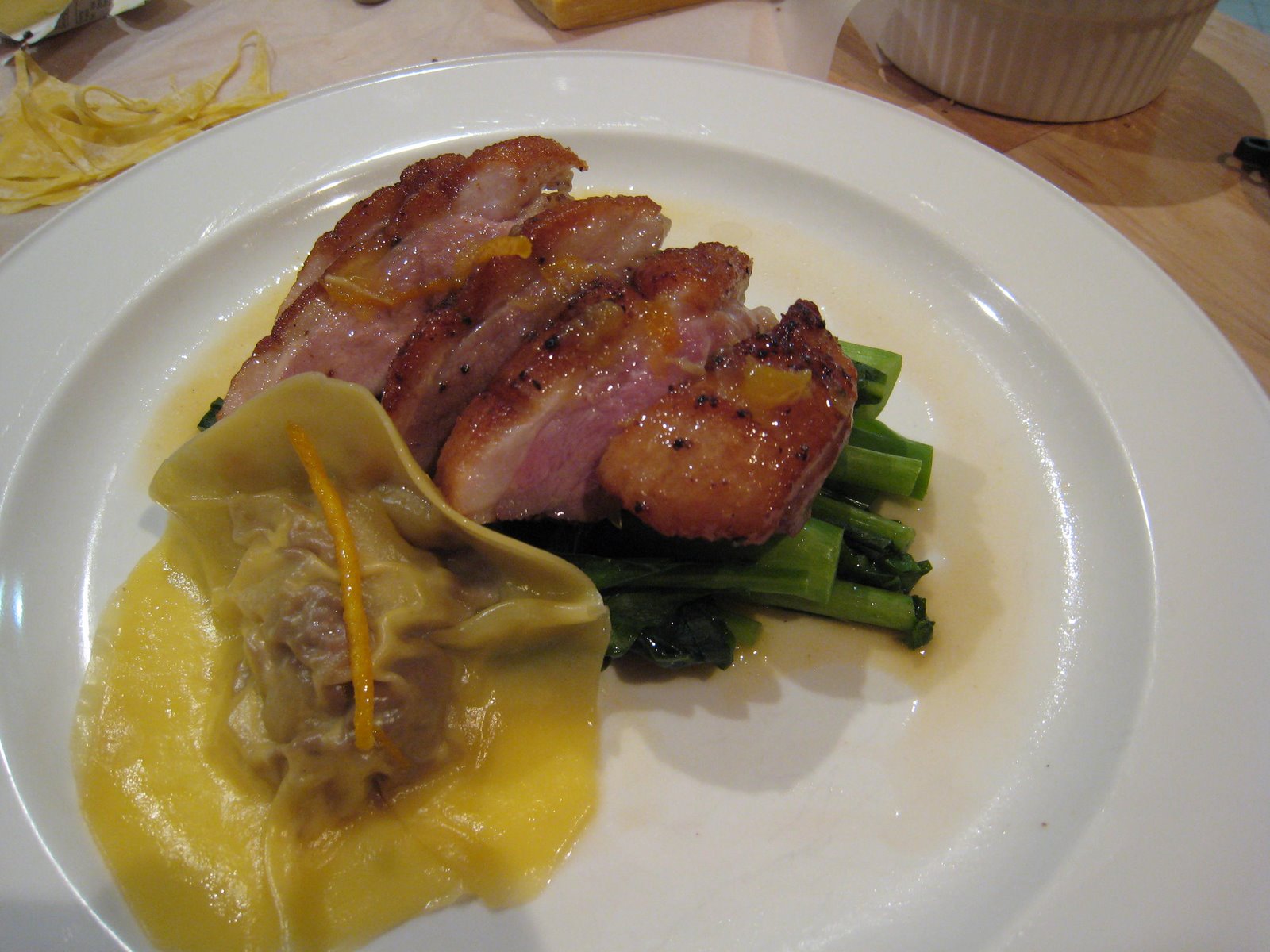
I even managed to try one of the Celebrity Chef Challenge recipes which was the Tea Smoked Duck Breast with Duck Liver Ravioli where Chef Peter Evans faced off against Julia and lost! Well, I thought if she can beat him, maybe the recipe would be easy enough to follow… of course I didn’t have a time limit.

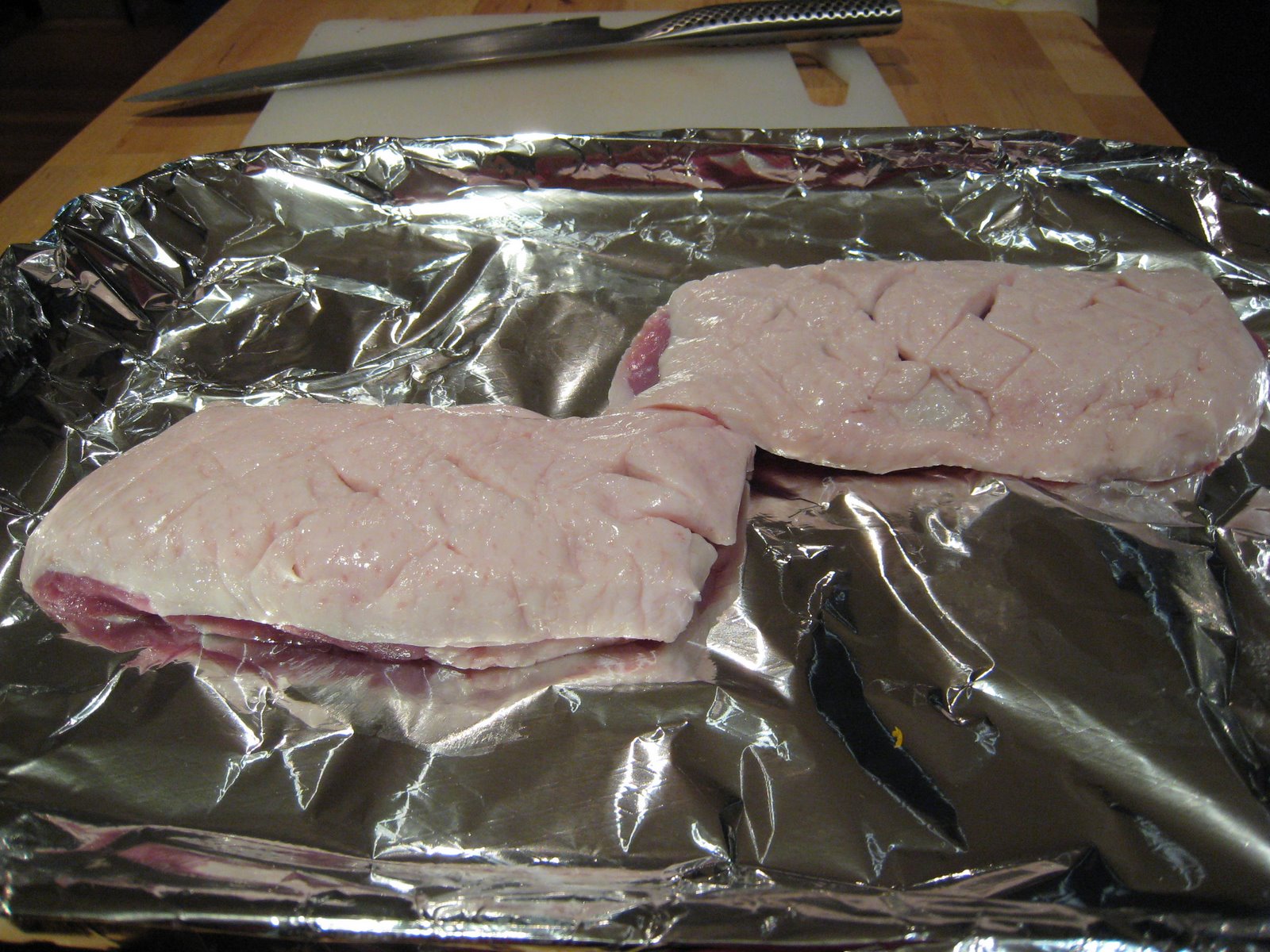
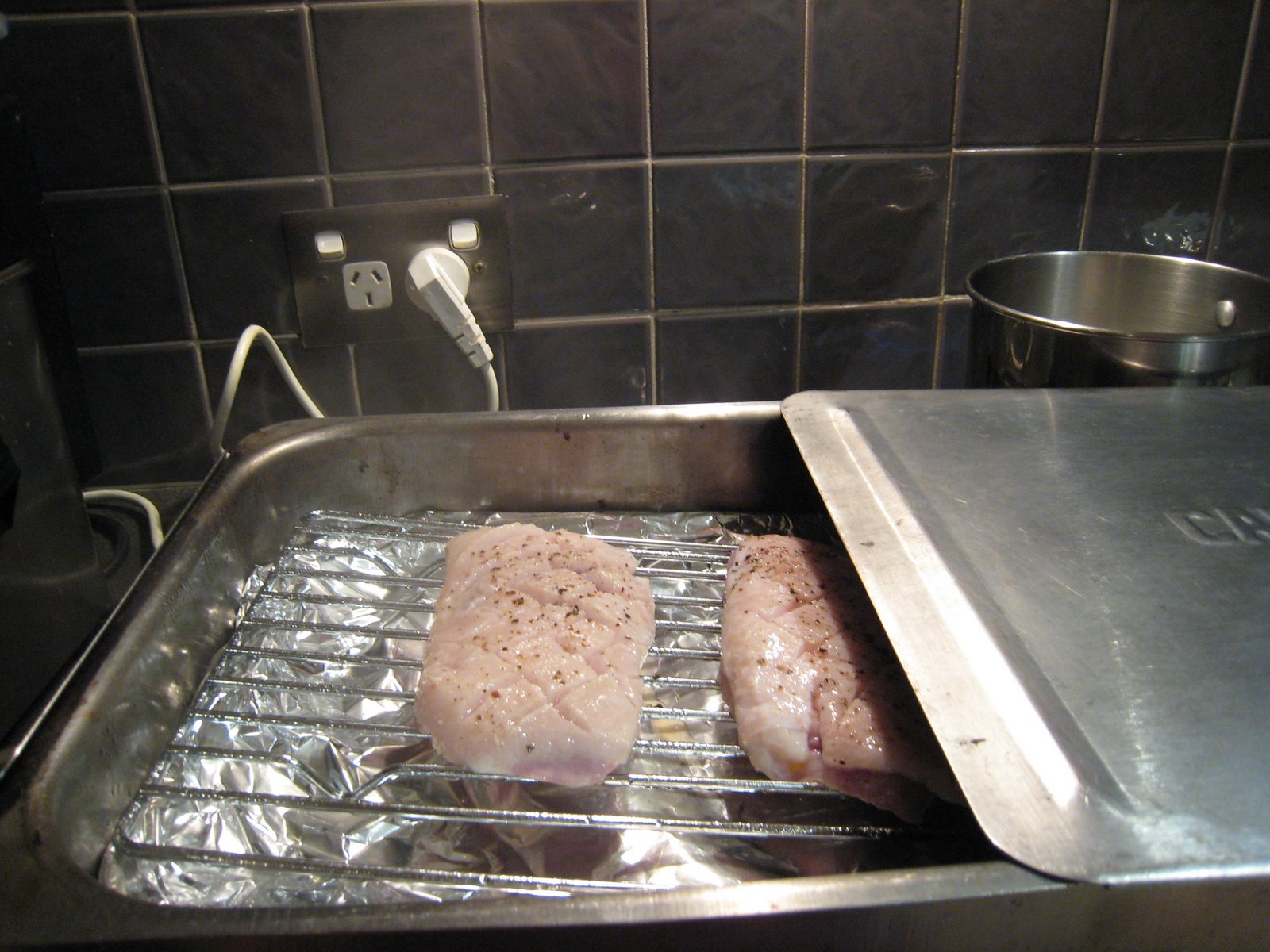
Anyway, the first step was to smoke the duck breasts which I had never done before. The process is easy enough and hassle free if you’ve got an indoor stove top smoker, otherwise you can use a wok and there are many sites on the internet that show you how.


The verdict – amazingly easy and good… given that it was a celebrity chef challenge – I thought it would be more difficult to make. But the hardest part was really going to the grocery three times because I never make a list when shopping for ingredients – and tend to forget something… with a shopping list as long as the one above – three trips were eventually necessary!

Ingredients

2 duck breast
50g pâté
25g water chestnuts, diced
25g pear, diced
4 gow gee or wonton wrappers or thin pasta sheets
¼ cup (60ml) blood orange sauce – recipe to follow
3 cups baby spinach
Vegetable oil
2 tablespoons julienned ginger

Tea Smoking Mixture
½ cup oolong tea leaves
½ cup jasmine tea leaves
Zest of 3 oranges
4 pieces of dried orange peel
1 cup jasmine rice
1 cup of brown sugar
5 star anise
1 tablespoon Sichuan peppercorns
6 pieces cassia bark

Orange sauce
60g caster sugar
¼ cup (60ml) red wine vinegar
2 cups (500ml) blood orange juice or orange juice
1 cup (250ml) Peking duck stock or chicken stock
Zest of 1 orange
50g of butter, diced

Serves 2

Method

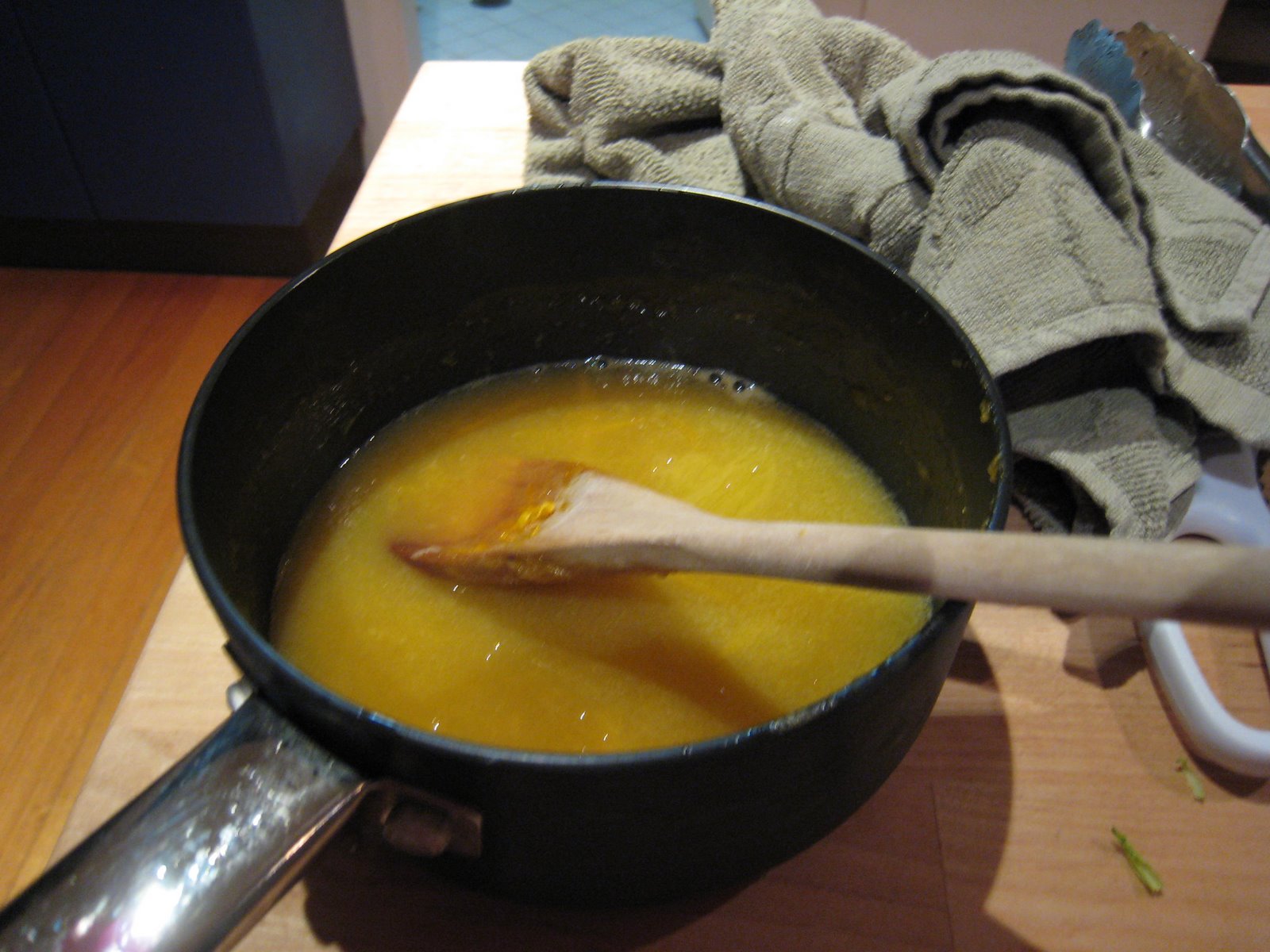
1. For the orange sauce, place sugar in a cold pan and melt it down slowly (careful not to burn). Then add vinegar and simmer until sugar is dissolved. Add orange juice and reduce by half. Then add the stock and reduce by half.

2. Add zest and blend the sauce with the butter and seasoning.

3. For tea smoking mixture, combine ingredients in a bowl.

4. Line a wok with foil then place the smoking mix on top and turn on the heat to medium and wait for it to start to smoke. OR If you are fortunate enough to have an indoor stovetop smoker – place the tea smoking mixture on the bottom of the smoker, cover with the drip tray, top with the rack and place the duck on top of the rack then cover. I used a medium heat for 8 minutes. Came out perfect.

5. To make the ravioli, mix the pâté, water chestnuts and pear together with a touch of salt. Lay 2 gow gee wrappers on the bench and brush with water, place 2 mounds of the pâté mix in the center of the gow gee wrappers and place the top gow gee wrappers over the mound and press down firmly around the edges to seal so you have 2 ravioli.


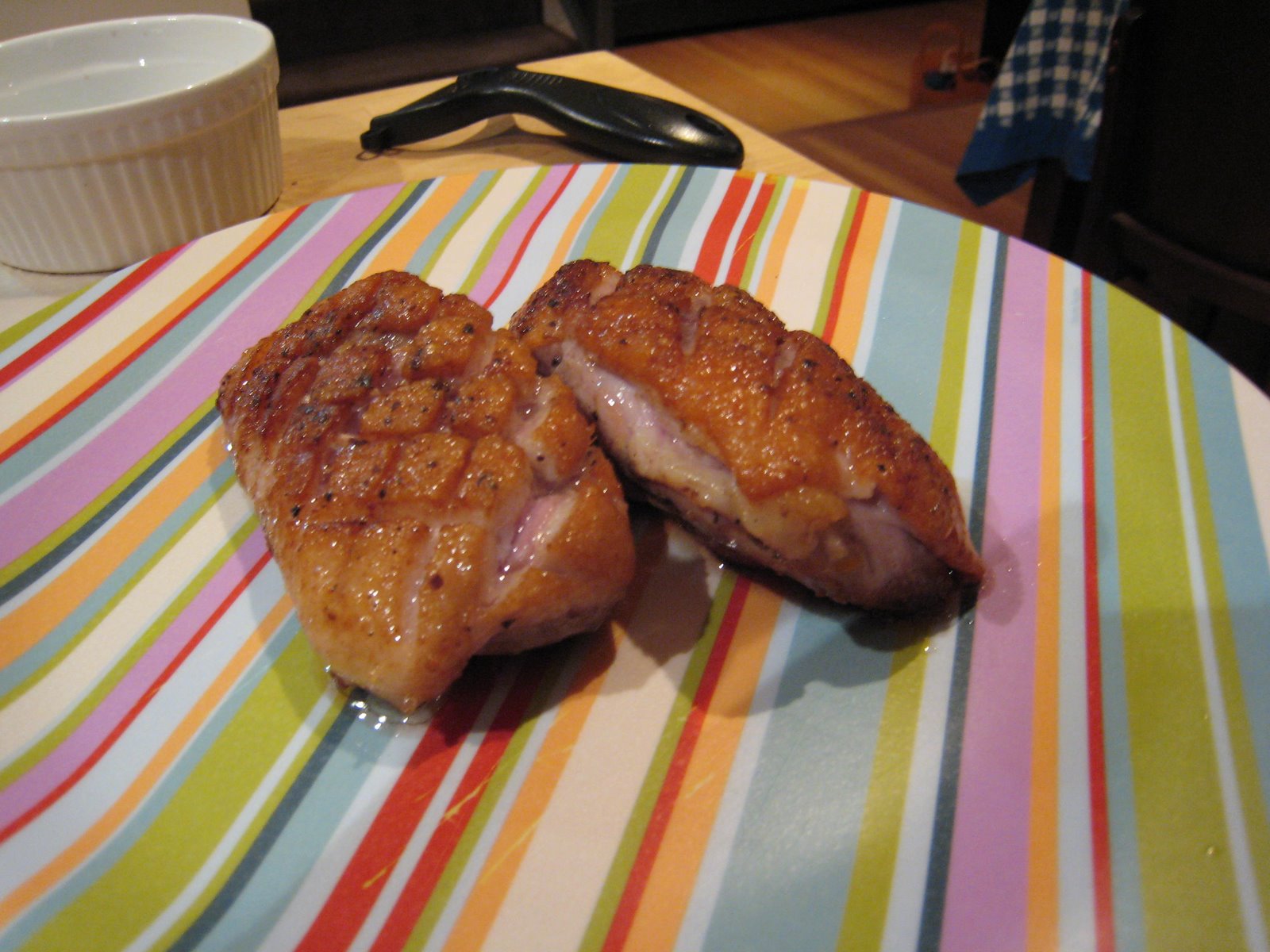
6. Place the duck skin side down in a frying pan and cook until fat has rendered and skin is crispy and let rest for a few minutes in a warm spot and then slice.

7. Add spinach (Gai Lan would be nice too!) to same pan and cook until just wilted, season with some sea salt and pepper and then drain any excess liquid out of the spinach in a strainer. Then drop the ravioli in a pot of boiling water to cook for 1 minute.

8. Pour vegetable oil into a small frying pan until one quarter full. Heat over medium-high heat until hot. Deep-fry ginger for 3-4 minutes or until golden and crispy. Drain on paper towel. Set aside.

9. Heat up the orange sauce.

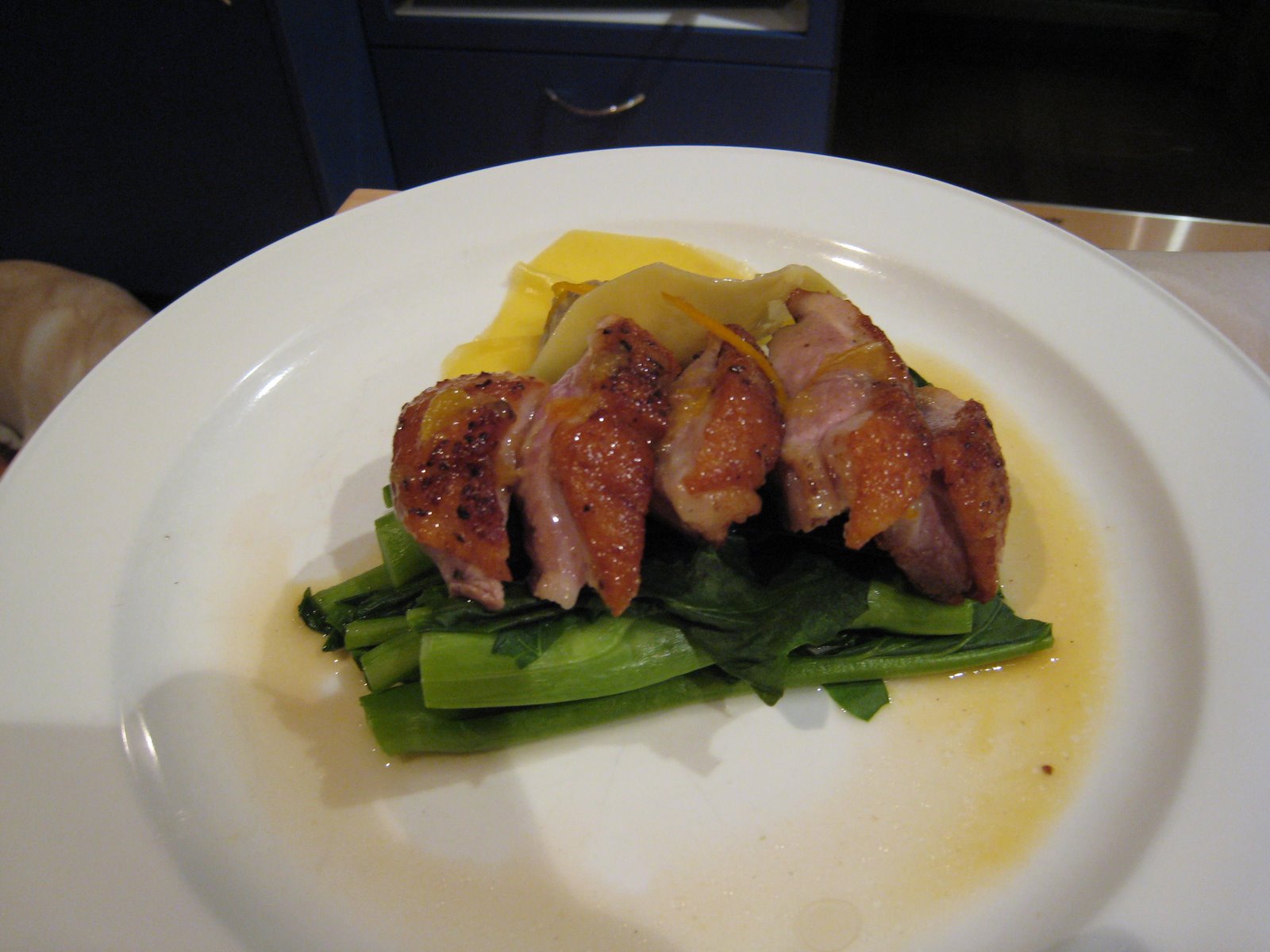
10. To serve, place the spinach on plate, then top with the sliced duck, the ravioli, drizzle a tablespoon of sauce over the ravioli and duck and top with the fried ginger.

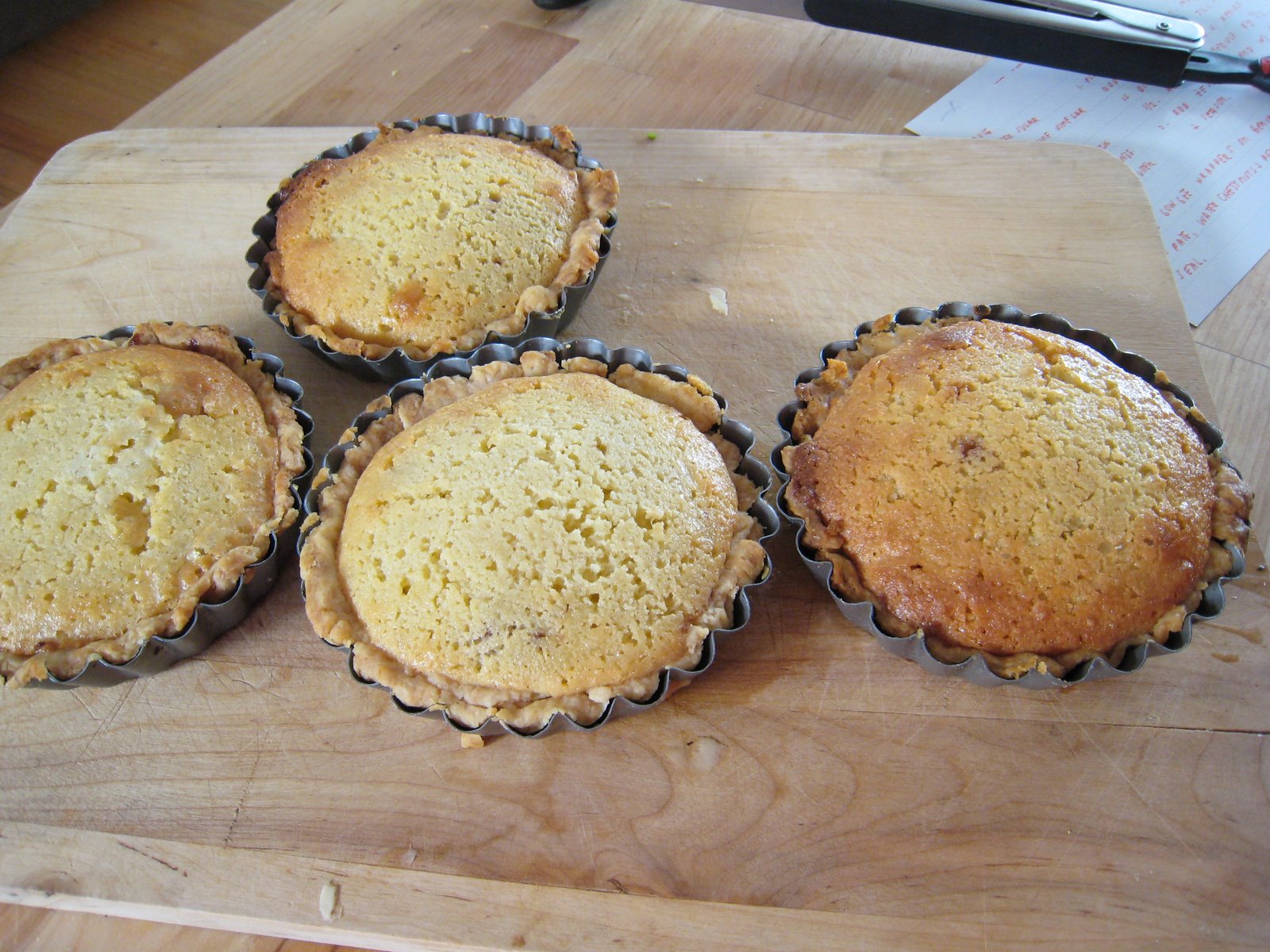
The June Daring Bakers’ challenge was hosted by Jasmine of Confessions of a Cardamom Addict and Annemarie of Ambrosia and Nectar. They chose a Traditional (UK) Bakewell Tart… er… pudding that was inspired by a rich baking history dating back to the 1800’s in England.

Bakewell Tart…er…pudding
Makes one 23cm (9” tart) OR 8 mini tarts
Prep time: less than 10 minutes (plus time for the individual elements)
Resting time: 15 minutes
Baking time: 30 minutes
Equipment needed: 8 mini tart pans, and a rolling pin

One quantity sweet shortcrust pastry (recipe follows)
Bench flour
250ml (1cup (8 US fl. oz)) jam or curd, warmed for spread ability
One quantity frangipane (recipe follows)
One handful blanched, flaked almonds

Assembling the tart
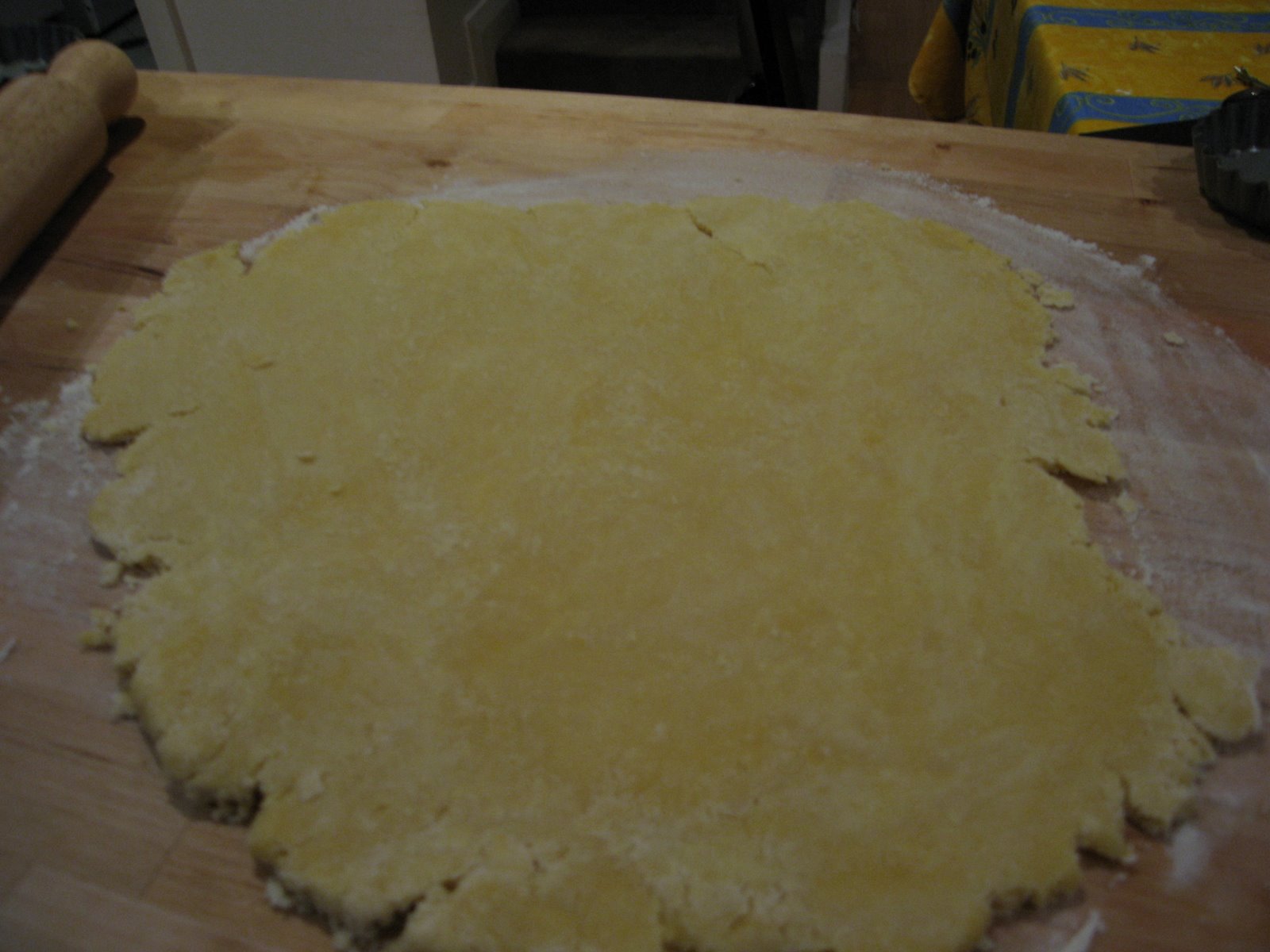
Place the chilled dough disc on a lightly floured surface. If it’s overly cold, you will need to let it become acclimatized for about 15 minutes before you roll it out. Flour the rolling pin and roll the pastry to 5mm (1/4”) thickness, by rolling in one direction only (start from the centre and roll away from you), and turning the disc a quarter turn after each roll. When the pastry is to the desired size and thickness, transfer it to the tart pan, press in and trim the excess dough. Patch any holes, fissures or tears with trimmed bits. Chill refrigerator for 15 minutes.

Preheat oven to 180C.

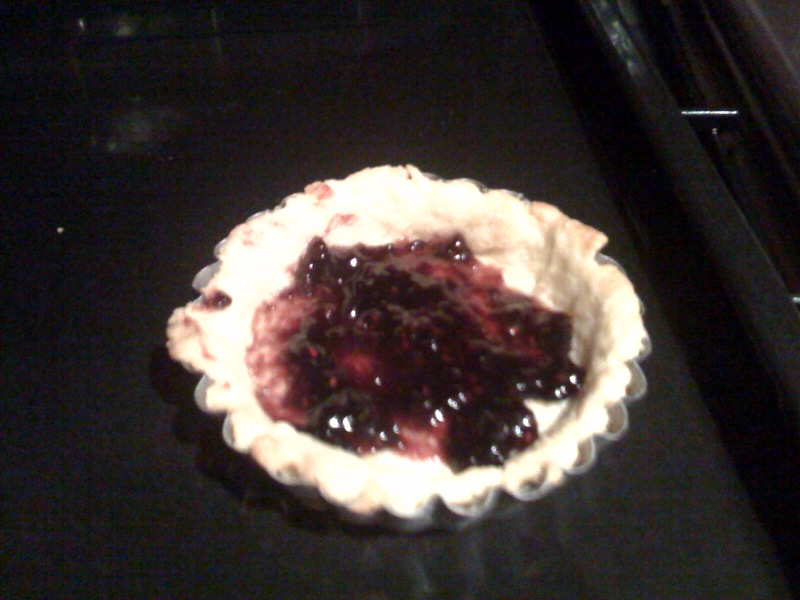
Blind bake pastry for 7 to 10 minutes at 180C then remove from oven and add a layer of jam to the pastry base. Top with the frangipane mixture and pop in the over for 20 minutes.

.

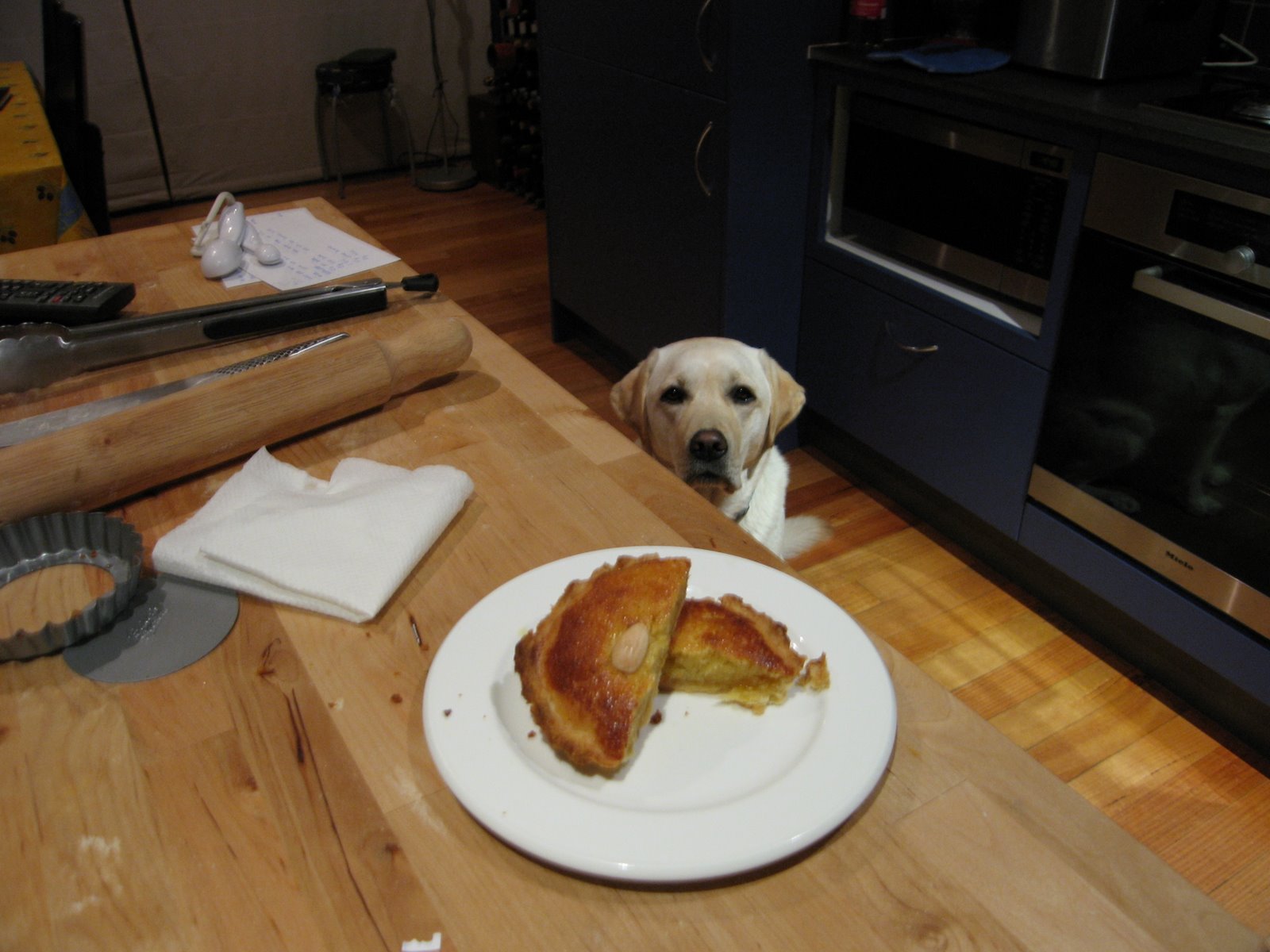
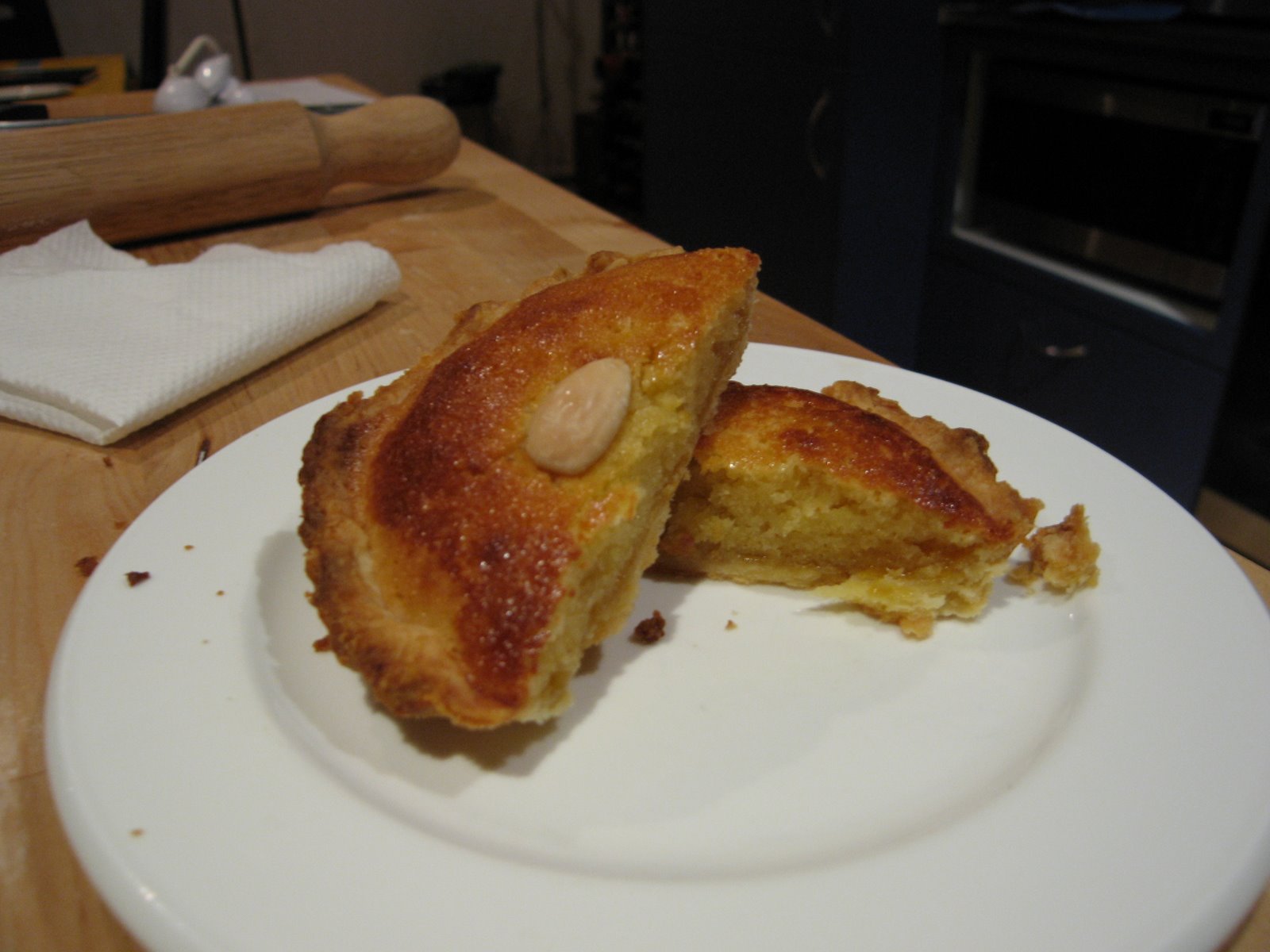
The finished tart will have a golden crust and the frangipane will be tanned, poofy and a bit spongy-looking. Remove from the oven and cool on the counter. Serve warm, with crème fraîche, whipped cream or custard sauce if you wish. When you slice into the tart, the almond paste will be firm, but slightly squidgy and the crust should be crisp but not tough.

Sweet shortcrust pastry
Prep time: 15-20 minutes
Resting time: 30 minutes (minimum)
Equipment needed: bowls, box grater, cling film

225g (8oz) all purpose flour
30g (1oz) sugar
2.5ml (½ tsp) salt
110g (4oz) unsalted butter, cold (frozen is better)
2 (2) egg yolks
2.5ml (½ tsp) almond extract (optional)
15-30ml (1-2 Tbsp) cold water

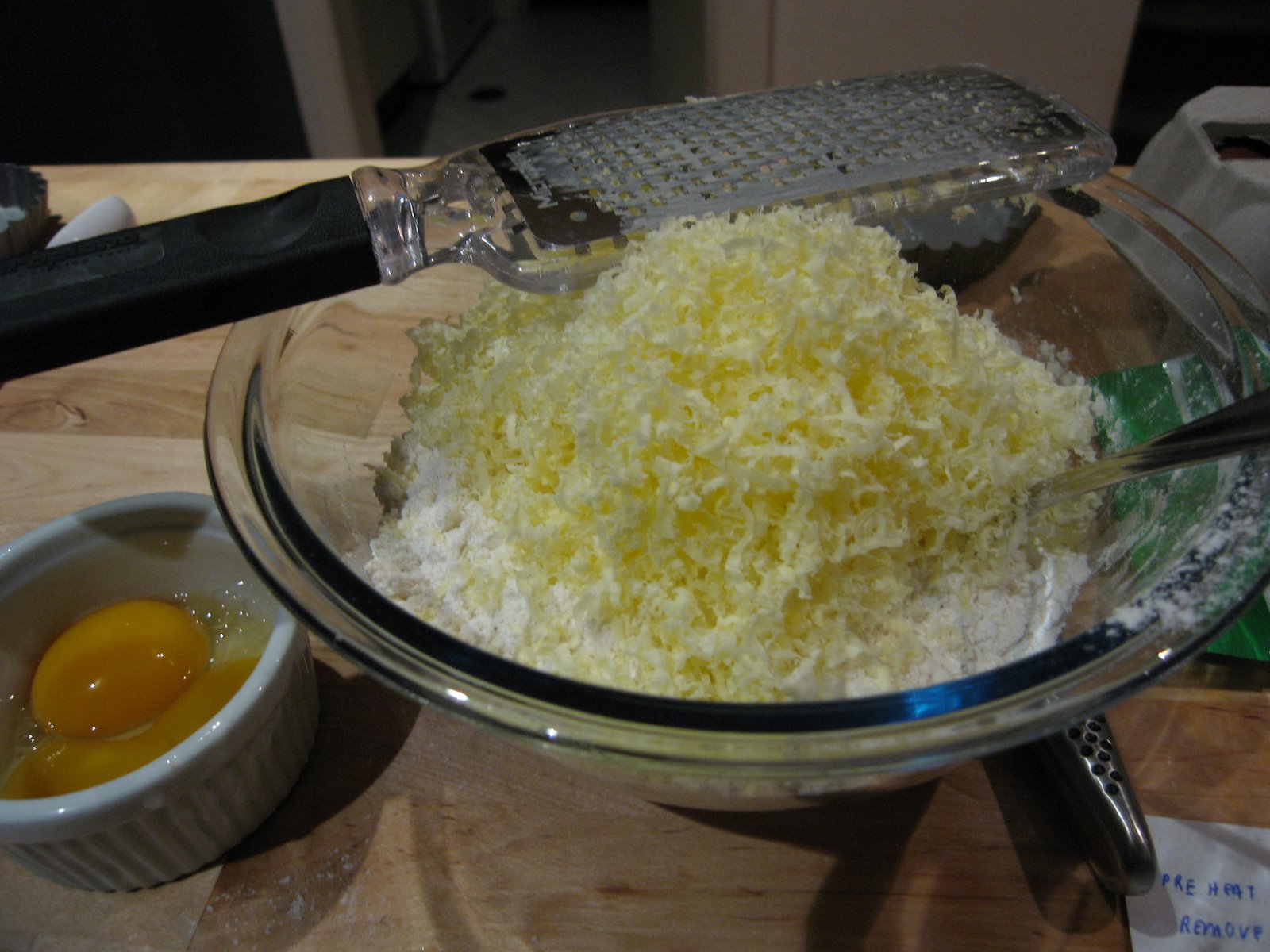
Sift together flour, sugar and salt. Grate butter into the flour mixture, using the large hole-side of a box grater. Using your finger tips only, and working very quickly, rub the fat into the flour until the mixture resembles bread crumbs. Set aside.

Lightly beat the egg yolks with the almond extract (if using) and quickly mix into the flour mixture. Keep mixing while dribbling in the water, only adding enough to form a cohesive and slightly sticky dough. Form the dough into a disc, wrap in cling and refrigerate for at least 30 minutes

Frangipane
Prep time: 10-15 minutes
Equipment needed: bowls, hand mixer, rubber spatula

125g (4.5oz) unsalted butter, softened
125g (4.5oz) icing sugar
3 (3) eggs
2.5ml (½ tsp) almond extract
125g (4.5oz) ground almonds
30g (1oz) all purpose flour

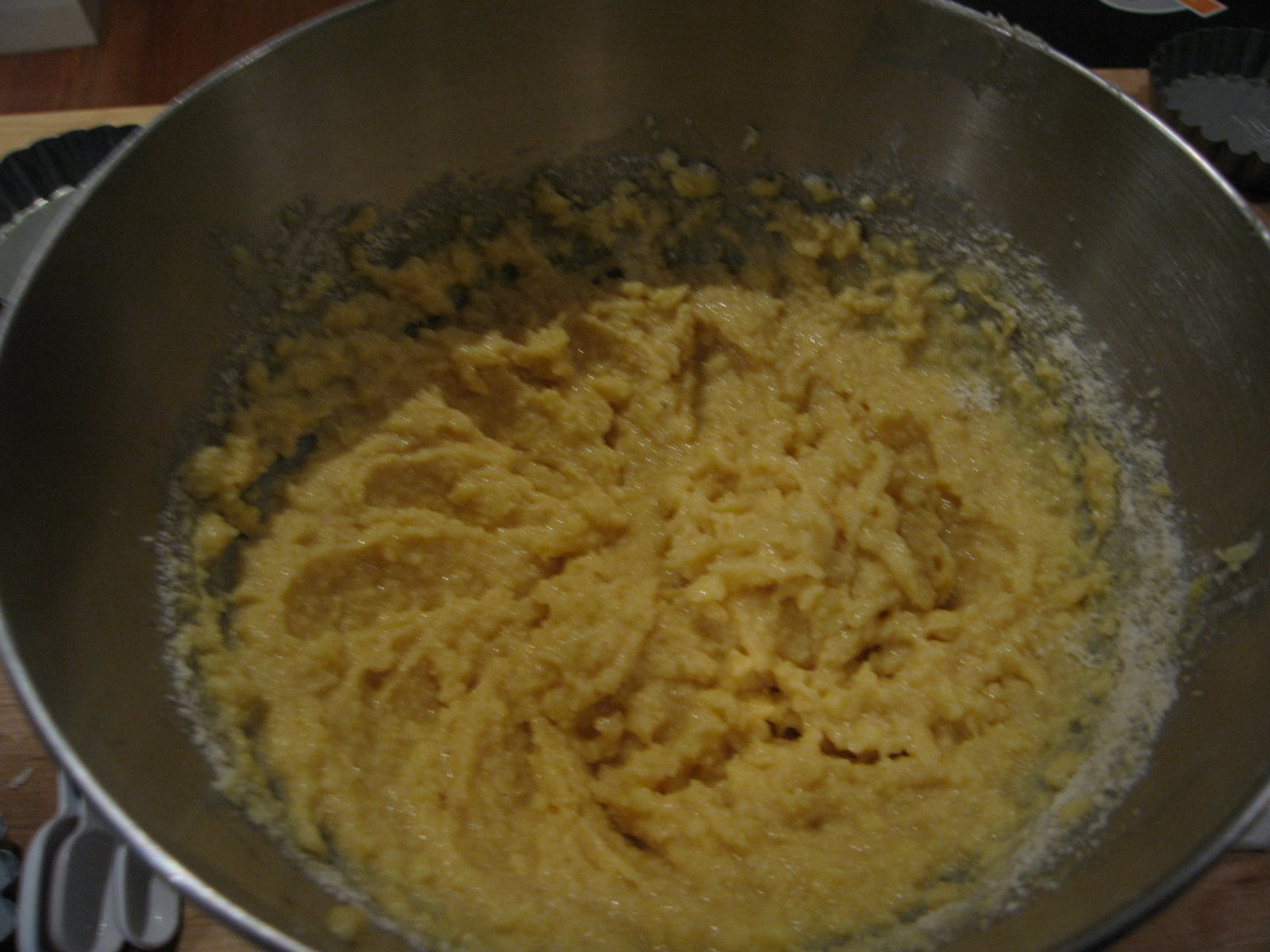
Cream butter and sugar together for about a minute or until the mixture is light yellow in color and very fluffy. Scrape down the side of the bowl and add the eggs, one at a time, beating well after each addition. The batter may appear to curdle. In the words of Douglas Adams: Don’t panic. Really. It’ll be fine. After all three are in, pour in the almond extract and mix for about another 30 seconds and scrape down the sides again. With the beaters on, spoon in the ground nuts and the flour. Mix well. The mixture will be soft, keep its slightly curdled look (mostly from the almonds) and retain its pallid yellow color.

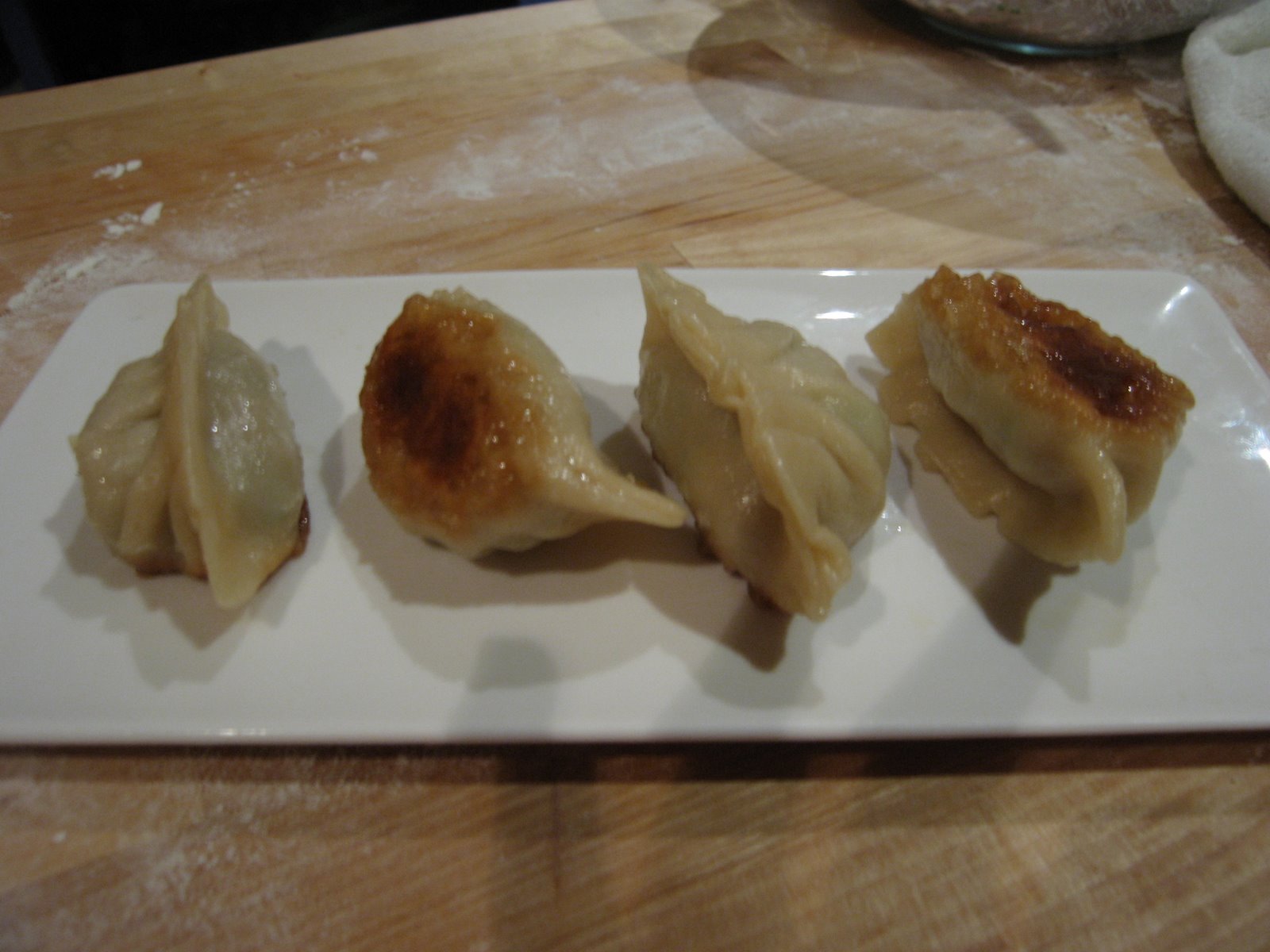
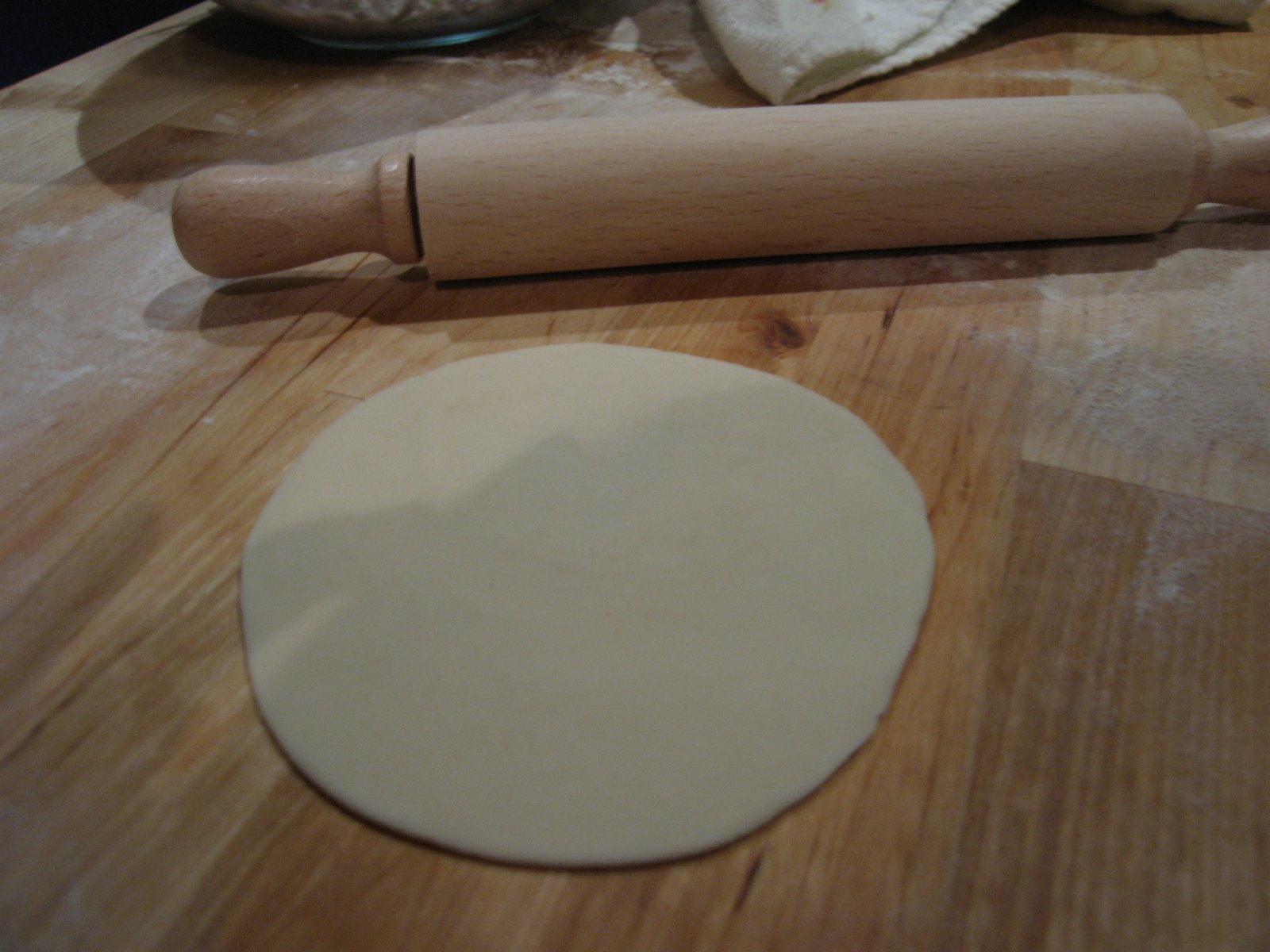
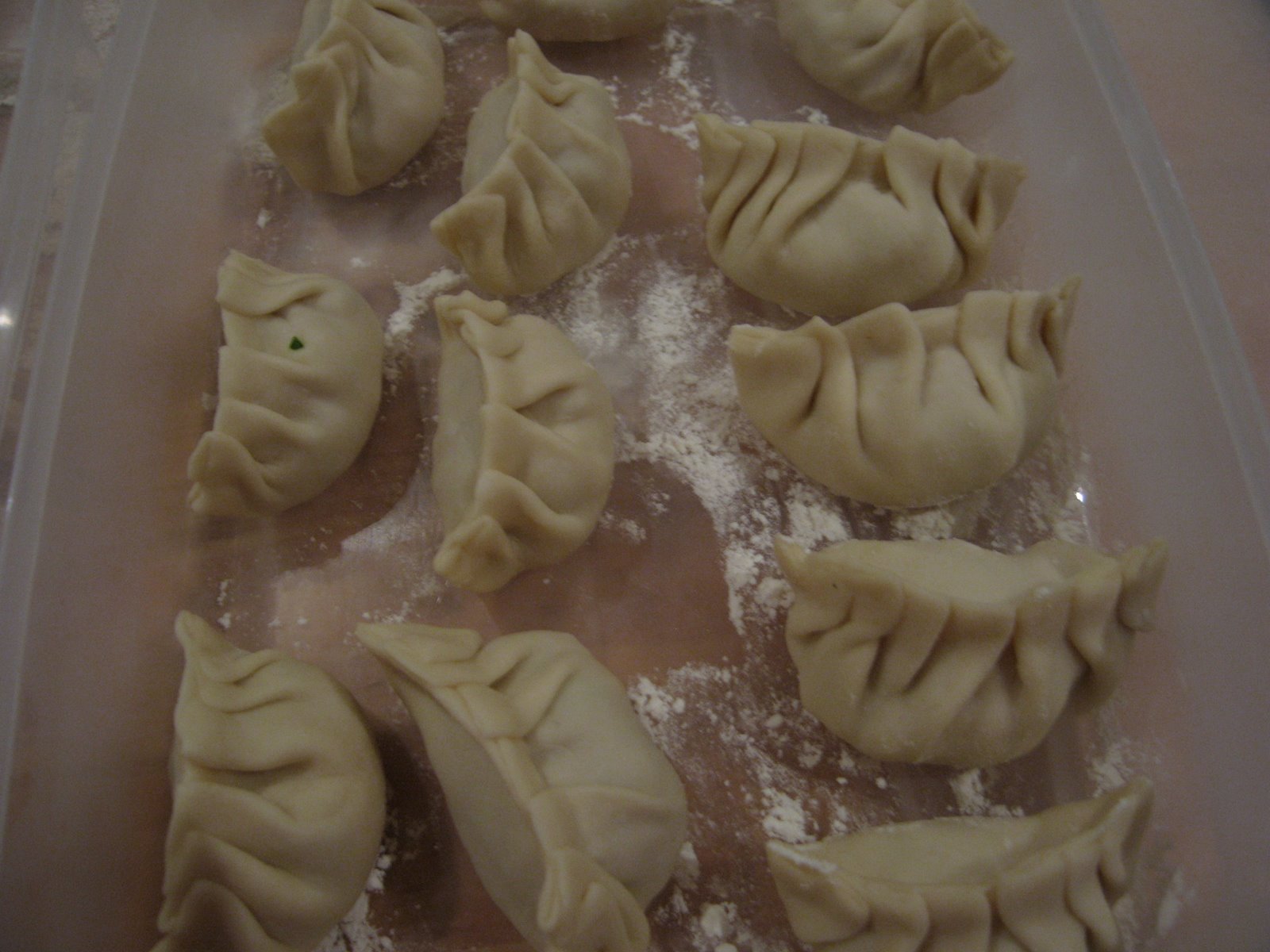
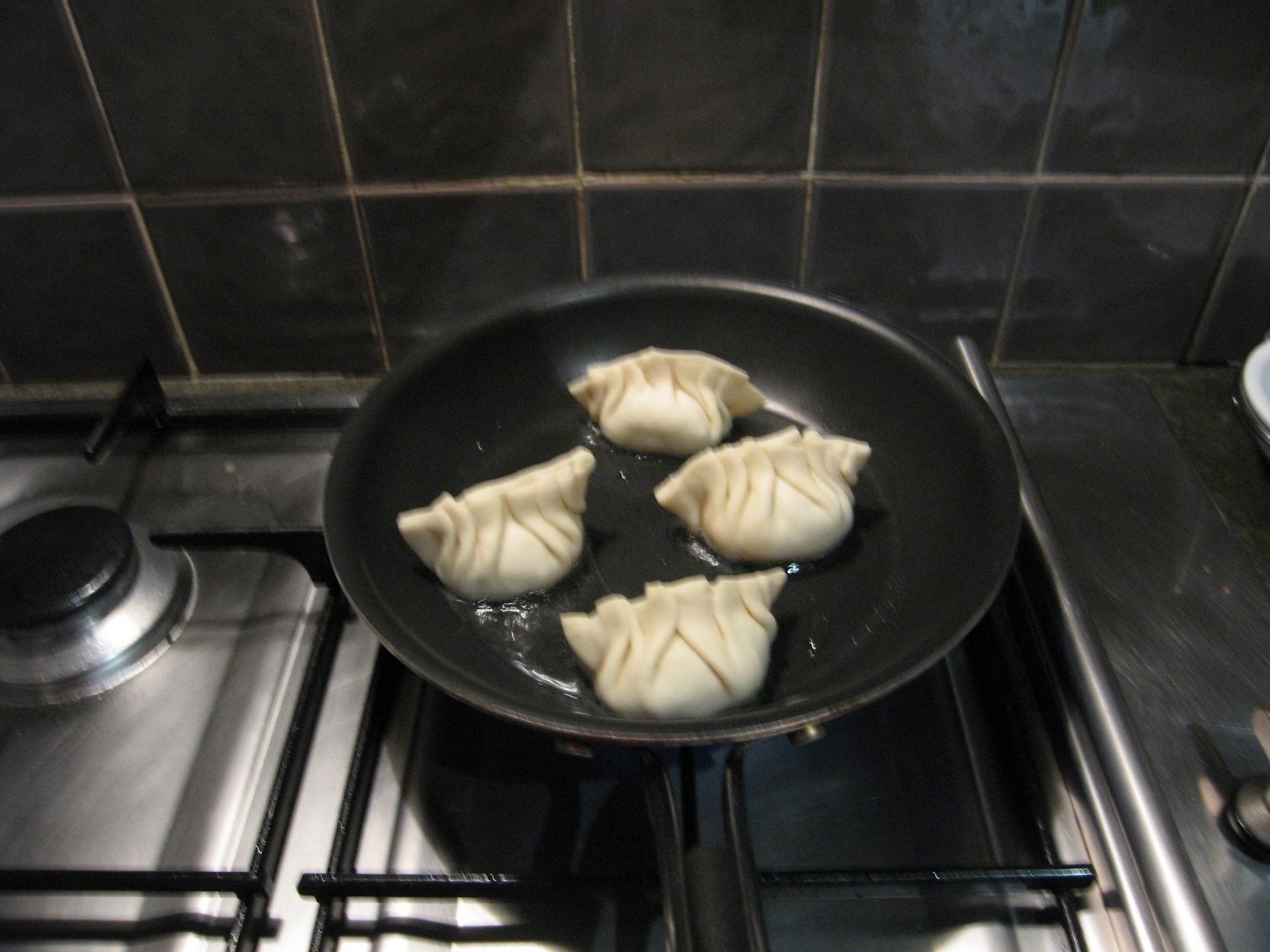
Just recently joined the Daring Cooks’ Challenge and nearly missed posting my attempt at Chinese Dumplings/Potstickers. I am glad that I managed to give it a go as making home made potsticker dough was something I would have never dared try if not for this challenge.

The challenge was hosted by Jen of use real butter (userealbutter.com). Recipe below:

shrimp filling:
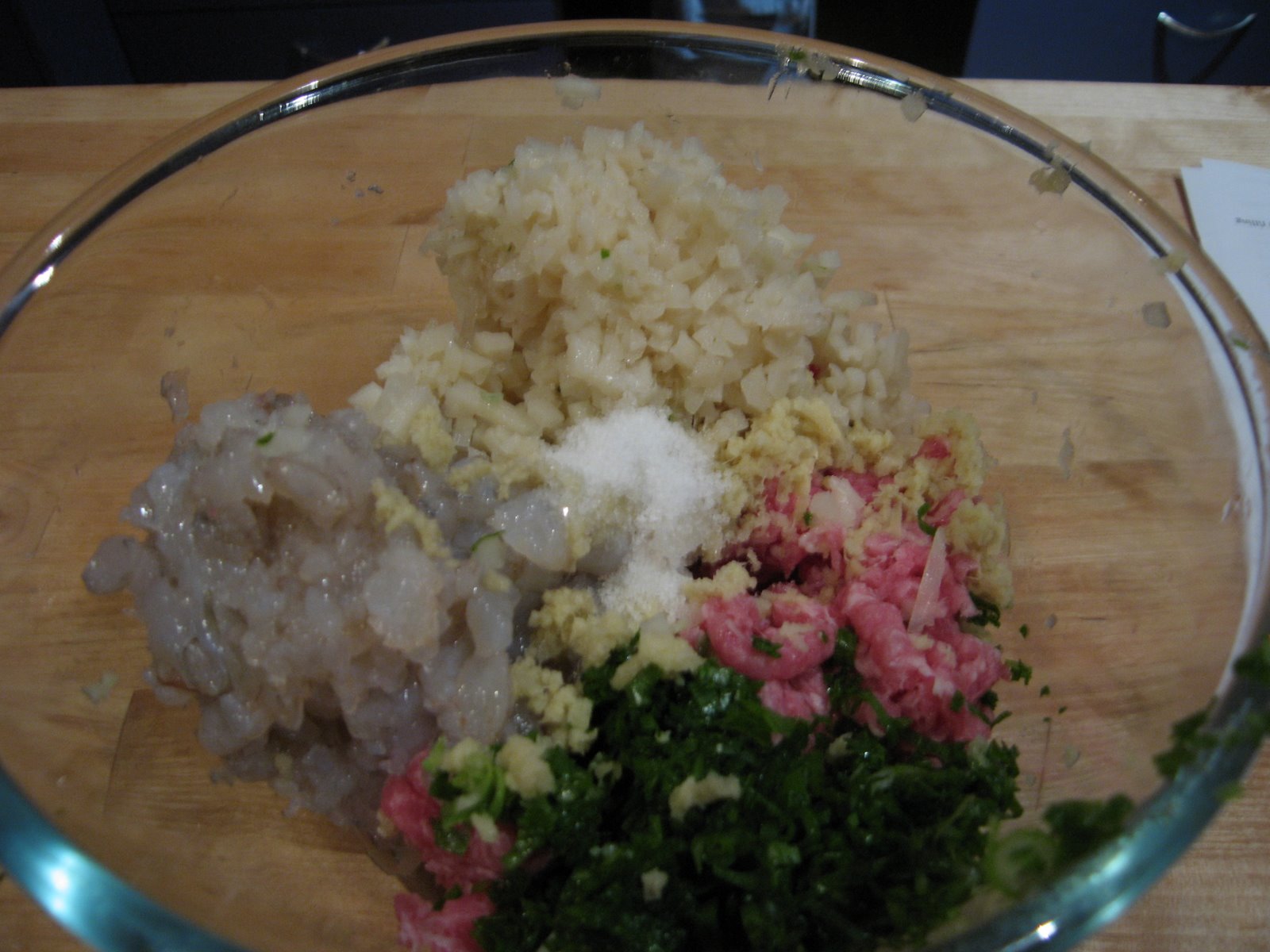
1/2 lb (225g) raw shrimp, peeled, deveined, and coarsely chopped
1/2 lb (225g) ground pork
3 stalks green onions, minced
1/4 cup (55g) ginger root, minced
1 cup (142g) water chestnuts, minced
1 tsp (5g) salt
3 tbsp (40g) sesame oil
2 tbsp (16g) corn starch

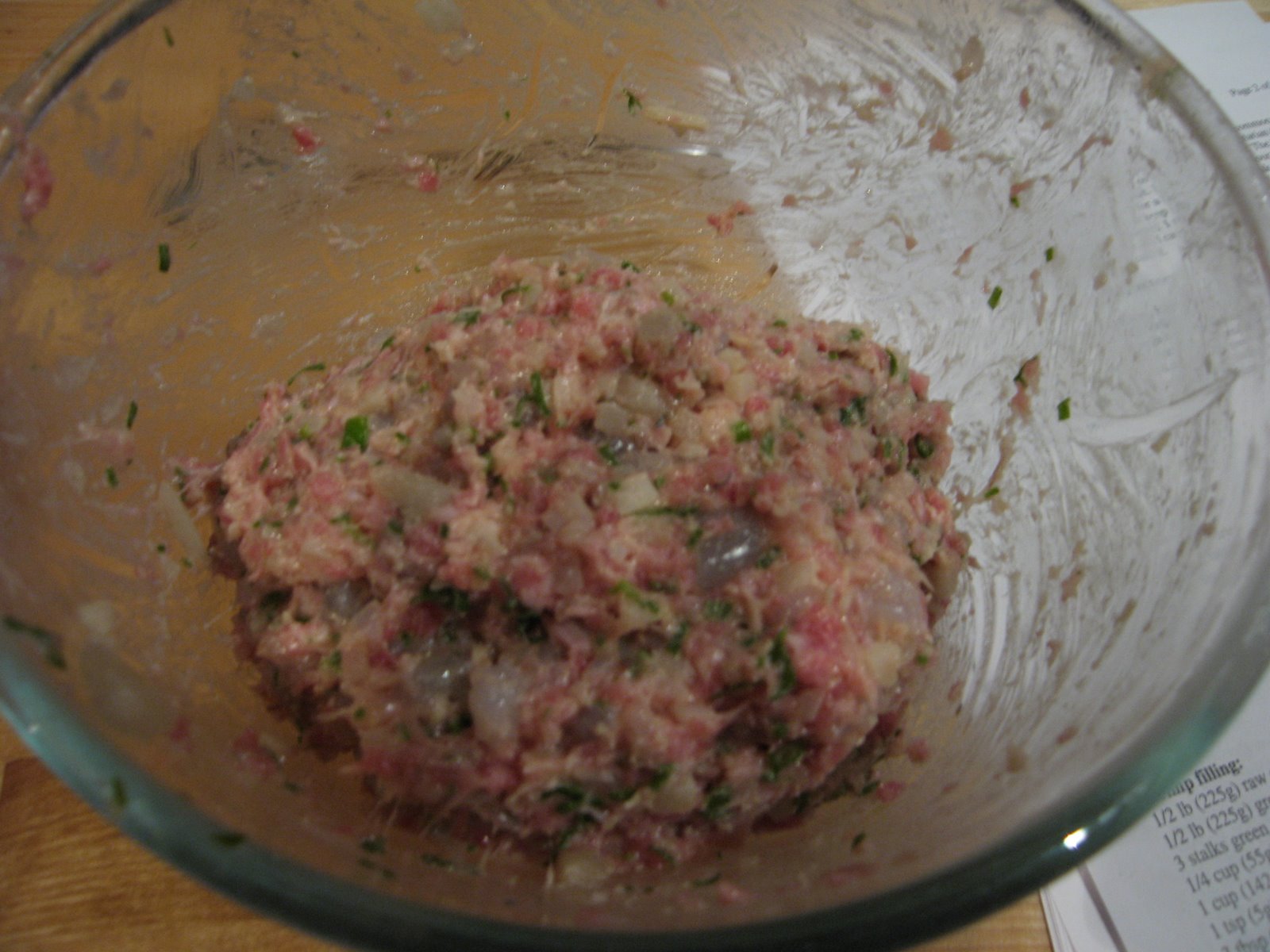
Combine all filling ingredients in a large mixing bowl and mix thoroughly (I mix by clean hand). Cover and refrigerate until ready to use (up to a day, but preferably within an hour or two).

dough: (double this for the amount of filling, but easier to make it in 2 batches – or just halve the filling recipe)
2 cups (250g) all-purpose flour
1/2 cup (113g) warm water
flour for work surface

Make the dough, Method 1: Place the flour in the work bowl of a food processor with the dough blade. Run the processor and pour the warm water in until incorporated. Pour the contents into a sturdy bowl or onto a work surface and knead until uniform and smooth. The dough should be firm and silky to the touch and not sticky.[Note: it’s better to have a moist dough and have to incorporate more flour than to have a dry and pilling dough and have to incorporate more water).

Both dough methods: Knead the dough about twenty strokes then cover with a damp towel for 15 minutes. Take the dough and form a flattened dome. Cut into strips about 1 1/2 to 2 inches wide. Shape the strips into rounded long cylinders. On a floured surface, cut the strips into 3/4 inch pieces. Press palm down on each piece to form a flat circle (you can shape the corners in with your fingers). With a rolling pin, roll out a circular wrapper from each flat disc. Take care not to roll out too thin or the dumplings will break during cooking – about 1/16th inch. Leave the centers slightly thicker than the edges. Place a tablespoon of filling in the center of each wrapper and fold the dough in half, pleating the edges along one side. Keep all unused dough under damp cloth.

To boil: Bring a large pot of water to a boil and add dumplings to pot. Boil the dumplings until they float.

To steam: Place dumplings on a single layer of napa cabbage leaves or on a well-greased surface in a steamer basket with lid. Steam covered for about 6 minutes.

To pan fry (potstickers): Place dumplings in a frying pan with 2-3 tbsp of vegetable oil. Heat on high and fry for a few minutes until bottoms are golden. Add 1/2 cup water and cover. Cook until the water has boiled away and then uncover and reduce heat to medium or medium low. Let the dumplings cook for another 2 minutes then remove from heat and serve.

To freeze: Assemble dumplings on a baking sheet so they are not touching. It helps to rub the base of the dumpling in a little flour before setting on the baking sheet for ease of release. Freeze for 20-30 minutes until dumplings are no longer soft. Place in ziploc bag and freeze for up to a couple of months. Prepare per the above instructions, but allow extra time to ensure the filling is thoroughly cooked.

To serve: Serve dumplings or potstickers hot with your choice of dipping sauce combinations.

Yum!

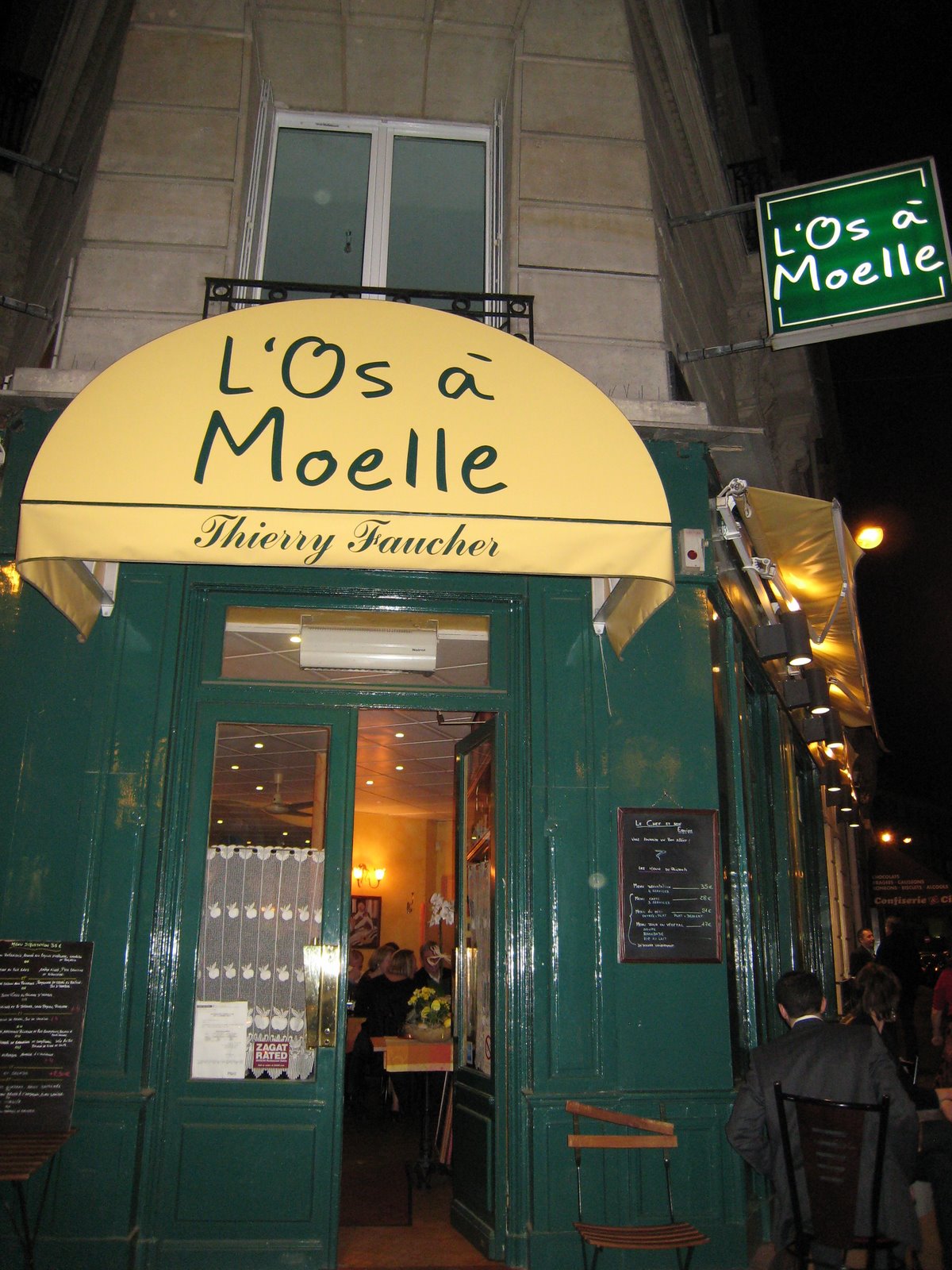
l’os a moelle
3, rue vasco de gama
75015 paris
tel : 01 45 57 27 27

Average Meal (without wine) 35 Euro
Front of Restaurant

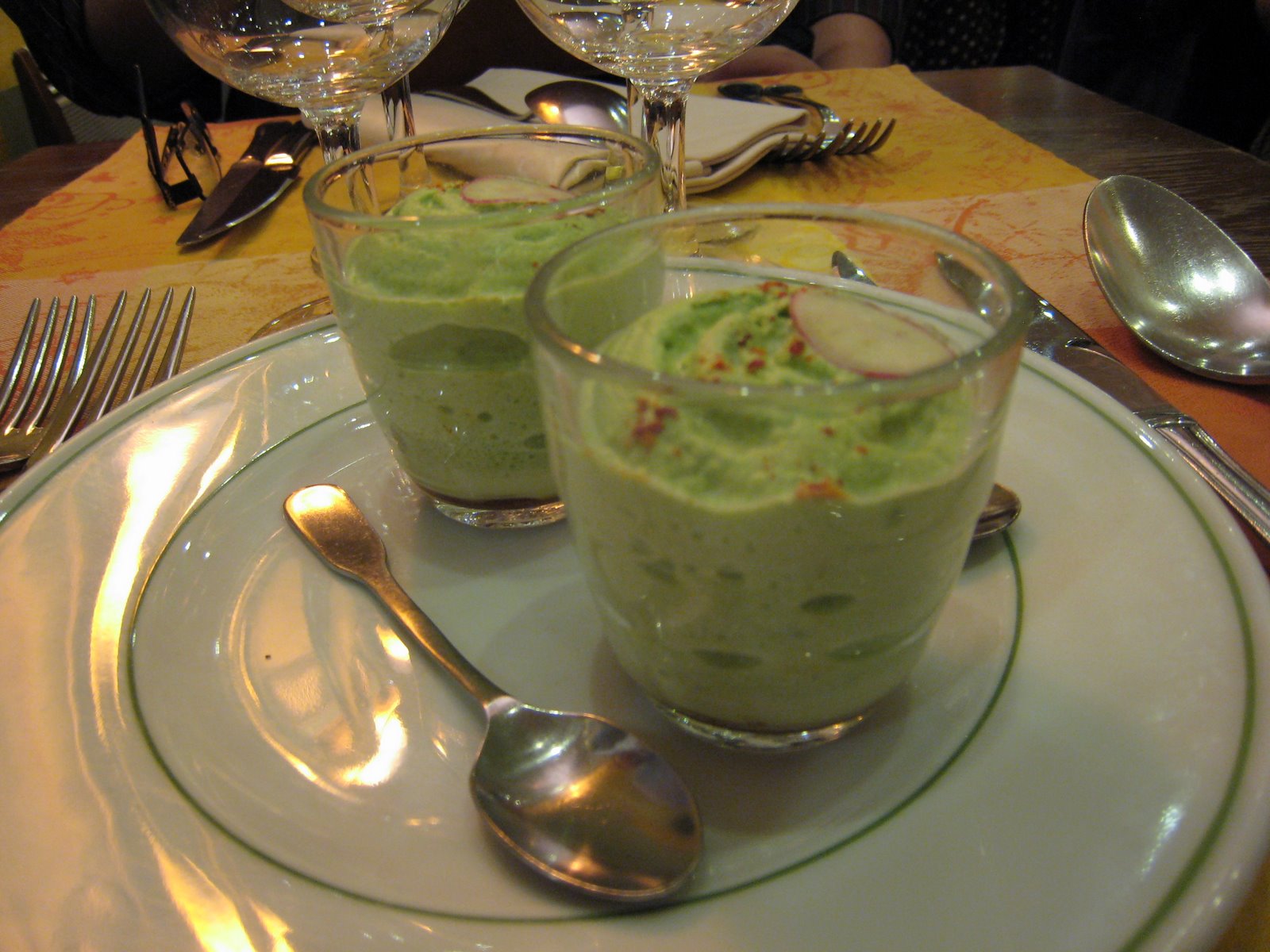
Amuse Bouche


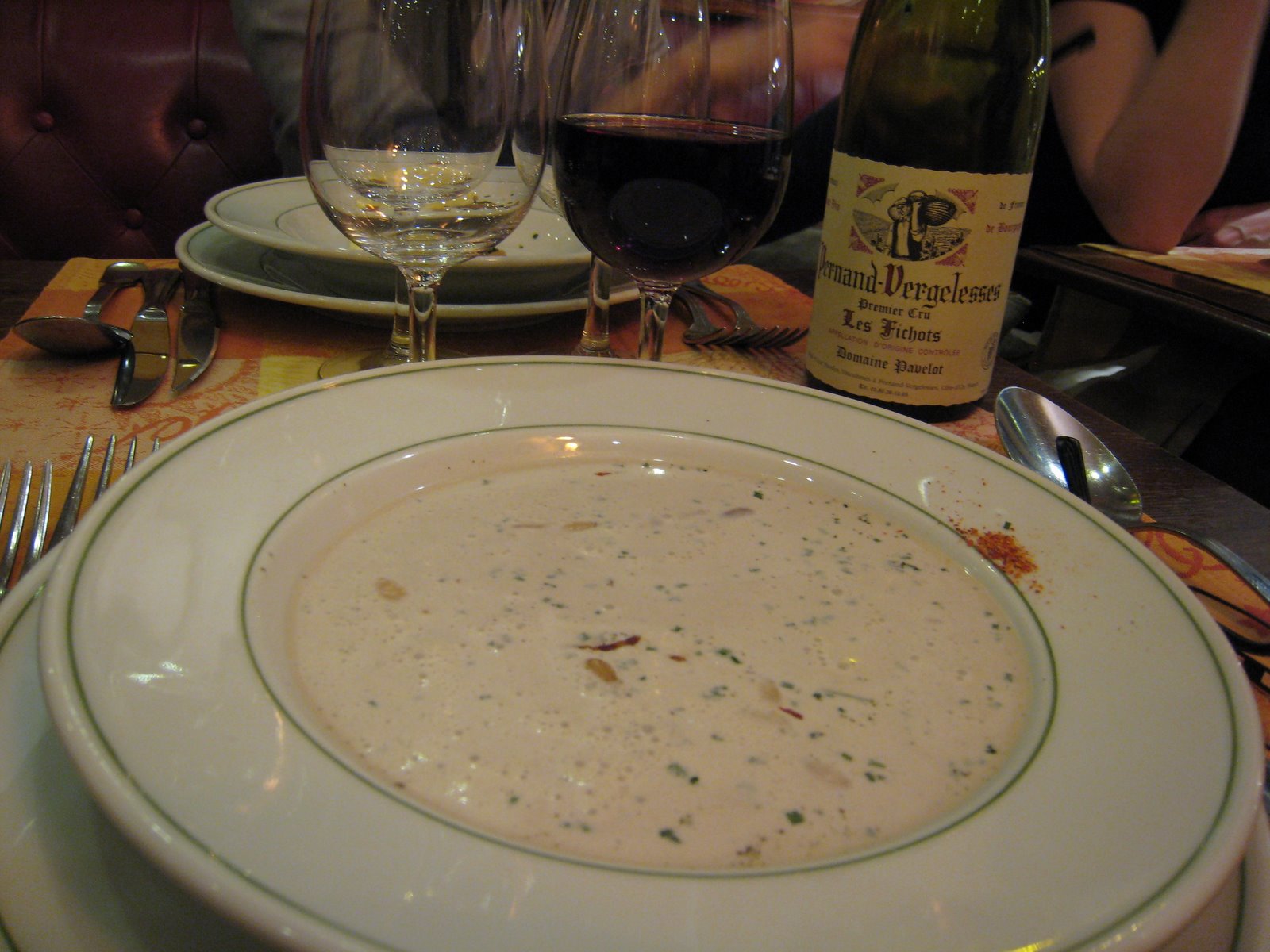
Cream of Mushroom Soup

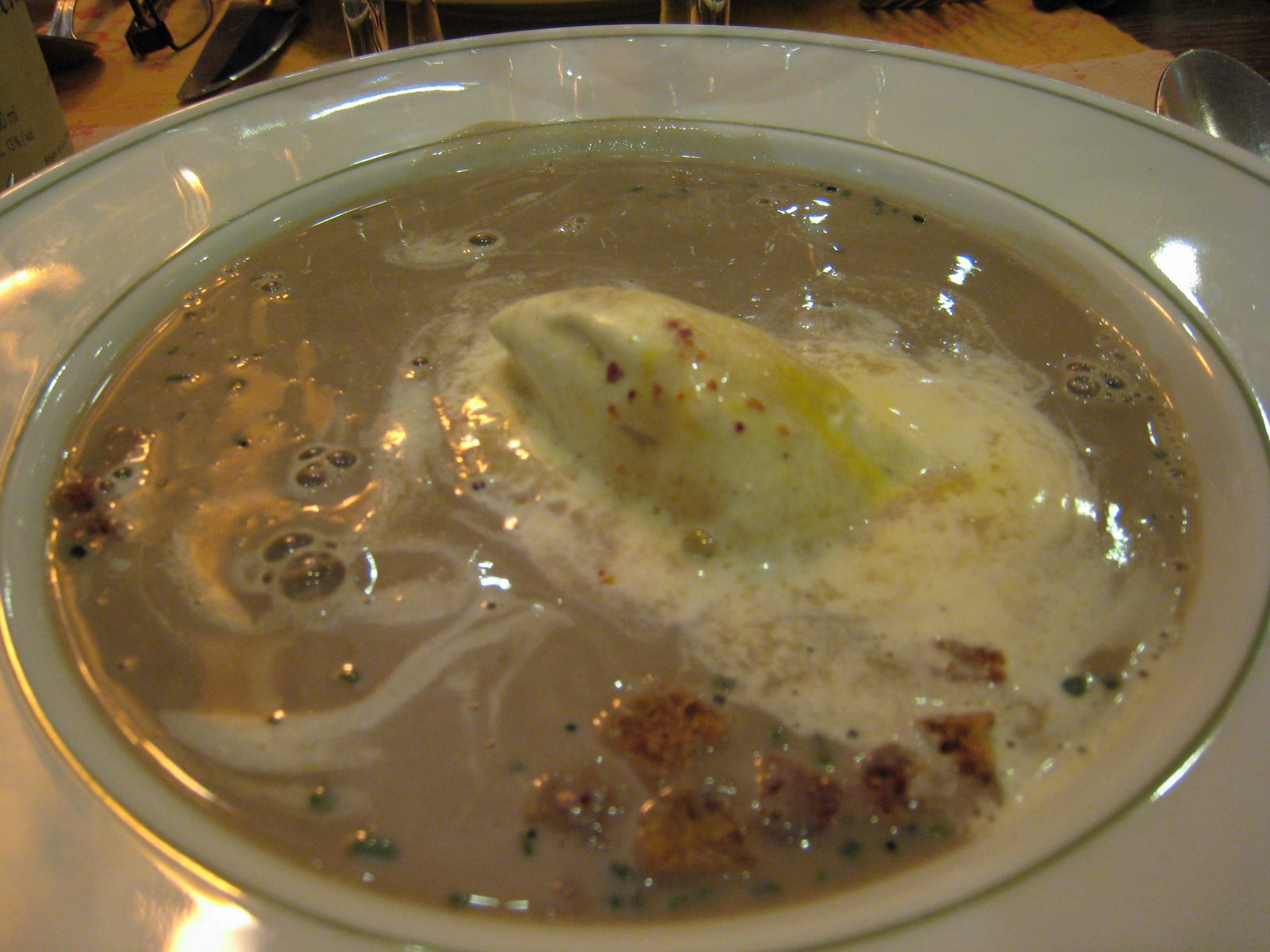
Cream of Lentil Soup with Foie Gras Cream

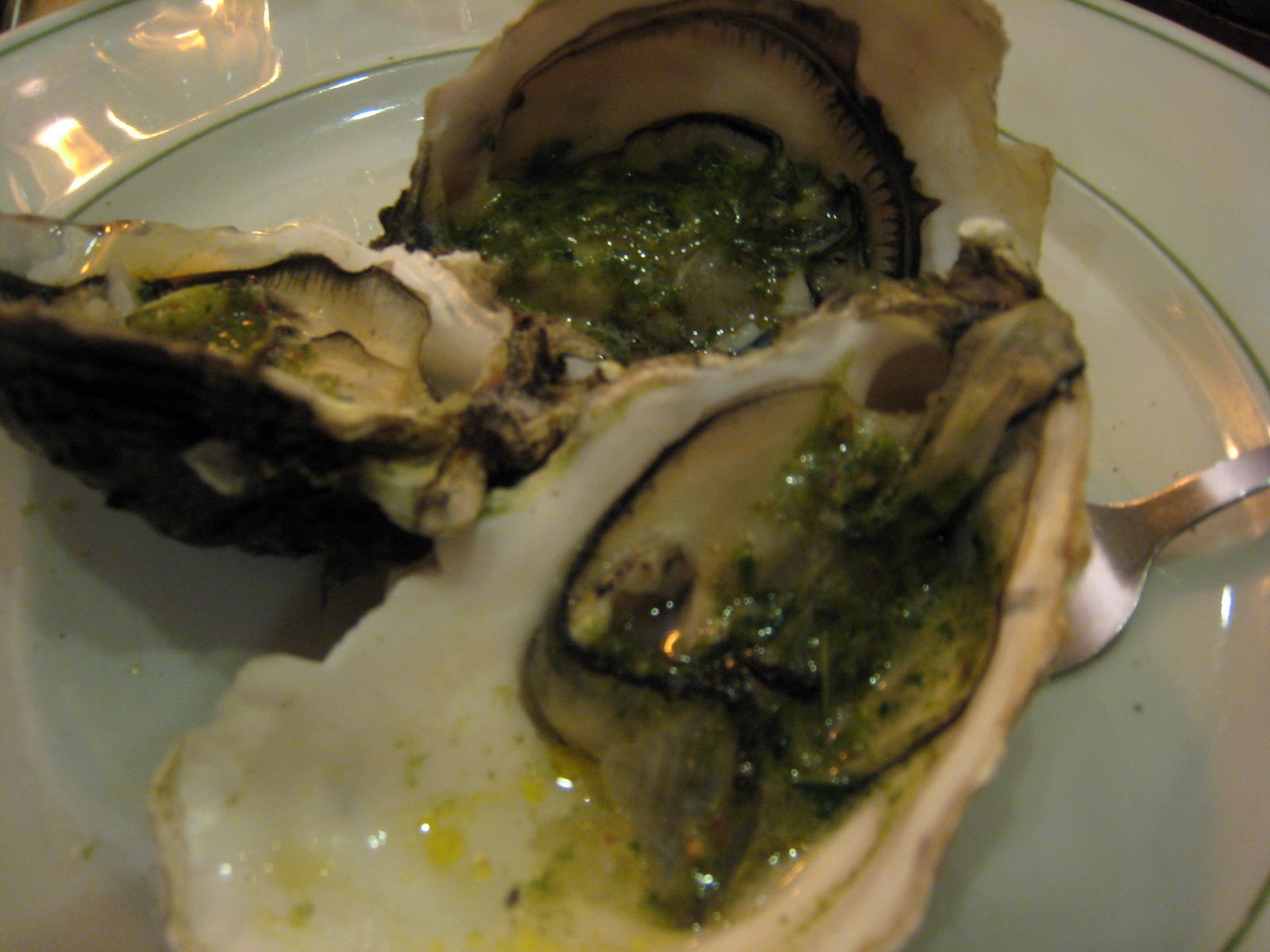
Fresh Oysters

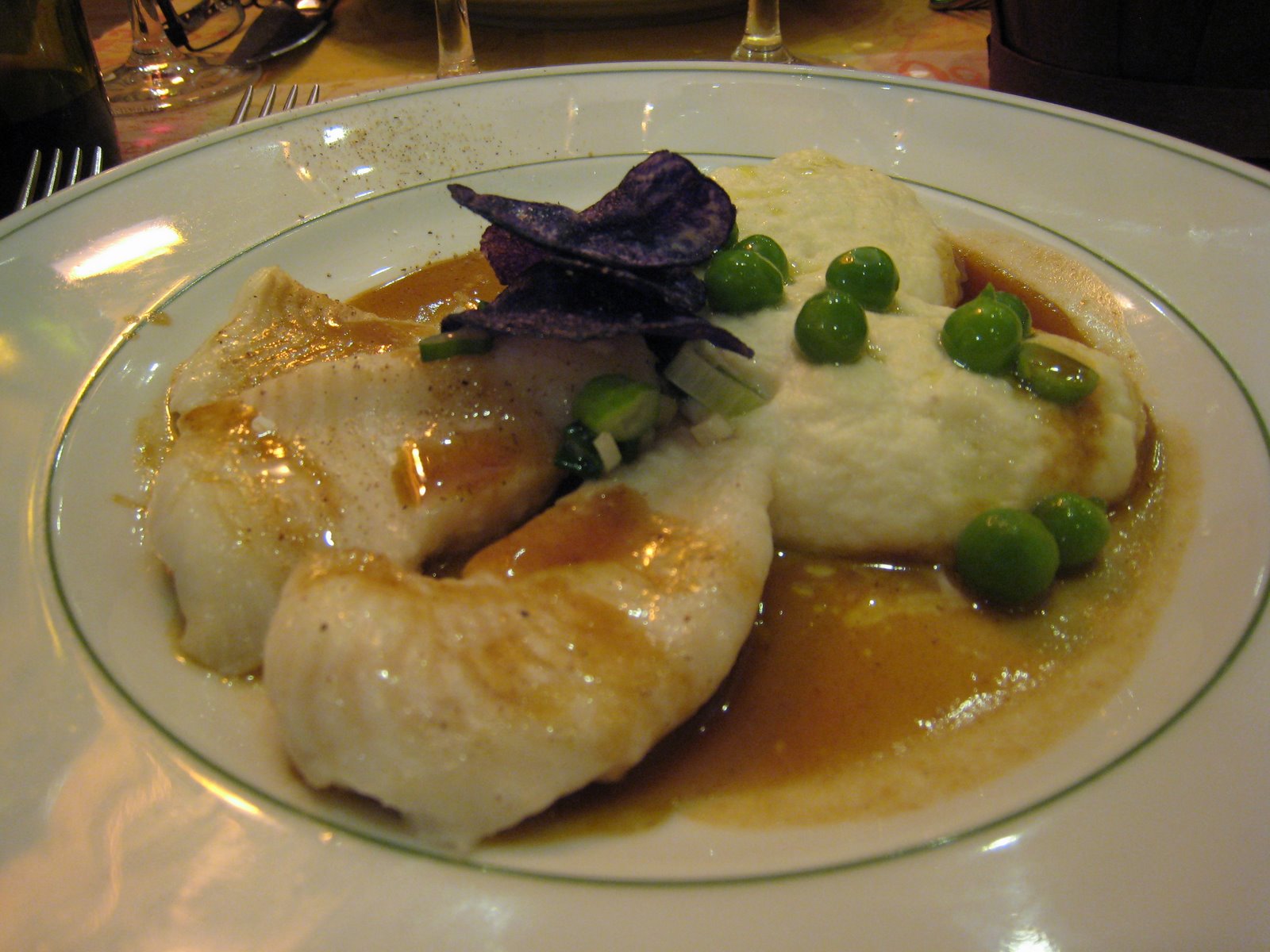
Fillets of sole with celery mousse


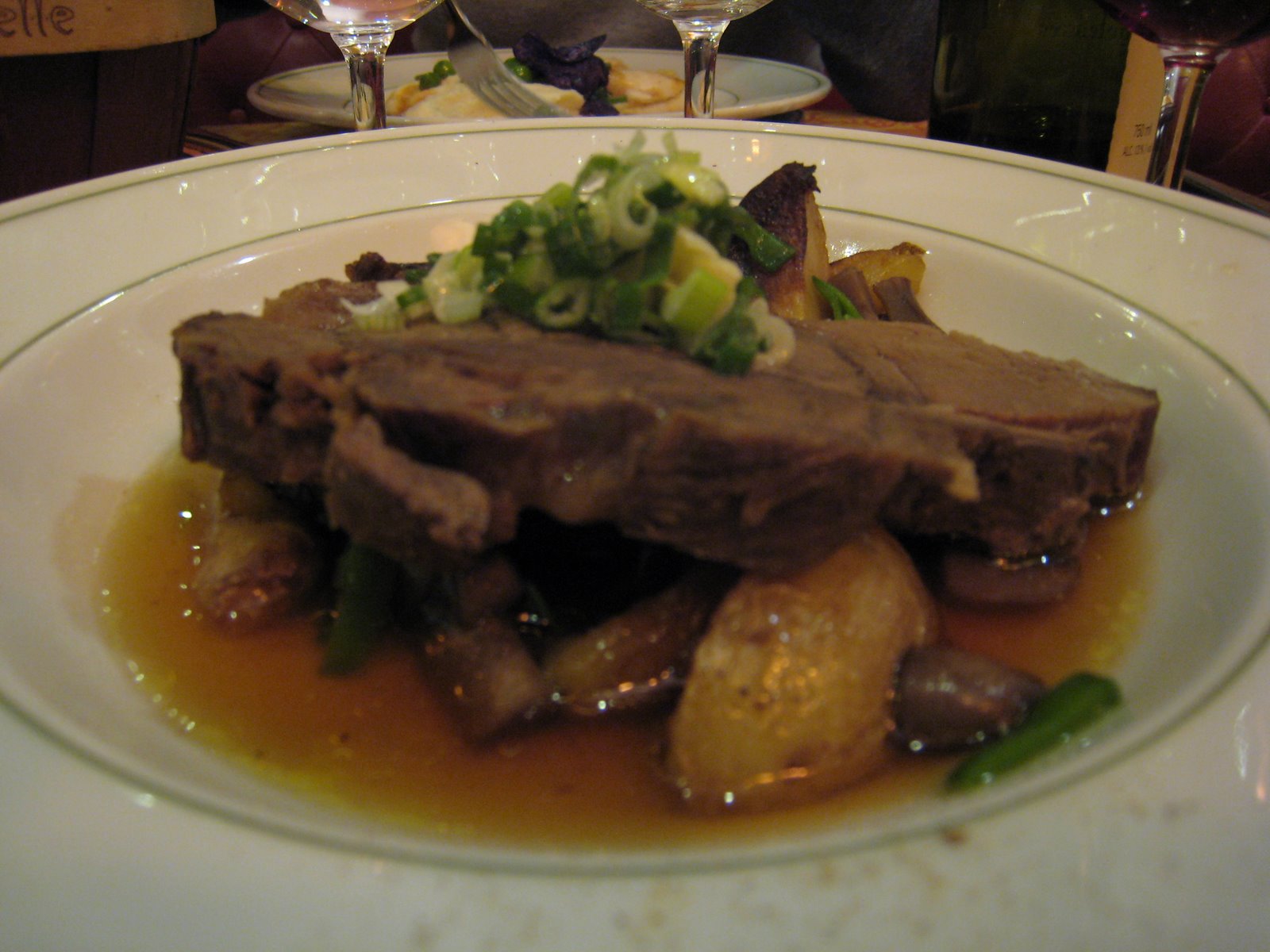
Braised Beef with Potatoes

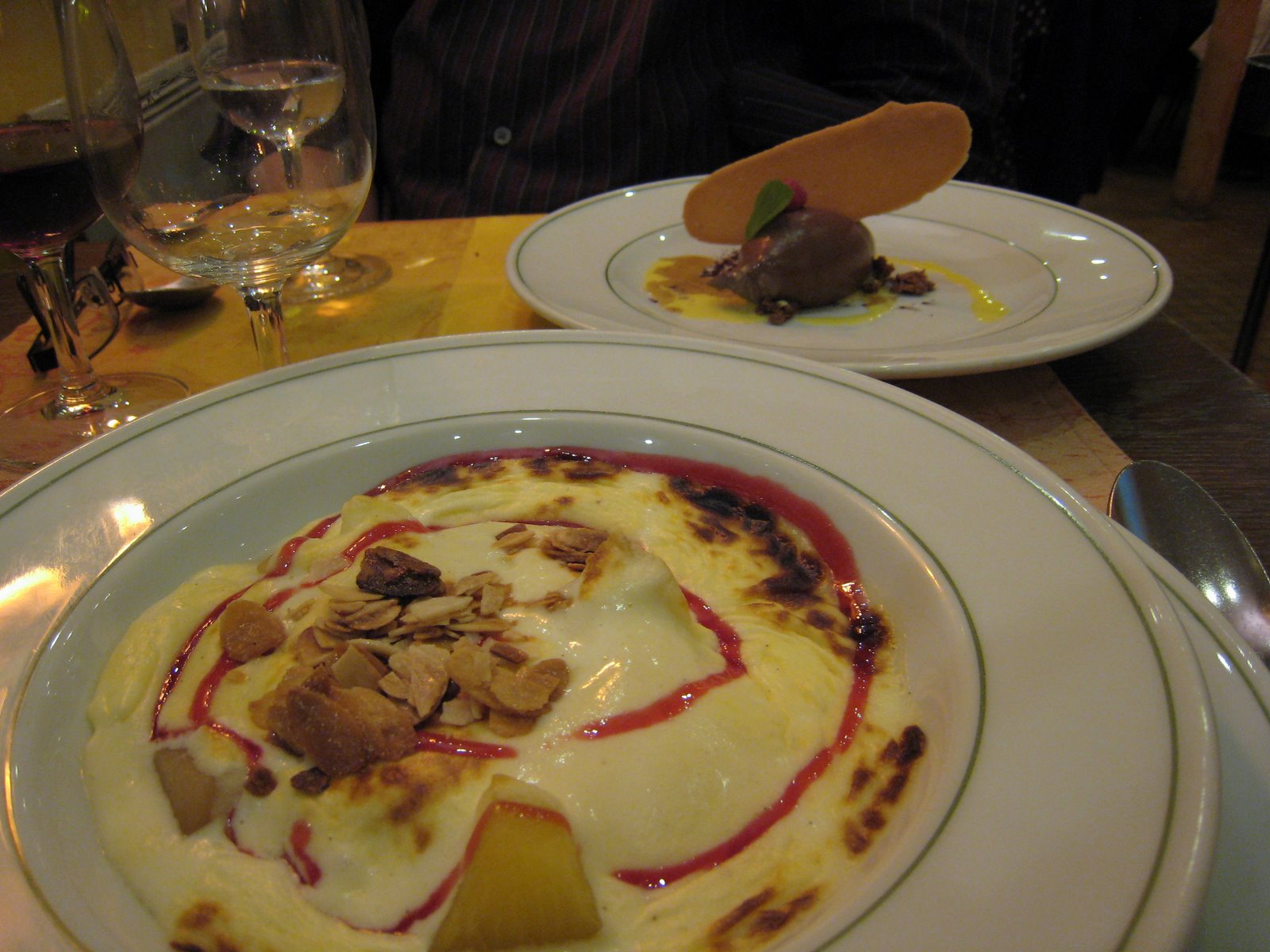
Fruit Sabayon

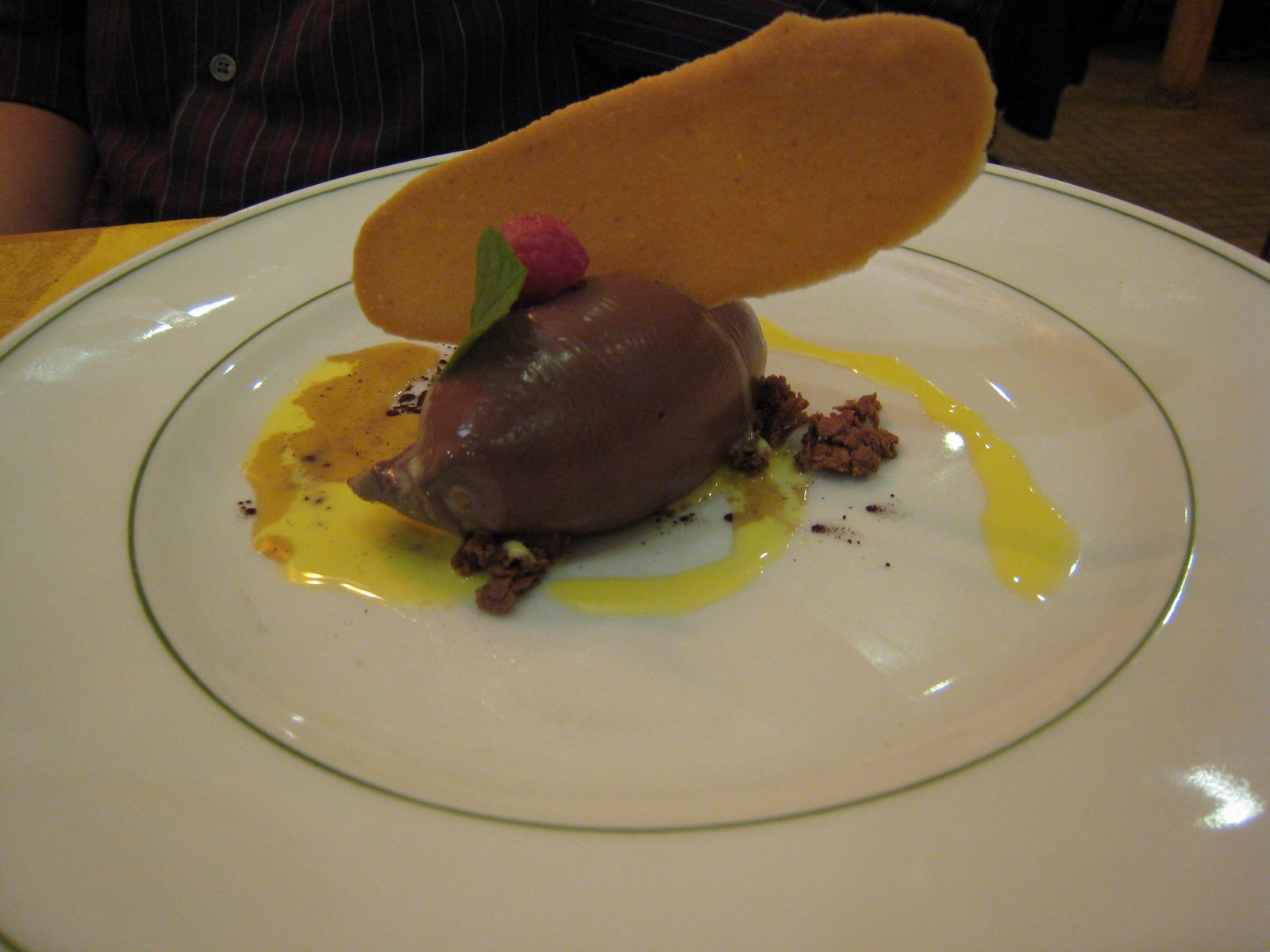
Chocolate Mousse

Chez Michel

10 Rue de Belzunce (10th arr)
Metro : Gare du Nord
Tel: 01 44 53 06 20

Average Meal (without wine) 35 Euro

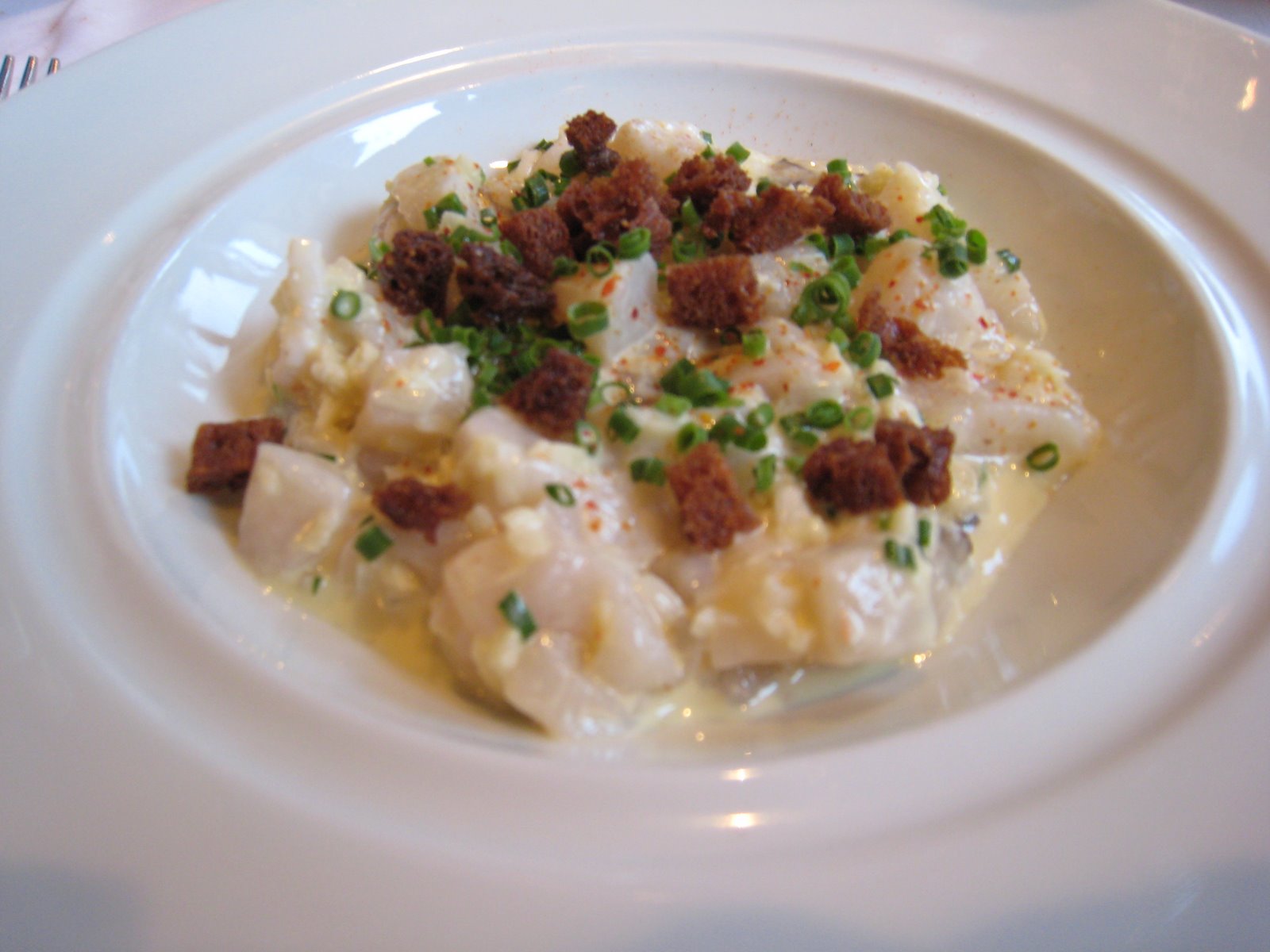
Scallop and oyster tartare with cream

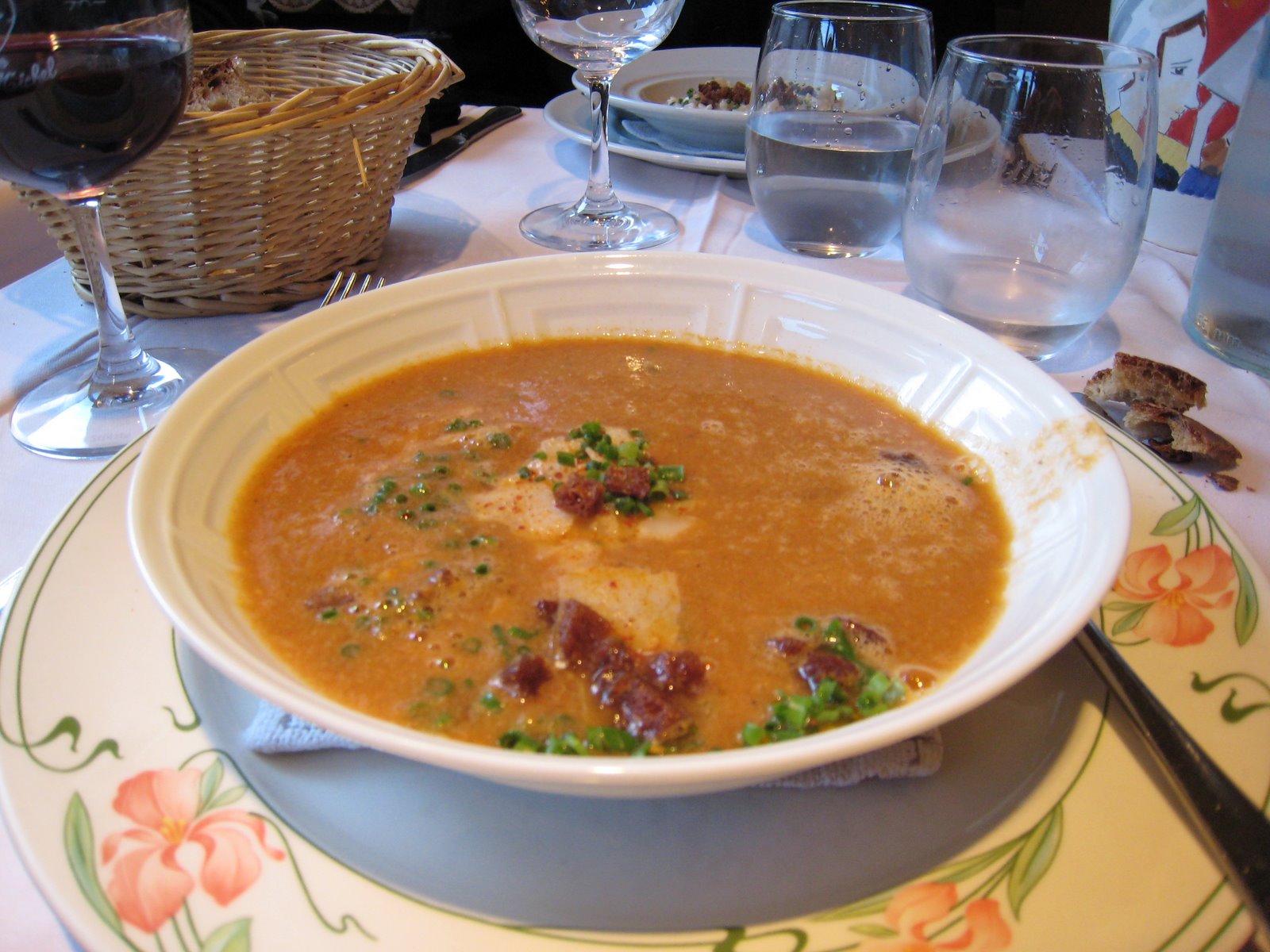
Fish Soup with croutons

Roast Cod with Jerusalem Artichokes

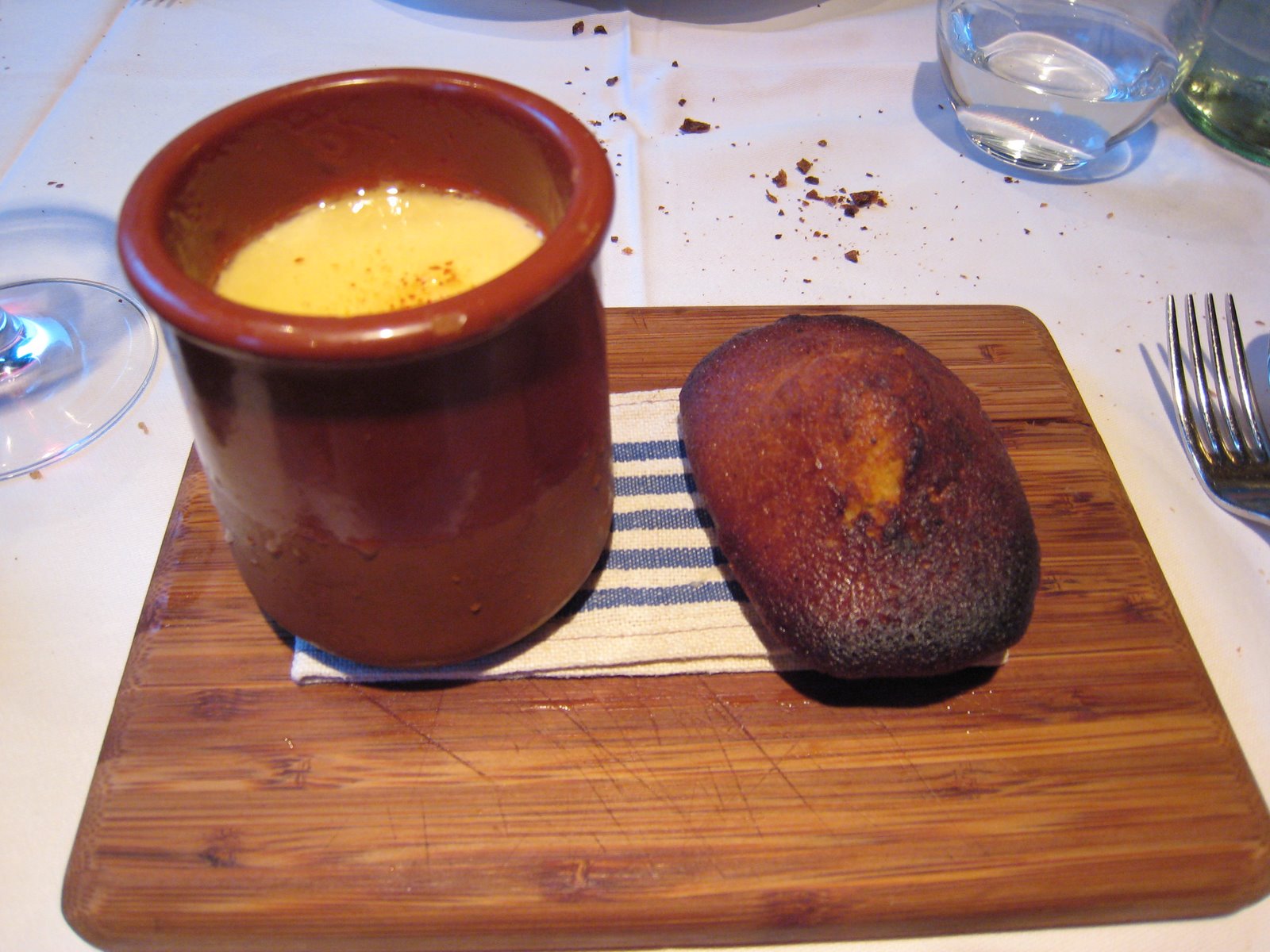
Panna Cotta and a Madeleine


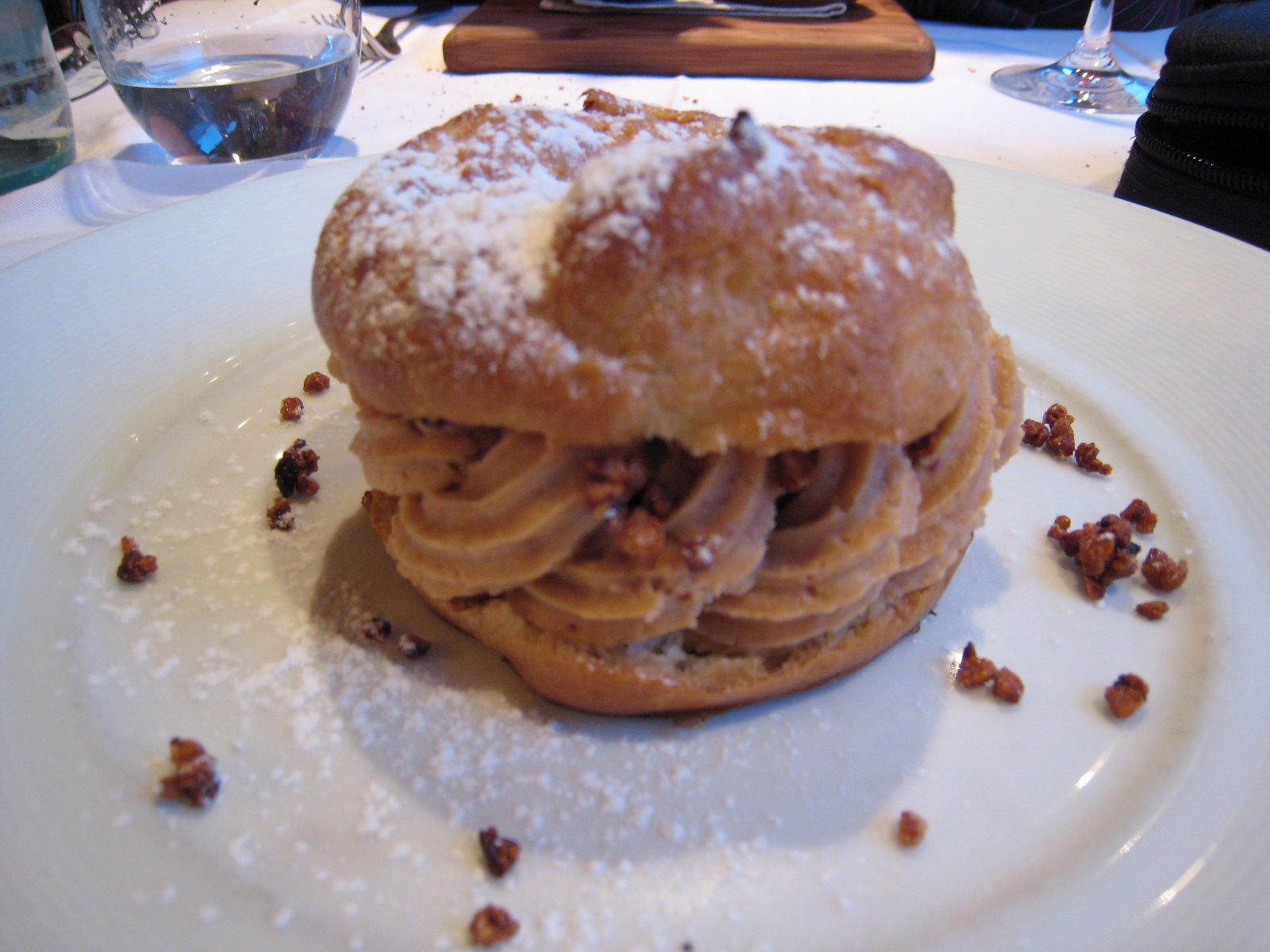
Paris Brest