Feeds:
Posts
Comments

Archive for the ‘Cook’ Category

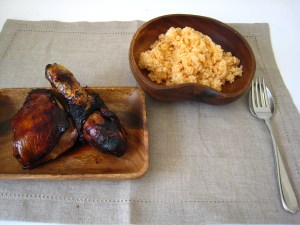
Chicken Barbecue and Java Rice

Chicken Barbecue and Java Rice

Inspired by the beautiful posts from Trish at Sugarlace, I’ve attempted to make a very typical Filipino dish.  We used to have this at a restaurant in the Philippines called Alex III and occasionally for Sunday lunch at my grandmother’s house.  Another version of this dish is to cut up pork belly or shoulder and marinate overnight in the recipe below.  The next day, thread the pork pieces on pre-soaked bamboo skewers and grill.

This dish is traditionally served with  pickled vegetables, Philippine Style called Atchara.

Chicken Marinade – serves 6

  • 12 chicken thighs (or a combination of thighs and drumsticks)
  • 1 can of sprite
  • 1 cup dark soy sauce
  • 1/2 cup brown sugar
  • 6 cloves of crushed garlic
  • salt and pepper

Marinate the chicken pieces in the refrigerator for at least 2 hours or overnight if possible.  When ready to cook, bake the chicken in a 180c oven for 40 minutes.  The reason I do this is because the marinade contains a lot of sugar, pre-baking the dish ensures that the pieces are cooked prior to grilling.  Grilling without pre-baking may result in burned chicken pieces! If you are not grilling the chicken after, continue to bake for another 20 to 30 minutes until the pieces are thoroughly cooked.

If grilling the chicken, fire up the barbecue and grill for around 10 to 15 minutes.  Baste the chicken pieces frequently with the leftover marinade.

Java Rice – serves 6

  • 6 cups cooked rice (cooked a day earlier and left in the refrigerator to cool)
  • 3 tablespoons peanut oil
  • 6 cloves crushed garlic
  • 1/4 cup light soy sauce
  • 1/4 cup tomato sauce (ketchup)

For the rice, heat the oil in a large work and add the crushed garlic until fragrant (around 30 seconds).  Add the salt and pepper and then the rice.  Fry the rice for a few minutes, making sure to separate the grains with the back of a wooden.  spoon.  To finish, add the soy sauce and ketchup and fry for another two to three minutes.

Chicken Barbecue and Java Rice

Read Full Post »

Julia Child's Vegetable Gateau

Julia Child's Vegetable Gateau

Spring on a plate!

Spring on a plate!

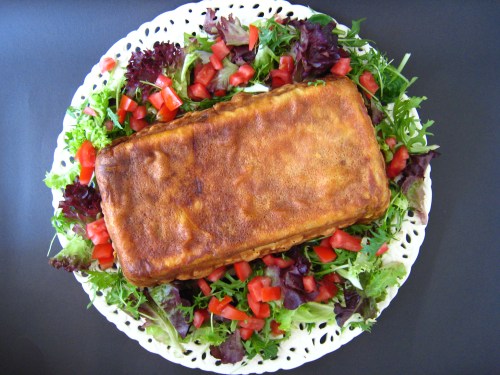
The weather here in Sydney is finally turning!  With warmer weather just around the corner, it’s great to be able to prepare dishes that sing of spring.  For me, that usually means lighter meals, and more vegetables.  This dish embodies spring time – it can be eaten cold, as part of a salad and is just so pretty and colorful to look at!

I took this recipe from my Mom who adapted it from Julia Child’s cookbook called Julia Child & More Company.  Simply put, it is a molded mountain of crepes layered with vegetables and cheese.  If I may give you one tip, plan ahead.  This dish has many components and one can easily think to give up after seeing the 17 or so ingredients.  But if you take your time in preparing this dish you will be handsomely rewarded.  Trust me.  If there was one dish that would convert me into a semi-vegetarian – this would be it!

Ingredients

For the crepe batter

  • 1 cup flour
  • 2/3 cup milk
  • 2/3 cup water
  • 3 eggs
  • 1/4 teaspoon salt
  • 3 tablespoons melted butter

Vegetables and Cheese for Filling

  • 450 grams carrots
  • 8 to 8 tablespoons butter
  • salt and pepper
  • 450 grams fresh mushrooms
  • 4 tablespoons shallots
  • 500 grams fresh broccoli
  • 2 cups shredded grated Swiss cheese

Custard Mixture for Filling

  • 1 cup (225 grams cream cheese at room temperature)
  • 6 large eggs
  • 1 cup heavy cream
  • salt and pepper
  • a pinch of fresh nutmeg to taste

Equipment:

  • Crepe pan
  • 1 loaf tin (Julia uses an 8 cup/2 litre baking dish such as a charlotte mold, 4 inches deep)

Procedure

The Crepes

Pour the flour into a bowl.  Blend the milk and water into the flour, beating with a whip until smooth, then beat in the eggs, salt and butter.  Let rest for an hour or two so that the flour granules can absorb the liquid – making a tender crepe.

The Crepes – cooking

To cook the crepes, heat the frying pan or pans until drop of water sizzle on the surface.   Brush lightly with a little butter (usually only necessary for the first crepe), and pour 2 to 3 tablespoons or so of the batter into the center of the pan, turning the pan in all directions as you do so to spread the batter over the bottom surface.  Cook for 30 seconds or so, until you see, when you lift an edge, that it is nicely browned.  Turn and cook for 15 seconds more.  Arrange the crepes as they are made on a cake rack so they will cool and dry off for 5 minutes or so.  When dry, stack together, wrap in foil and place in a plastic bag.

*Note: Crepes will keep for 2 to 3 days in the refrigerator.  To freeze, it is best to package them in stacks of 6 or 8; either thaw at room temperature, or unpackage and heat in a covered dish in a moderate over for 5 minutes or until they separate easily.

Preparing the vegetables

Trim and peel the carrots, and cut into julienne matchsticks.  Saute in 1 1/2 tablespoons butter in a large frying pan, swirling and tossing frequently until carrots are nicely tender and being careful not to brown them.  Season well with salt and pepper.  Set aside.

Trim and wash the mushrooms, and cut into a fine mince.  Saute in the same large frying pan along with the shallots until the liquid from the mushrooms evaporates (around 10 minutes).  Season with salt and pepper and set aside in another bowl.

Trim and wash the broccoli.  Cut bud ends off stalks to make them about 2 inches long.  Starting at the cut ends, peel as much skin off as you easily can; peel skin of stalks cutting down to expose the tender whitish flesh, then cut into pieces half the length of your little finger to ensure quick and even cooking.  Drop the peeled stalks and florets into rapidly boiling salter water and boil uncovered for 3 to 5 minutes.  Drain immediately and chop into piece about 1/4 inch in size.  Toss briefly in 2 tablespoons hot butter and salt and pepper to taste.  Set aside.

The vegetables can be cooked a day ahead.  Cover and refrigerate until ready to use.
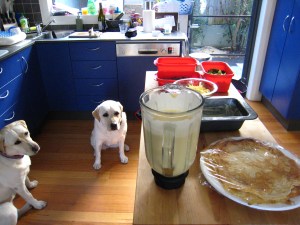
My little helpers giving moral support!

My little helpers giving moral support!

The Custard Mixture

Blend the cream cheese with the rest of the custard ingredients in a blender or food processor until smooth.

To Assemble

Preheat the over to 180c.  Smear some butter over the inside of the baking tin and line the bottom of the dish with buttered wax paper.  Fit 1 crepe (good side down) in the bottom of the dish and space 4 around the sides.

Spread 1/4 of the grated cheese in the bottom of the dish, cover with the carrots and pressing them well in place, and top with 1/3 of the remaining cheese.  Ladle in enough custard mixture to come just to the level  of the carrots and cheese.

The carrot layer being assembled

The carrot layer being assembled

Arrange 1 crepe on top, and spread over it the mushrooms and another ladleful of custard.
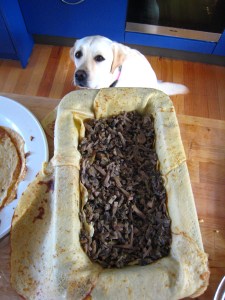
The mushroom layer with Baci watching closely

The mushroom layer with Baci watching closely

Arrange 1 or more crepes over the mushrooms and spread 1/2 of the remaining cheese, then broccoli and the final bit of cheese.
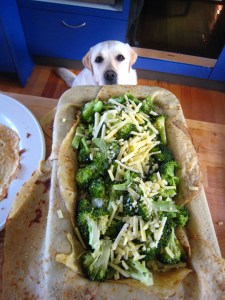
The broccoli layer - Baci... still watching

The broccoli layer - Baci... still watching

Pour on the last of the custard mixture and fold the first layer of overhanging crepes up over the filling; cover with a crepe and fold the first layer of overhanging crepes up over the filling; cover with a crepe and fold the outside layer of overhang up over it, and cover with 1 or more crepes.  Place a round of buttered wax paper over the dish, and cover with a sheet of foil.

Bake the gateau immediately in case the custard leaks against the sides and bottom of the dish, sticking the crepes to it and making a mess later when you attempt to unmold!

*Note: I only used a loaf pan which was considerably smaller than the baking dish Julia recommended.  As such, there was some leftover custard and vegetables.  Never mind, the idea is that you layer the dish with cheese, vegetables, custard and then the crepe.  Except for the mushrooms which is just custard and mushrooms.  If using a loaf pan, you will also have leftover custard and I had some left over vegetables to make sure that my loaf pan did not overfill.

Baking using the 8 cup baking dish

This will take around 1 3/4 hours.  Bake on lower middle rack in a preheated oven, placing a pan below the dish in case some of the custard filling dribbles.  In about 1 hour, when the gateau has started to rise, turn oven up to 205C.  It will eventually rise and inch or more and is done when a meat thermometor reads 71c.   Remove from the oven and let rest at room temperature for around 20 to 30 minutes allowing the custard to set and settle.  Then run a thin blade knife carefully around the inside of the dish, and unmold.

Baking using the loaf pan

This will take around 1 hour.  Bake on the lower middle rack in a preheated oven.  After an hour, turn the oven off and leave the gateau to rest for 10 minutes.  Remove from the oven and let rest at room temperature for 20 to 25 minutes, allowing the custard to set and settle.  Then run a thin blade knife carefully around the inside of the dish and unmold.

Surround the gateau with lettuce leaves and fresh tomatoes.
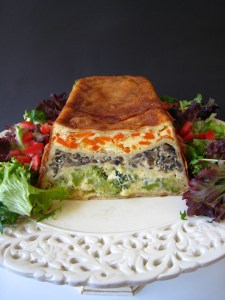
Makes a delicious cold dish as well!

Makes a delicious cold dish as well!

Read Full Post »

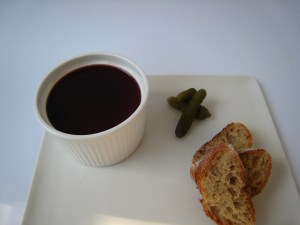
Chicken Liver Parfait

Chicken Liver Parfait

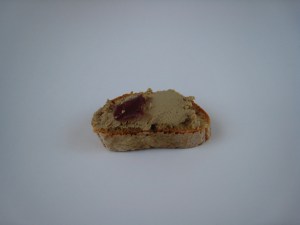
I’ve always considered Chicken Liver Parfait as “cheap chic” – it seems very luxurious but not very expensive to make.  Adding cream results in a also mousse like texture.  It’s heaven if you’ve got some warmed up slices of baguettes and cornichons!

I’ve adapted this recipe from Australian Gourmet Traveller’s book called Fare Exchange.   The Australian Gourmet Traveller asks the chefs to share recipes that have been requested by diners to their restaurants.  This one comes from Must Winebar in Perth.  While I have never been to Perth – if all their dishes taste this good – when I ever decide to visit, this restaurant will be at the top of the list!

Ingredients

  • 150 ml port
  • 120 ml madeira
  • 1 large shallot, finely chopped
  • 1 large clove of garlic, finely chopped
  • 1 1/2 teaspoon thyme leaves
  • 500 grams organic chicken livers, trimmed and coarsely chopped
  • 1 cup milk
  • 250 grams unsalted butter, melted
  • 50 ml cream
  • 2 eggs
  • 1 1/2 teaspoon salt
  • 1 teaspoon quatre-epices
  • Pepper to taste

For the Jelly

  • 150 ml grenache based red win
  • 3 cloves
  • 1 1/2 teaspoons caster sugar
  • 2 teaspoons lemon juice
  • 1 teaspoon salt
  • 1/4 cup water
  • 2 leaves gelatine (5 grams each)
  1. Place fortified wines, shallot, garlic and thyme in a small saucepan and simmer over medium heat for 5 minutes or until reduced by 1/4 cup.  Cool.
  2. Place chicken livers in milk for a few hours to remove any bitter taste.
  3. In a small non-stick frying pan, cook the livers over medium heat until the livers just start to change colour, then transfer to a food processor.  Add the port mixture, cooled melted butter, eggs, salt, cream, pepper  and quatre-epices and process until smooth.  Using a spatula, push the mixture through a fine sieve placed over a bowl.
  4. Oil a 1 litre capacity terrine (I used 5 ramekins), then line the base with baking paper.  Wrap outside of terrine in foil to prevent any water seeping in.  Pour chicken liver mixture into prepared terrine, then place in a deep roasting pan.  Pour in enough boiling water to come one third of the way up side of terrine, then bake at 150c for 45 minutes or until just set.  Remove terrine from water bath and cool to room temperature then cover with plastic wrap and refrigerate overnight or until chilled and firm.
  5. For the jelly, combine wines, cloves, sugar and lemon juice, salt and water in a small saucepan and bring to the boil.  Meanwhile, soak gelatine leaves in cold water until soft then squeeze out excess water.  Add gelatine leaves to wine mixture, then stir until dissolved.  Strain through a fine sieve into a jug and cool to room temperature.
  6. Pour the jelly on top of the parfait and refrigerate until set (about 1 hour)
  7. To unmould parfait, invert onto a platter, then rub a hot cloth over the outside of the terrine to help release the parfait.  Using a hot, dry knife, cut the parfait into slices and serve with baguette slices and cornichons.

031

Read Full Post »

044

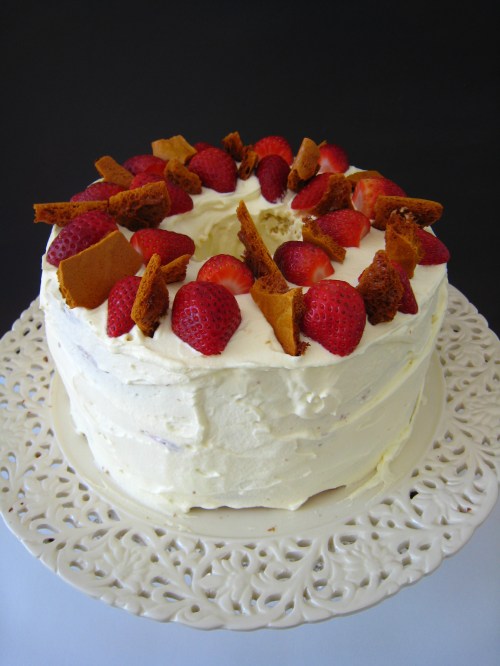
Brittle Torte - an El Comedor Speciality!

Brittle Torte - an El Comedor Speciality!

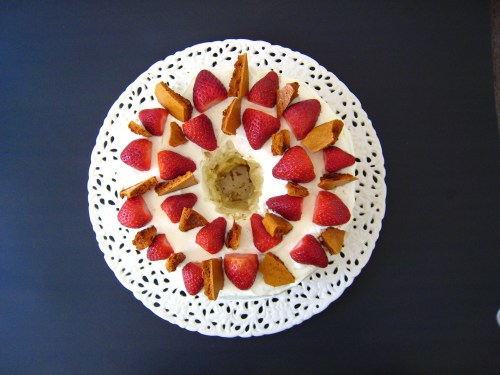
Brittle Torte was my favourite dessert at El Comedor.  To me it seemed like such a decadent  looking cake and it stood so tall and proud with the brittle (I think they call it hokey pokey here) sticking out.  I have always been a little intimidated to make this recipe but  I finally decided to have a go.  The conclusion?  It wasn’t as hard as I anticipated.  You will definitely need to plan ahead and maybe read the recipe a few times before you begin (I didn’t and realized half way through that I lacked baking soda to make the cake!).

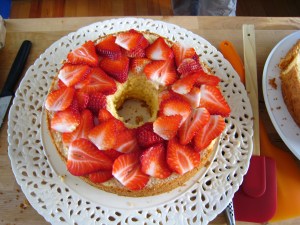
This cake has two layers and sandwiched in between is a generous layer of fresh strawberries and cream.  It is covered with even more cream and topped with more strawberries and the brittle.  While it is a large cake (you will need an angel food pan), it is very light because it is leavened with air.  When I first read the recipe I was surprised to learn that the sponge was not made with butter.  No wonder I managed to eat two slices at a time!

Ingredients

For the Cake

  • 1 1/2 cups flour, sifted twice
  • 3/4 cup sugar (for the cake)
  • 8 egg yolks
  • 1/4 cup cold water
  • 1 tablespoon lemon juice
  • 1 teaspoon vanilla
  • 8 egg whites
  • 1 teaspoon cream of tartar
  • 1 teaspoon sale
  • 3/4 cup sugar
  1. Preheat the oven to 180 C.
  2. Sift the flour twice and add 3/4 cup sugar into a bowl.  Make a well in the center and add the egg yolks, water, lemon juice and vanilla.  Beat until smooth (I used the kitchen aid to make things easier)
  3. Beat the egg whites with cream of tartar and salt until very soft peaks form.  Add the remaining sugar gradually, 2 tablespoons at a time.  Continue to beat until still meringue forms.

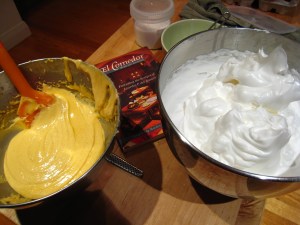
    The egg yolk and meringue mixture

    The egg yolk and meringue mixture

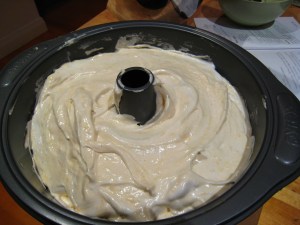
  4. Fold the first mixture gently into the meringue.  Pour the batter into an ungreased 10 inch tube pan.  Carefully cut through the batter, going around the tube 5 or 6 times with a knife to break large air bubbles.

    Make sure the pan is ungreased which will help the mixture rise in the oven

    Make sure the pan is ungreased which will help the mixture rise in the oven

  1. Bake for 50 to 55 minutes or until the top springs when lightly touched.
  2. Cool the cake.  Remove it and split crosswise in 4 equal layers (I only did 2 layers).  Put the layers together with the whipped cream and brittle. For my variation, I only split the cake into two layers and layered it with strawberries.

For Whipped Cream

  • 2 cups thickened cream
  • 1/2 cup powdered sugar
  • 1 tsp vanilla

Whip the cream (again, the kitchen aid was indispensable).  When you have almost reached the stiff peak stage, add the sugar and then the vanilla.

For the Brittle Topping

  • 3/4 cup sugar
  • 1/8 teaspoon instant coffee
  • 2 tablespoons light corn syrup
  • 2 tablespoons hot water
  • 1 1/2 teaspoons baking soda
  1. In a saucepan, combine the sugar, coffee, corn syrup and water.  Stir well.
  2. Cook to hard-crack stage (148C) over medium high heat.
  3. Remove from the heat and immediately add the baking soda.  Stir vigorously, but only until the mixture blends and pulls away from the sides of the pan.
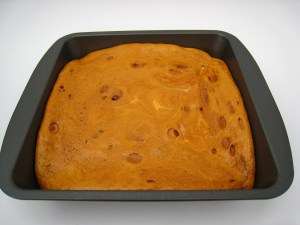
  4. Quickly pour the foamy mixture into an ungreased shallow metal pan.  Do not spread or stir.  Let stand until cool.  Knock out the pan and crush the brittle into chunks.

    Here is the brittle

    Here is the brittle

Assembly

When the cake is cool, spread the whipped cream between the layers (see above) and the remainder over the top and sides of the cake.  Cover the top and sides with candy.  You may also sprinkle with blanched almond halves if desired.

Again my variation, I only used two layers where is sandwiched cream and strawberries and topped with strawberries and brittle.

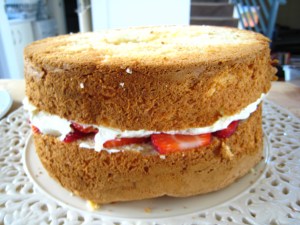
Split the layers and sandwich with strawberries

Split the layers and sandwich with strawberries

Next cover with cream and the next cake layer

Next cover with cream and the next cake layer

Enjoy!

A slice of brittle torte

A slice of brittle torte

Read Full Post »

El Comedor

El Comedor Meals and Memories

El Comedor Meals and Memories

Ever since I can remember, Mama (my grandmother), showed us her love through her food.  Every Sunday all her seven children, their spouses and us grandchildren would go to her house for our “Sunday Lunch”.  Good food was what kept our family together.  On many occasions the food was prepared by El Comedor, our Spanish restaurant and delivered to her home.  I can honestly say that it is only today I can appreciate what a treat it was to always have great food around the house – I guess back then because we had it all the time, I thought it was the norm!

Anyway, this is the start of a series of recipes dedicated to my Mama.  I want to dedicate this section to her because she taught me the importance of family and staying together and so many years later, despite our busy schedules, my brother and sisters still continue to have our own Sunday Lunch.

I also want to dedicate this section to her because I think she was one of the strongest persons I know.  She was widowed at the young age of 42 and she started cooking to support her family. First she started teaching and accepting orders for some of her cakes.  As her fame spread, she was asked to run executive loungers or dining rooms around Manila.

She founded El Comedor (The Dining Room) in 1975 with her two daughters and what began as a housewife’s pastime, literally became her bread and butter!   She not only had my Mom and my aunt (Tita Chito) to supervise and run the restaurant, she also taught her house help to cook and trained one of them to be the maitre ‘d.

El Comedor's first location in Manila (1975)

El Comedor's first location in Manila (1975)

In 2004 my Mother and my Sister (Tina) along with Mama published a cookbook called  El Comedor : Meals and Memories Featuring the Recipes of Lourdes P del Rosario.

This recipe collection is like our very own family album and all the dishes were served during our Sunday lunches, birthday parties, weddings, baptisms, Christmas meals and many more special occasions.

I have over 300 cookbooks today and yet this is still and will always be my favorite.  For me, it’s familiar, comforting, and part of my heritage.

Mama with her grandchildren

Mama with her grandchildren

Mama with her daughters (in daugthers in law) during one Sunday lunch

Mama with her daughters (in daugthers in law) during one Sunday lunch

There is one thing though that I would like changed it the cookbook, or maybe one day, suggest it for the updated version – that is – to have someone photograph the dishes.  Unfortunately, the cookbook has no pictures… and I am getting old and forgetful.  So when I make the dishes, sometimes I have to ask my Mom or sisters how the food was presented.

So while I had no part in writing the original cookbook – this is my humble addition to the cookbook.  Every so often, when inspiration hits, I’ll blog about a recipe and share with you a pictures of the dish as well.

So stay tuned for the first recipe tomorrow… can’t tell you too much about it except that it was one of my favorite desserts!

I think Mama would be proud!


Read Full Post »

Paella Negra

Paella Negra

There are decisions in life that we all make and we know that they can change our lives forever.  For me, one of them was deciding to move with my husband to Australia and leave the comforts of Manila behind.  Other decisions, you think are inconsequential but when you look back, you realize that choosing something else would have changed the course of your life in ways you would never imagine.

Ages ago, I briefly dated someone I thought had lots of potential.  Cute, smart, great conversations etc… you know what I mean.  On our first few dates, I would order “safe date” dishes – nothing you had to eat with your hands (ribs), made your breath stink (prawns in garlic sauce) etc.

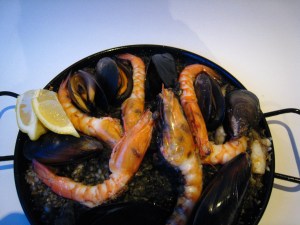
Around our fifth or sixth date, I decided we were close enough that I would order Paella Negra – one of my favorite dishes.  It’s basically made of squid or cuttlefish, paella rice and sauteed in some of the squid ink.  It’s delicious but definitely not a first date dish.

So we ordered it and ate it.  After two bites I thought “well, here goes” and I flashed him a great big smile.  While he tried to keep his surprise in check, I did notice he was slightly taken aback.  I guess he didn’t realize that the ink from these cephalopod babies could stain your teeth.

Paella Negra

And things turned quickly from there.  He started getting self conscious (must have thought, well if her teeth are stained, so are mine!) and barely said anything throughout the meal.  What’s more, he cracked no jokes, bared no smile and when I tried to engage him in more conversation, got monosyllable answers.  Not very encouraging.

I decided then and there that this guy was not the one for me.  If he could not accept my mouth full of black teeth, he could not accept me.  Period.  That was it. Fast forward to today… when the daring cooks’ challenge was announced, I immediately thought of that date and how my decision to order the Paella Negra just changed my life completely… for the better of course!

The Daring Cook’s challenge for August was Rice with Mushrooms, Cuttlefish and Artichokes.   The original recipe was by Jose Andres but I have varied it so that the resulting dish was more of a Paella Negra.  Thank you to Olga for giving us the flexibility to do so.

Recipe (serves 2 to 3)

Ingredients

3 tablespoons olive oil

1 onion, diced

2 cloves garlic, crushed

1 tablespoon tomato paste

1 tablespoon squid ink

500 grams squid or cuttlefish

6 pieces fresh prawns, peeled but with head and tail intact

handful of mussels

1 cup calasparra rice

2 1/2 chicken stock

1/2 cup dry white wine

salt and pepper

aioli sauce

Equipment – Paella Pan

Directions

  1. Gently saute the onions and garlic with olive oil until the onions are translucent
  2. Add the cuttlefish and saute for another 3 to 4 minutes over medium heat
  3. Add the tomato paste, squid ink and cook it out
  4. Next, add the dry white wine and allow the alcohol to evaporate (2 to 3 minutes)
  5. Add the rice and spread over the paella pan
  6. Immediately add the chicken stock and bring to a simmer
  7. Leave to cook for 15 minutes.
  8. After 15 minutes, add the prawns and mussels on top of the rice and cover the paella pan with some foil and cook for another 5 minutes or until all the liquid has evaporated and the rest of the seafood is cooked through
  9. Serve with aioli and lemon wedges

Allioli (Traditional recipe)
Cooking time: 20 min aprox.
Ingredients

4 garlic cloves, peeled

Pinch of salt

Fresh lemon juice (some drops)

Extra-virgin olive oil (Spanish preferred but not essential)

Directions:

  1. Place the garlic in a mortar along with the salt.
  2. Using a pestle, smash the garlic cloves to a smooth paste. (The salt stops the garlic from slipping at the bottom of the mortar as you pound it down.)
  3. Add the lemon juice to the garlic.
  4. Drop by drop; pour the olive oil into the mortar slowly as you continue to crush the paste with your pestle.
  5. Keep turning your pestle in a slow, continuous circular motion in the mortar. The drip needs to be slow and steady. Make sure the paste soaks up the olive oil as you go.
  6. Keep adding the oil, drop by drop, until you have the consistency of a very thick mayonnaise. If your allioli gets too dense, add water to thin it out. This takes time—around 20 minutes of slow motion around the mortar—to create a dense, rich sauce.

Daring Cooks’ Challenge August 2009

Read Full Post »

Rolled Spatchcock with Brussel Sprouts

CIRA – The Council of Italian Restaurants in Australia hosts a number of cooking classes.   I was fortunate enough to attend this class (taught by Logan Campbell from Lucio’s restaurant).  A previous post talked about the Eggplant Ravioli we made.  The second dish we made was a rolled spatchcock and brussel sprouts.  Deboning a spatchcock is not easy, especially when you are doing it for the first time.  I don’t even think I can begin to go through the process but I am sure that the internet contains a number of videos you can google to show you how it’s done.  Otherwise, a number of good butchers will do this for you.

The benefit of this technique is that the spatchcock remains moist all throughout your cooking and is flavoured with the butter and rosemary.  Amazing dish and relatively simple (except for the deboning part)

The idea is pretty simple.

Spatchcock

Ingredients

Spatchcock – one per person or if using chicken, half a chicken per person

Butter – around 20 grams per person

Rosemary

Salt and pepper to taste

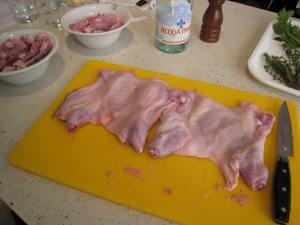
Debone the spatchcock (if you can’t find spatchcock, use a chicken instead) and lay it on a board.

Deboned Spatchcock

Next add some butter, salt and pepper and rosemary on the flesh side and wrap in cling wrap to form a log and then wrap in aluminium foil.

Rosemary, butter, salt and pepper

Steam (or simmer) for some time (the spatchcock took me around 17 minutes).  Rest.  Before serving fry with some olive oil to crisp up the skin.

Steamed chicken

For the brussel sprouts

Ingredients

Brussel Sprouts

Ingredients

Sage

Speck, diced

Pan fry the speck until crispy, add the brussel sprouts and saute until cooked.

To serve, lay out the brussel sprouts and top with a portion of the rolled spatchcock.

Read Full Post »
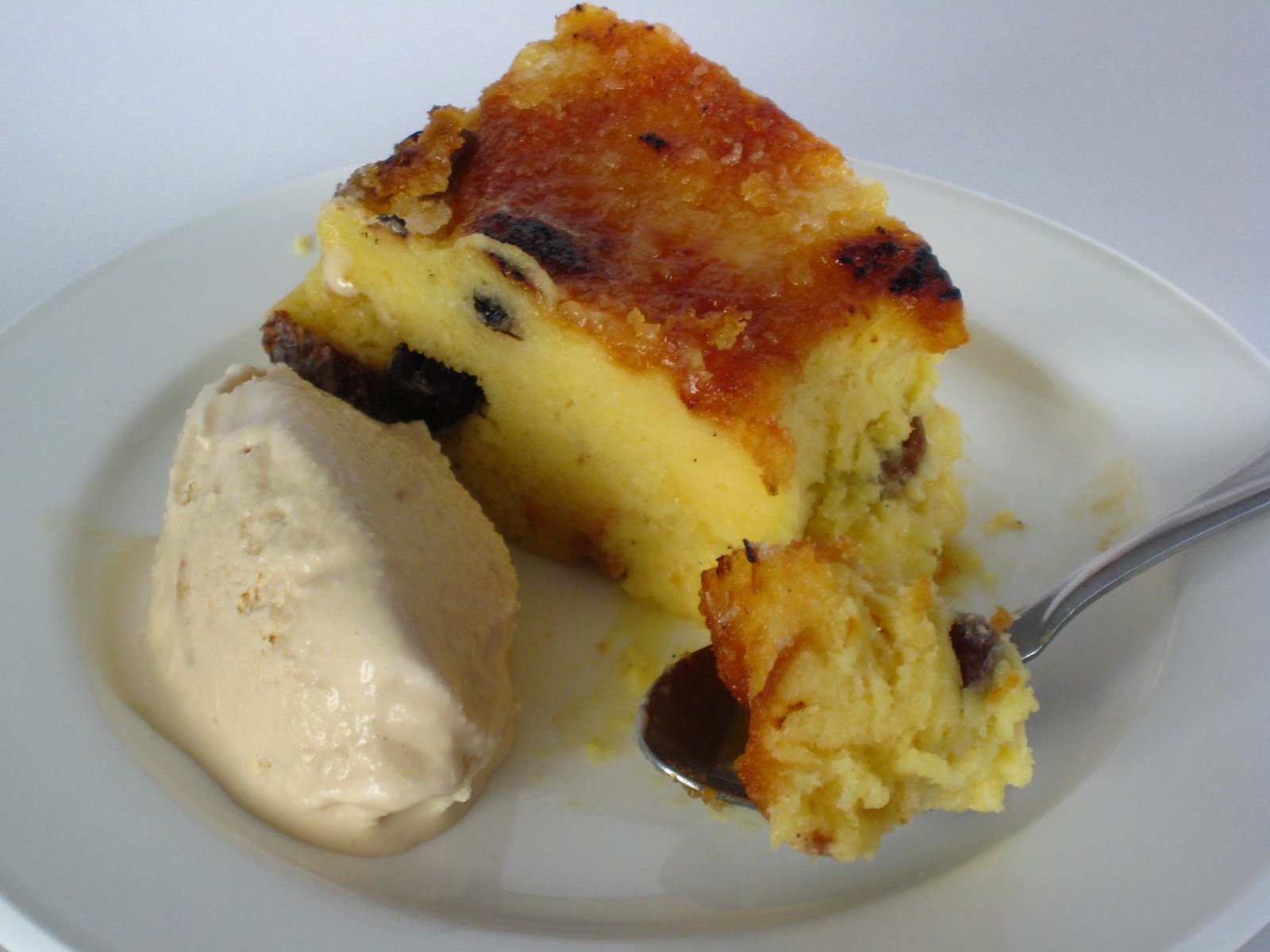
Basic Bread & Butter Pudding

Basic Bread & Butter Pudding


Update: 25 September 2009 – I’m looking for your thoughts on the next bread and butter pudding:


Minimum effort with maximum results… that’s exactly what this bread pudding is all about.

While bread pudding started as a frugal dish which was a good way to use up stale bread, this has evolved into a pretty deluxe dessert – this version (which I have adapted from Gary Rhodes, New British Classics) is almost creme brulee like in texture and a decadent end to a winter meal.

The recipe also reheats well, if you are lucky to have leftovers, 15 to 20 seconds in the microwave will do the trick!

1 Loaf Brioche, cut into about 18 slices and crust removed
6 yolks
175 g caster sugar
300 ml cream
250 ml milk
1 vanilla bean, scraped
80g salted butter – soft
25g sultanas
4 pieces pitted dates, sliced

Place egg yolks and sugar in a bowl and whisk until pale. Mix the milk, cream and vanilla bean in a pot and bring the mixture to a simmer. Pour a fourth of the scalded milk into the egg yolk mixture and whisk. Pour the rest of the mixture on to the egg yolk mixture and whisk continuously. strain through a fine mesh strainer. Set aside to cool slightly.

Meanwhile, butter the brioche slices and cover the bottom of an over proof dish (I used a 9 inch round cake dish) with a third of the bread. Sprinkle half of the sultanas and half of the pitted dates. Add another third of the brioche and then top again with the rest of the sultanas and dates. Finally, top with the rest of the buttered brioche.

Pour half of the custard mixture and let rest for 30 minutes. Then pour the rest of the custard mixture and let soak for at least 1 hour. When ready to use, pre-heat your oven to 130c and bake the pudding in a bain marie for 45 minutes. To serve, sprinkle with more caster sugar and torch to caramelize the top.

Serve with vanilla ice cream while the pudding is still warm.


P.S. Special thank you to Lita, one of the BEST PHOTOGRAPHERS in the PHILIPPINES for the photo and photo tips!

Read Full Post »
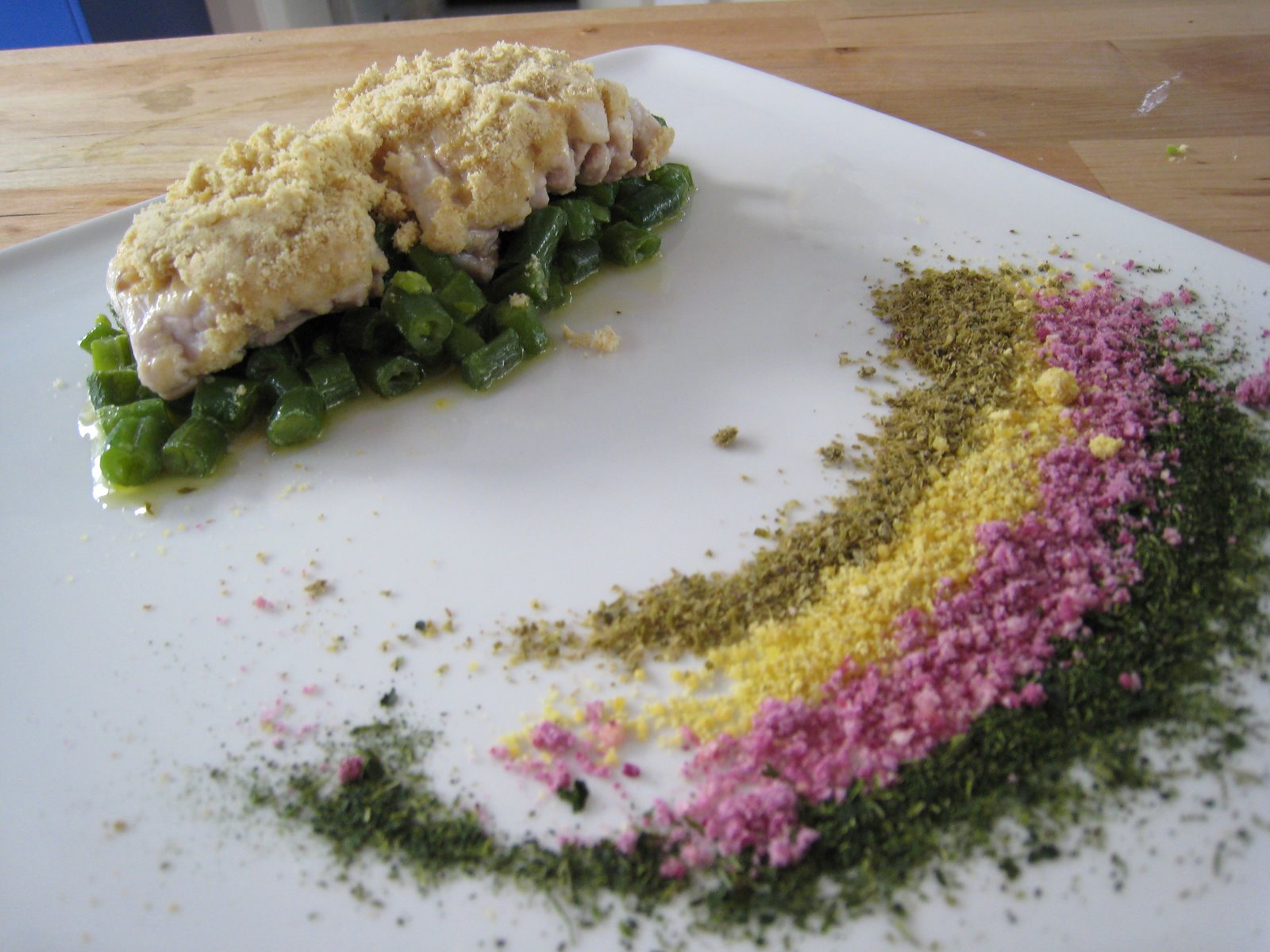
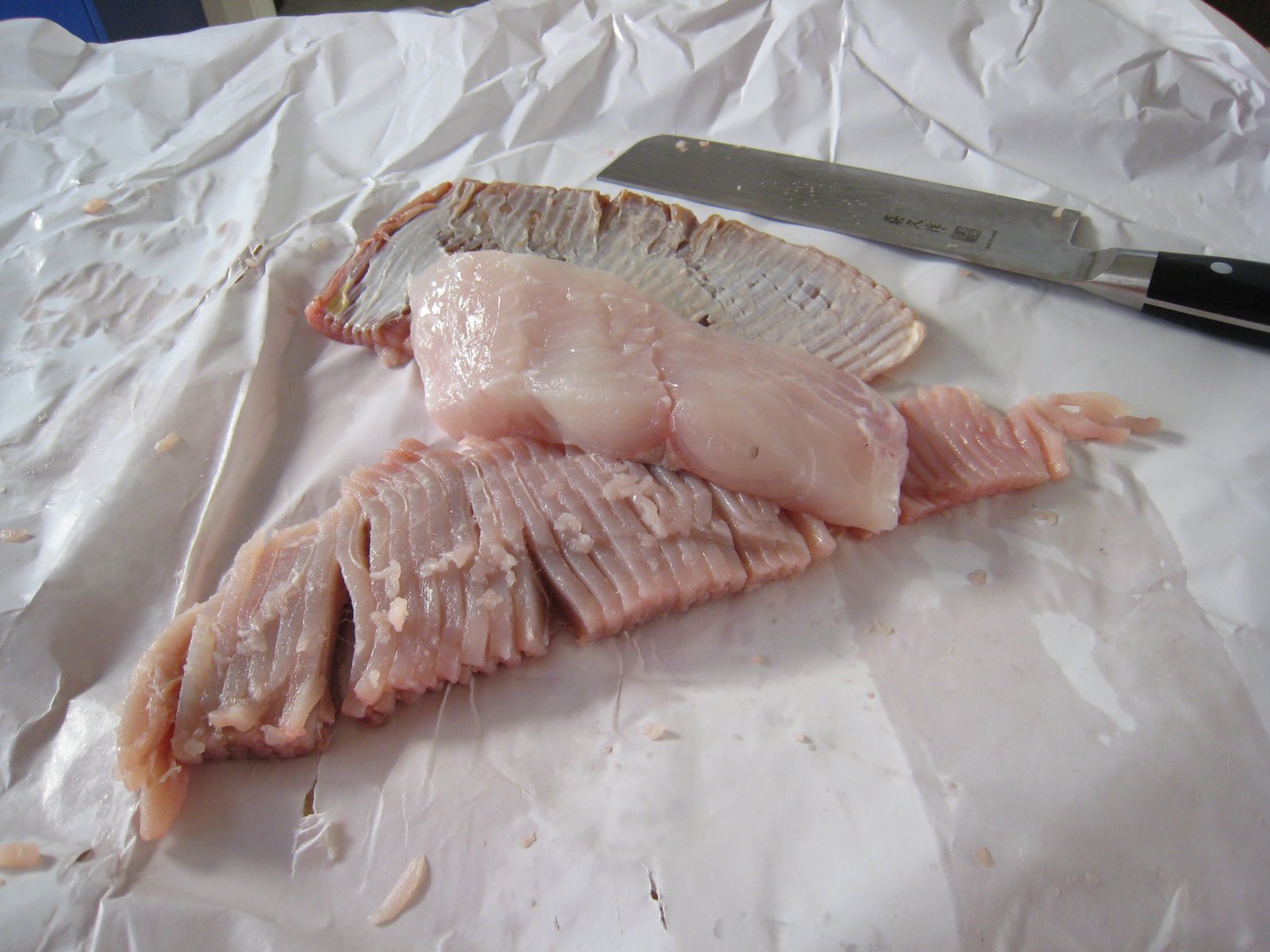
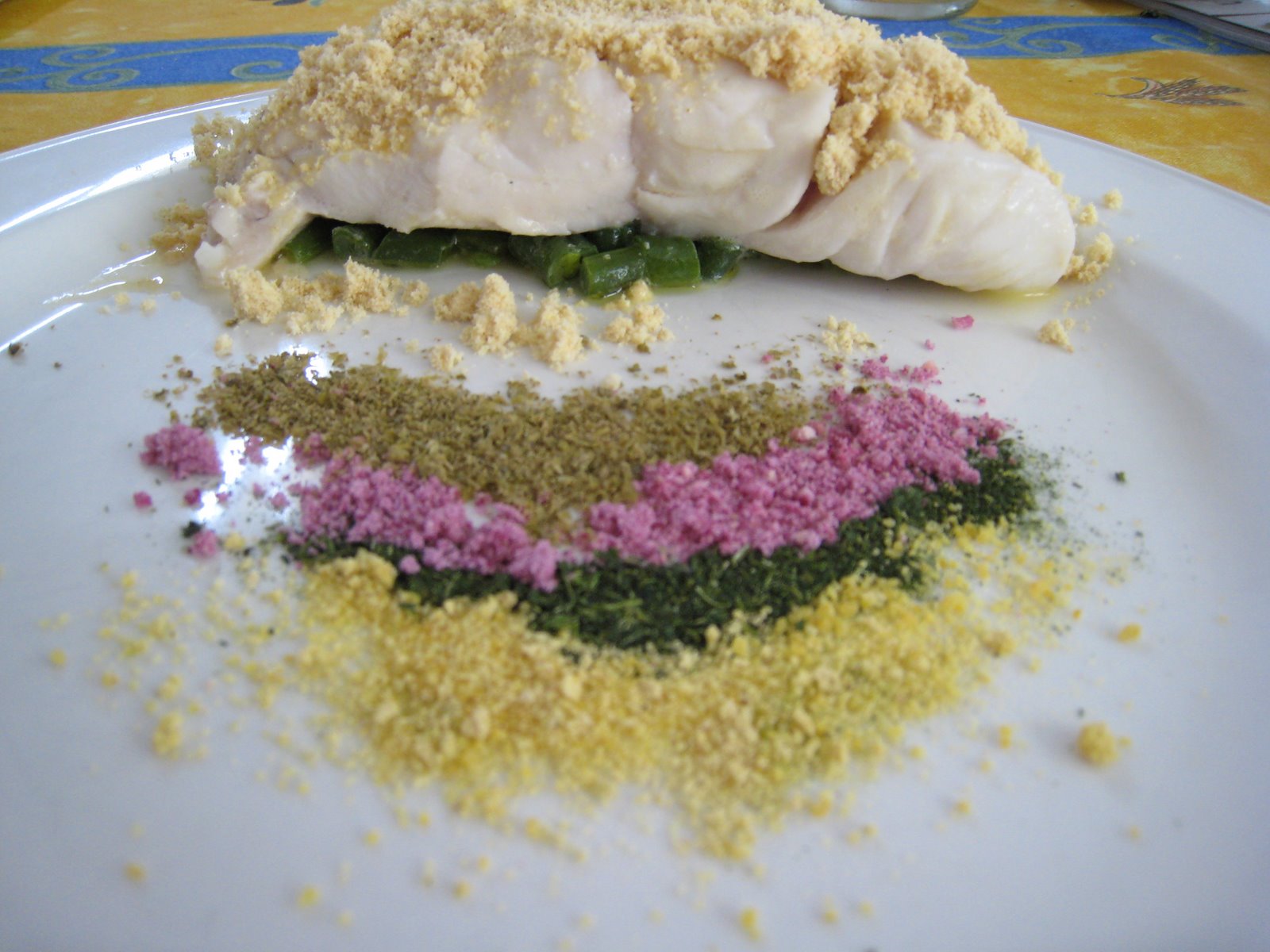
July’s Daring Cooks challenge was hosted by Sketchy and was called Skate, traditional flavors…

Skate, Traditional Flavours Powderedwith changes

  • 4 skate wings
  • * Beurre monte
  • * 300g fresh green beans
  • sea salt/kosher salt
  • 454g butter – 4 sticks
  • 300g lemons
  • 5g citric acid/vitamin c tablet
  • 150g cilantro
  • 150g parsley
  • 100g dried banana chips
  • 300g powdered milk
  • 100g cup minced red onion
  • 200g capers (brined, not oil)

* For green beans, slice each beans into very thin rounds (2 mm)
* Beurre Monte – 454g butter cubed and cold, 60g water. In a small saucepan, bring the water to a boil, remove from heat and whisk in the butter 1 cube at a time. This should from an emulsion. Keep this heated, but under 90C. The emulsion will not break – this is your poaching liquid.

Powders – prepare ahead of time
caper / onion
lemon powder
cilantro/parsley powder
‘brown butter’ powder

Powders
once dried, all powders should be pulsed in a coffee grinder/spice mill/morter and pestle then passed through a chinois or fine mesh strainer.

Citrus powder
300g lemons
1000g simple syrup (boil equal parts water and sugar until dissolved)
5g citric acid/vitamin c tablet

Zest 300g of lemons (10.6 oz), remove the pith from the zest and poach in the simple syrup three times. dry with paper towels and move to the oven. 70C for 2 hours. pulse the zest in a coffee grinder, and mix with citric acid/vitamin C powder.

Cilantro/parsley powder
150g cilantro
150g parsley

Blanch the parsley in boiling saltwater for 1 second, submerge the leaves in ice water for 3 minutes. Dry on paper towels and place in oven. 70C for 2 hours. Grind.

onion powder
100g cup minced red onions

Place in oven for 2 hours at 70C. Grind.

Caper powder
200g capers (get the ones packed in brine/vinegar)

Run the capers under cold water for two minutes to remove some of the brine.
Dry on paper towels and place in oven for 2 hours at 70C.

Brown Butter powder

100g Dried banana chips (unsweetened if possible – many are coated in honey – the freeze dried ones would be brilliant)
300g powdered milk

Grind the banana chips in a coffee grinder and mix with the toasted milk powder. Heat the powdered milk with the ground dried banana in a pan. Be cautious and make sure it does not burn.

Read Full Post »
The Council of Italian Restaurants in Australia offers cooking lessons on a regular basis. The classes are held at Casa Barilla in Annandale and many of them are hands on. I’ve been fortunate enough to attend a number of classes, these are conducted by the who’s who of Australia’s Italian cooking world.

Attending a class is almost as good as eating in anyone of the restaurants from where the chefs are associated with.

The first lesson I attended was a hands on class with James Kidman from Otto Restaurant where we learned the secrets to making a great rissotto. The second class I went to was taught by Armando Percuoco from Buon Ricordo. Signore Percuoco is one of the most amiable and down to earth people I have ever met. His class was entitled Cucina Povera (Peasant Cooking or humble food) where he shared pragmatic yet very delicious recipes.

Two weekends ago I managed to drag my husband to CIRA once again for a class with Logan Campell, head chef at Lucio’s in Paddington. My husband had never cooked a meal in his LIFE prior to the class so it was interesting to see how he would react to this whole new experience. I am happy to report that he LOVED it! Absolutely loved the experience.

The class was entitled “Logan’s Ligurian Experience”. The hands on class featured two dishes, Eggplant Ravioli and a Rolled Spatchcock. Both were amazingly easy to prepare (yes, even deboning the spatchcock) and can be recreated at home.

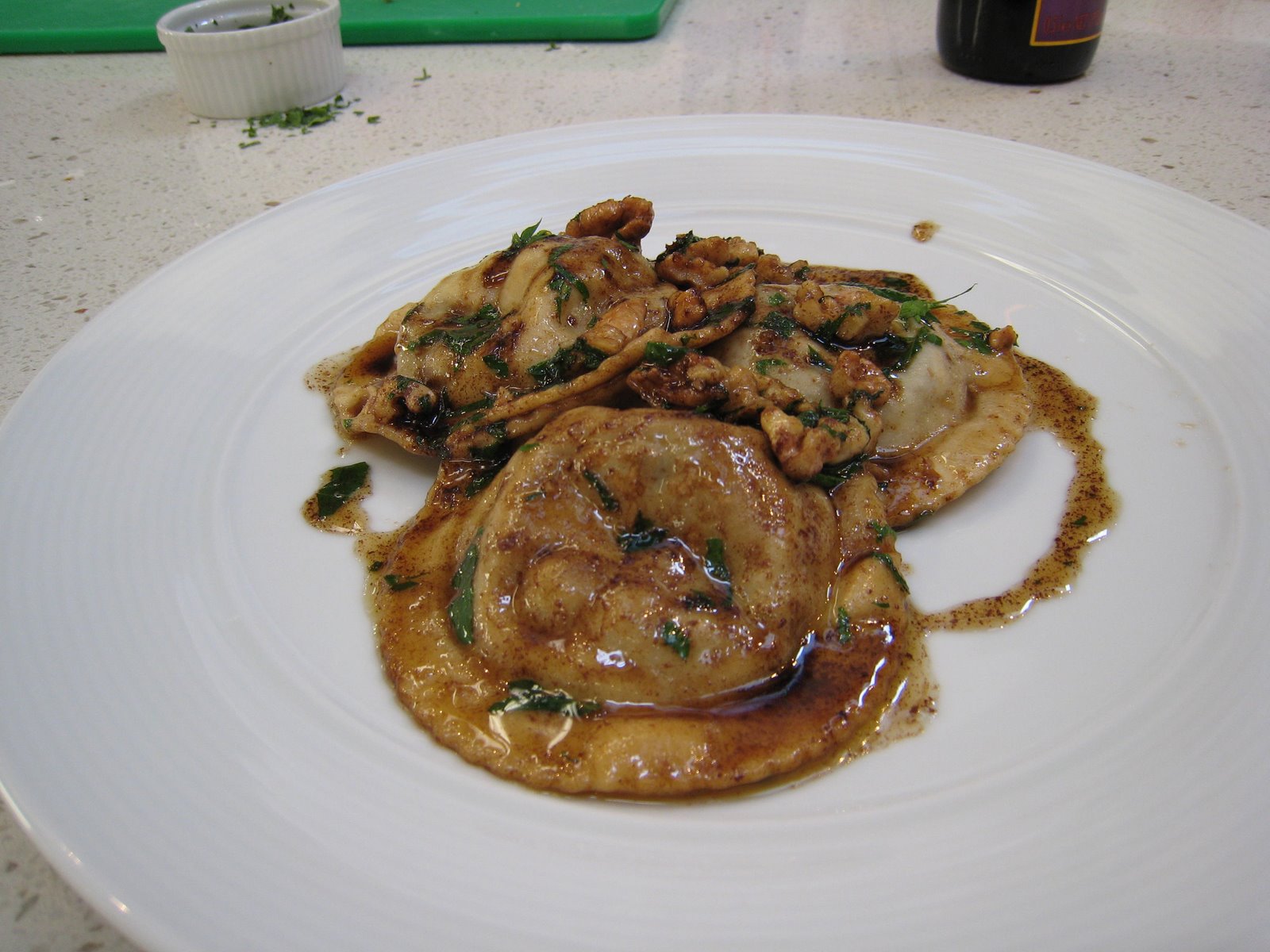
I’ve written down the eggplant ravioli recipe and hope you’ll enjoy it!

Pasta Ingredients
300 grams plain flour
3 large eggs
pinch of salt

Filling Ingredients (you will probably have leftover filling depending on how you fill your pasta)
1 large eggplant, diced
1/2 bunch picked thyme
100 grams diced taleggio cheese (I used Mauri Taleggio)
50 grams parmesan cheese
1 egg
1/4 bunch chopped parsley
salt and pepper

To Serve
125 grams butter
2 tablespoons vinegar
1/4 cup chopped walnuts
A few sprigs of parsley

Pasta
Pour flour onto benchtop and make a well in the centre.
Place the salt and add the eggs into the well and incorporate until the dough forms
Knead for 5 minutes and rest covered for 1 hour

Filling
Sprinkle the eggplant with salt and let stand 20 minutes
Rinse off the salt and drain
Saute the eggplant in a little olive oil, add thyme and cook until eggplant is browned
Allow to cool and then mix the eggplant with the cheeses, egg and parsley
Season with salt and pepper


Ravioli
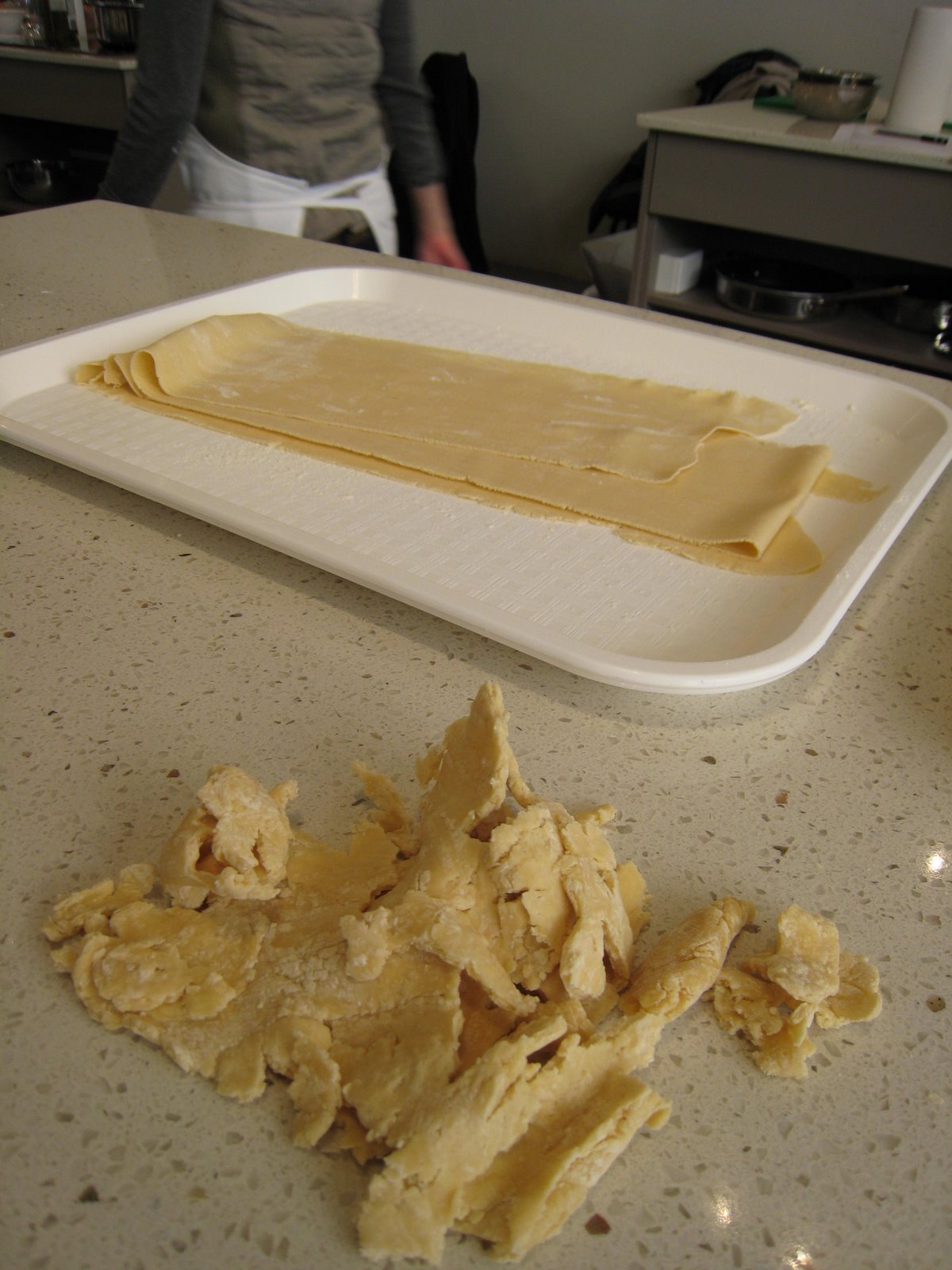
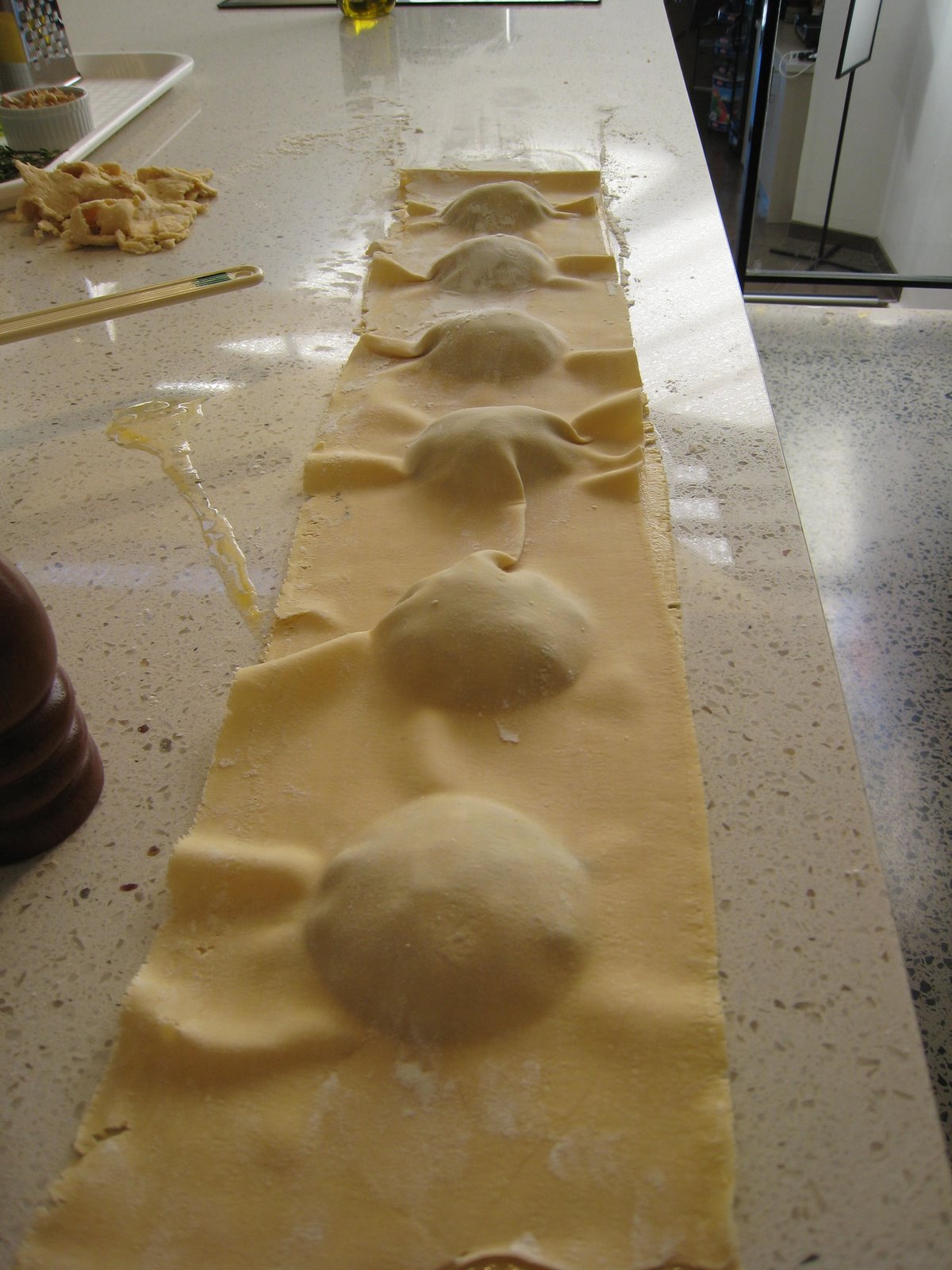
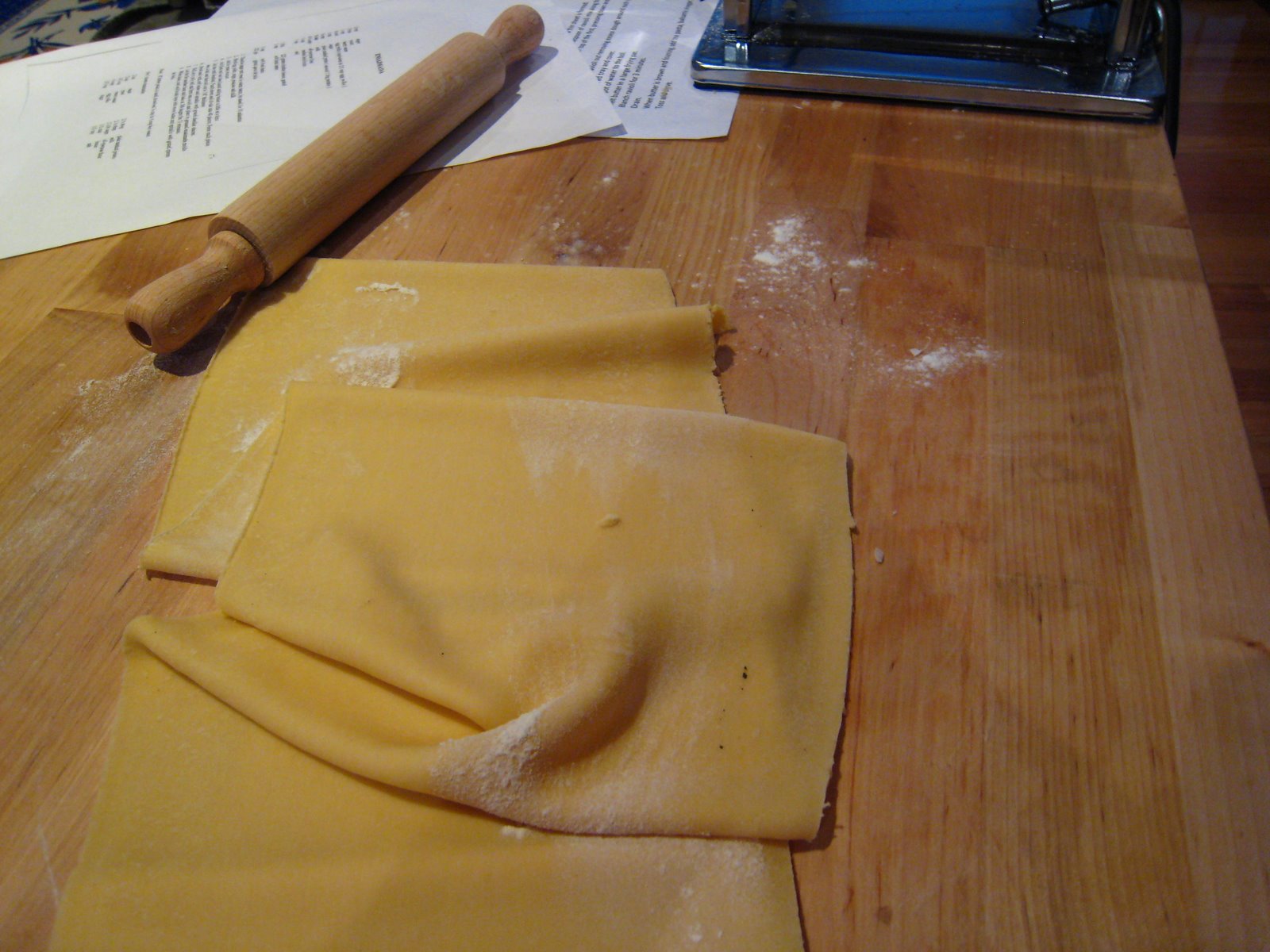
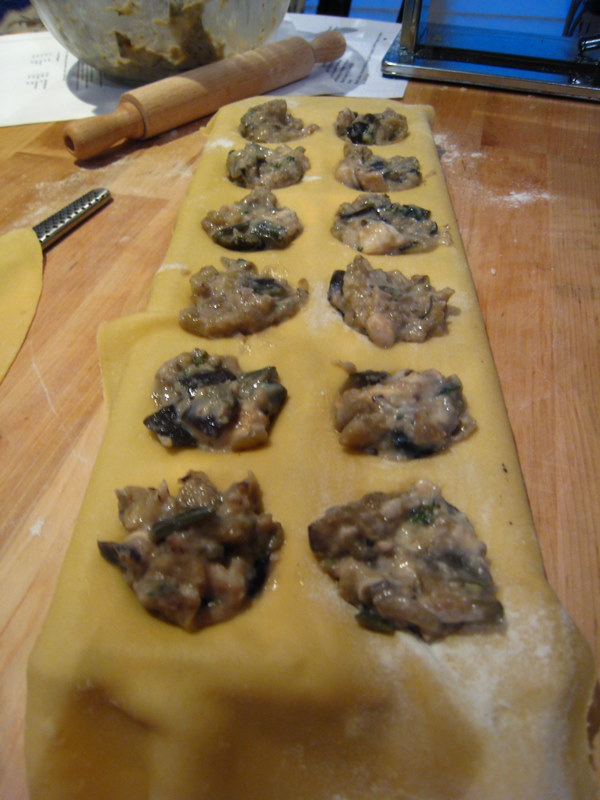
Using a pasta machine roll out the dough until a thin sheet is formed. Brush with egg wash and place some the ravioli mix along the sheet 3 centimeters apart.


Roll another sheet and place on top of the first, pressing down around the mix to remove any air pockets.


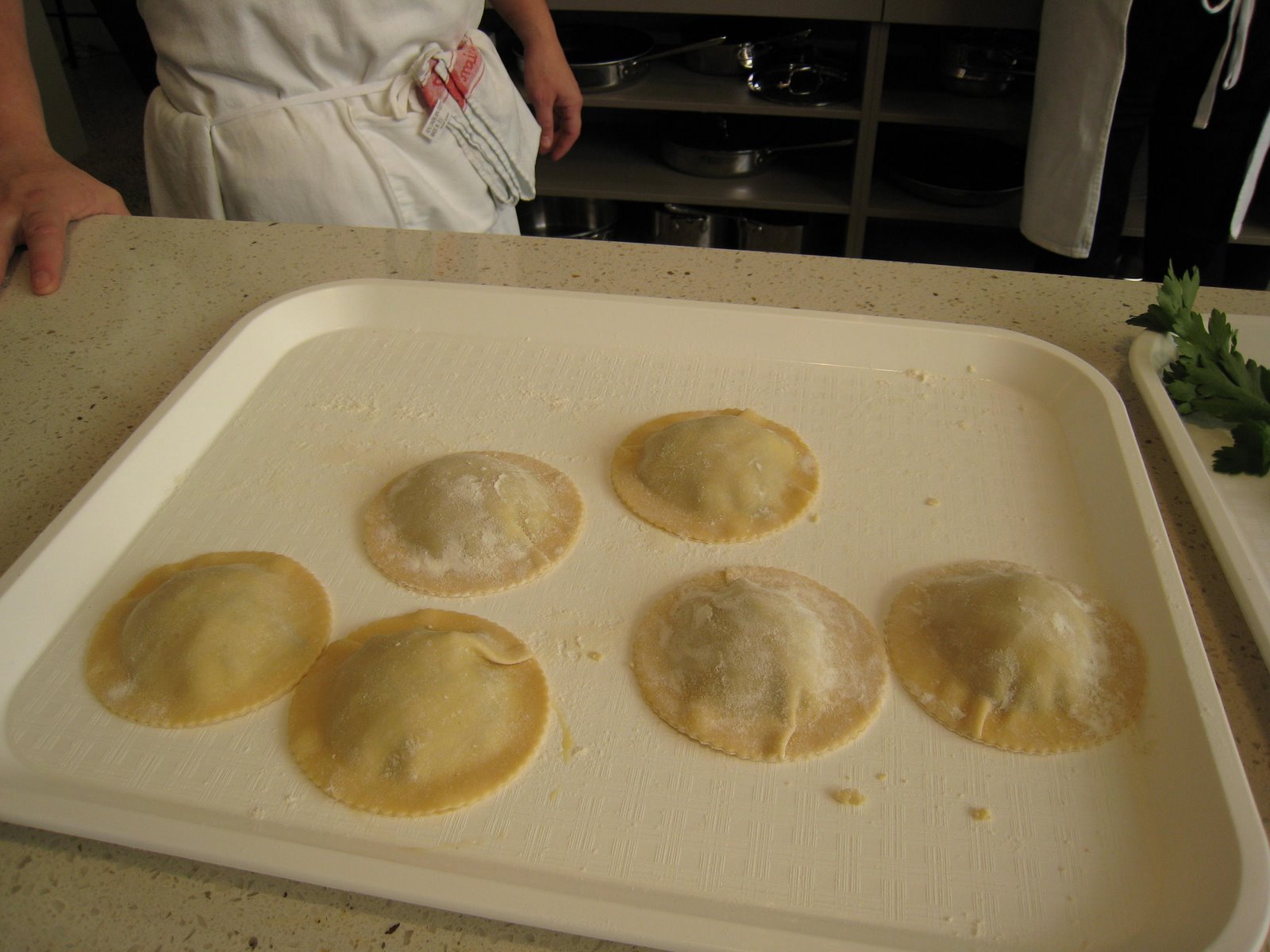
Using cutters, cut the ravioli out removing excess dough around each one.


Place on a floured tray and cover.
Brint a pot of water to the boil.
Melkt the butter in a large frying pan
Blanch ravioli for 3 minutes
Drain
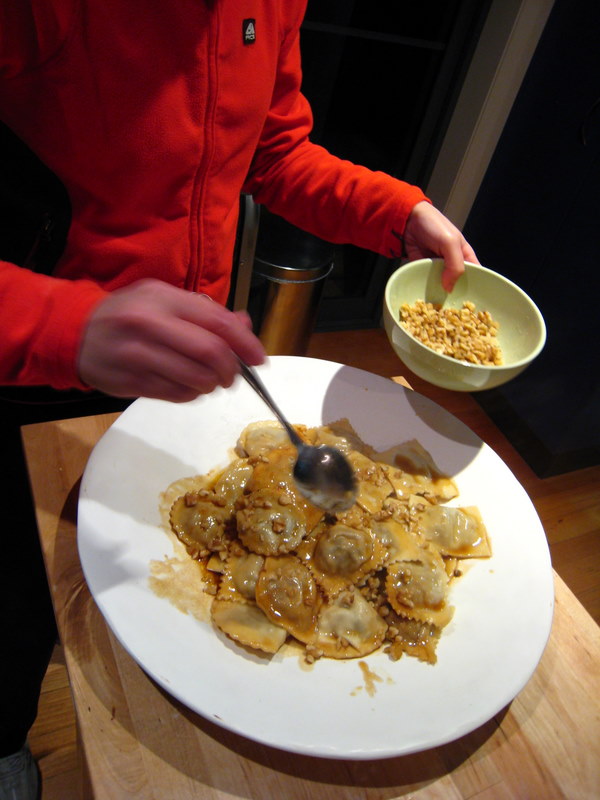
When butter is brown and foaming, add the pasta, balsamic vinegar and walnuts.
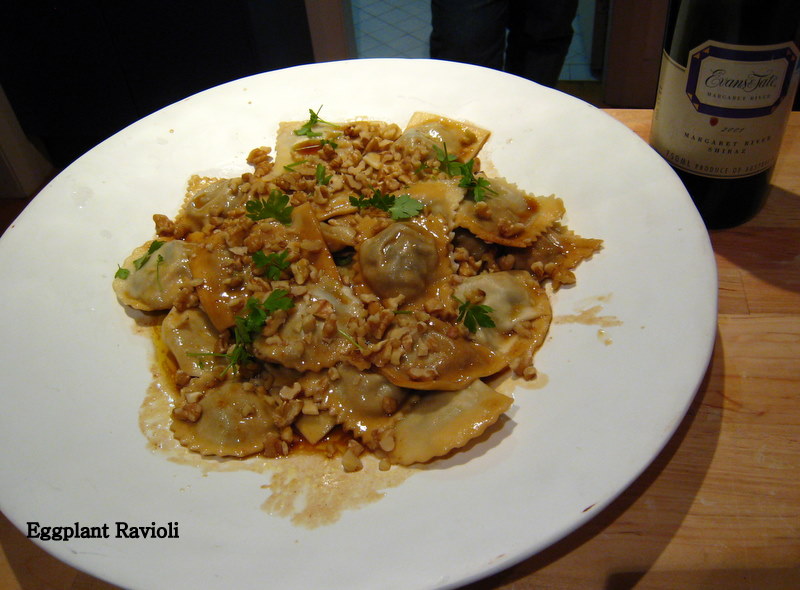
Garnish with chopped parsley
Toss and serve.

That’s not the end of it!

This weekend I invited a few guests to try out the pasta… here are a few shots of my version of the eggplant ravioli.


Read Full Post »
« Newer Posts - Older Posts »